






Brands are paying serious attention to youth sports audiences right now, and the data on why is pretty compelling. But knowing brands are interested and knowing how to land one are two different things. If your program is ready to go beyond a banner on a fence, this is how you build something sponsors will actually budget for.
Executive Summary:
- Youth sports sponsorships capture parent attention at an 81% net likelihood, beating TV ads, pro team deals, and influencer marketing.
- Before you pitch anyone, build your audience data first: registration totals, attendance figures, geographic reach, and repeat participation rates.
- Structure three to five tiered packages with visible pricing and distinct channels per tier so brands can get internal approval without back-and-forth.
- Deliver a post-event report within two weeks covering attendance, impression counts by placement, and photo documentation to stand out from every other sponsor partner.
- Fastbreak runs Fastbreak Connect across thousands of youth sports events nationwide, managing brand activations end to end for operators and national brands alike.
Why Brands Invest in Youth Sports Sponsorships
Youth sports families are one of the most valuable audiences in consumer marketing, and brands are starting to act accordingly.
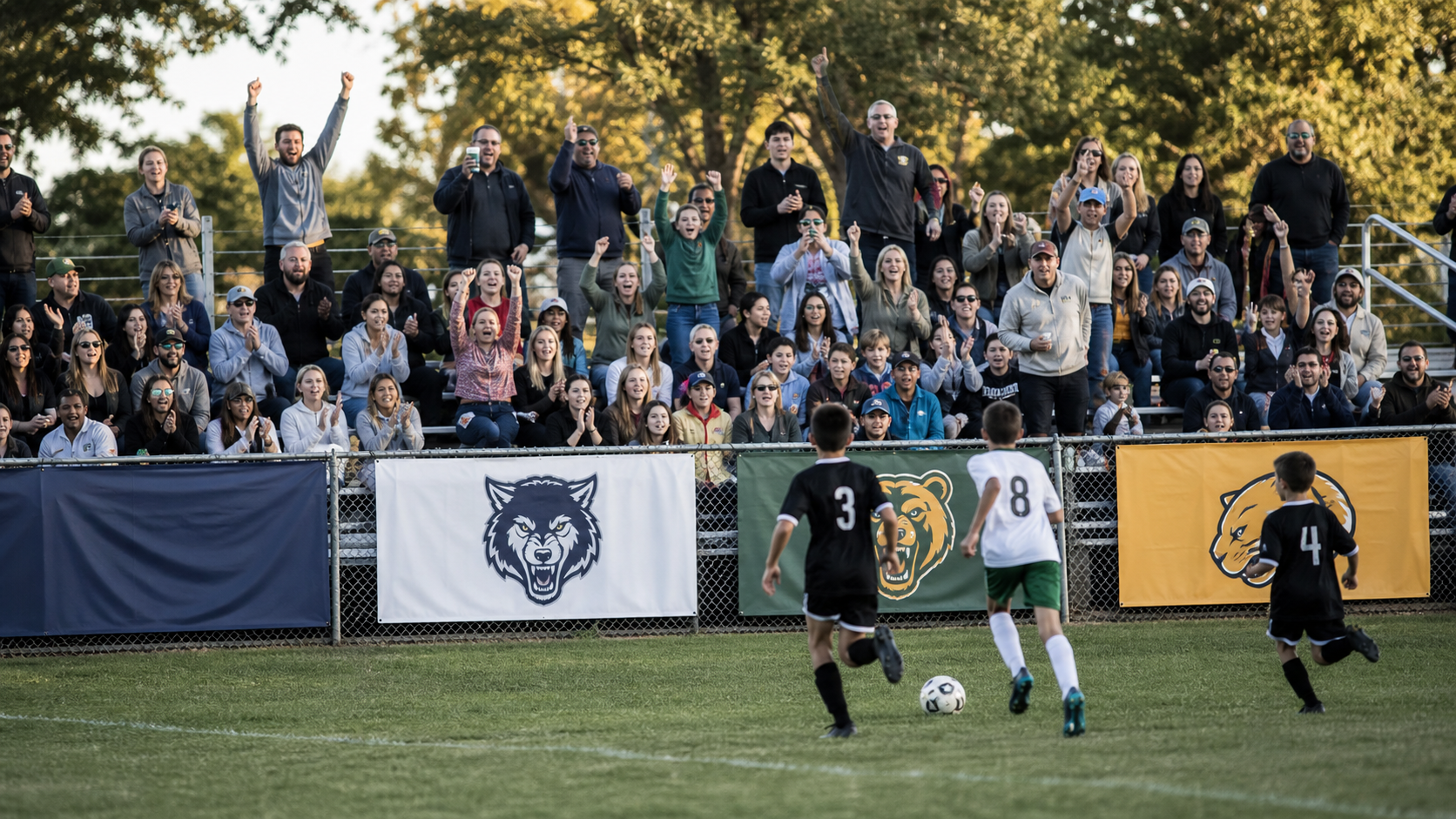
A YouGov Sport study for Priority Partnerships, fielded among 922 youth sports parents in late 2025, found that sponsoring a child's youth sports program captures parent attention at an 81% net likelihood. That figure beats sponsoring a pro team (54%), TV commercials (51%), social and digital media (52%), and influencer marketing (32%). The same study found that when two products are comparable in cost and quality, 80% of parents say they would choose the brand sponsoring their child's program.
That's purchase behavior, beyond awareness. Parents at youth sports events are present, emotionally invested, and making household purchasing decisions for their entire family. For brands, that combination is hard to replicate anywhere else.
The Cost Crisis Driving Brand Opportunity
According to the Youth Sports Business Report, the average U.S. family spent $1,016 on their child's primary sport in 2024, a 46% increase since 2019 and twice the rate of broader inflation over the same period. Registration fees, travel, gear, and tournament entry costs all pile up fast.
That pressure changes the sponsorship conversation. When a brand's involvement visibly helps offset what families are already paying, the goodwill runs deeper than a logo on a banner. Parents notice who made participation more affordable, and that kind of relationship is hard to buy through a 30-second ad.
For program operators, this is the value exchange worth leading with. Sponsorship revenue can hold registration fees down, fund equipment, or cover travel costs for lower-income families. Brands get access to a highly receptive audience. Families get financial relief. That framing turns your pitch from "buy ad space" into something a brand's marketing and community-relations teams can both say yes to.
What Makes a Youth Sports Program Sponsorship-Ready
Before you send a single email to a potential sponsor, you need to be able to answer one question clearly: who shows up, and how many of them?
Brands are buying access to your crowd, as MVP Visuals puts it. That means hard numbers matter far more than enthusiasm. Registration totals, average event attendance, the age range of athletes, household income estimates, geographic reach, repeat participation rates: these are the figures that move a brand's marketing team from "interesting" to "let's get this approved." If you have not been tracking them, start now.
The Data You Need Before You Pitch
- Total athletes registered per season or event
- Average family attendance per game or tournament session
- Geographic footprint, including how far families travel and how many states or zip codes are represented
- Age and demographic breakdown of participants
- Repeat participation rate year over year
Organizational Credibility
Numbers alone are not enough. Sponsors will look you up. A clean, current website, a consistent logo, and an active social presence signal that you run a real operation. You do not need to look corporate, but you do need to look like someone who will still be around next year.
Your track record of well-run events carries real weight too. Brands have been burned by sponsorships at disorganized events where signage ended up in a corner and activation tables sat unstaffed. Photos, post-event recaps, or participant feedback from past events show you deliver what you promise.
Build Your Sponsorship Inventory
Most programs have more to offer sponsors than they realize. The inventory exercise is about looking at every surface, every moment, and every channel where a brand name could appear in front of your audience.
Start by walking your venue like a sponsor would. Where do families stand and wait? Where do athletes gather between games? Where does everyone look? Those answers tell you where your highest-value placements are.
Physical Assets
- Banners and signage at field entrances, scorer's tables, fence lines, and concession areas
- Jersey or uniform logo space on the chest, sleeve, or back
- Warm-up gear, bags, or water bottles if your program provides them
- Activation table or booth space near high-traffic areas like check-in or concessions
Digital and Media Assets
- Website logo placement and sponsor pages, with estimated monthly visitors
- Branded mentions in registration confirmation emails, schedule emails, and post-event recaps
- Social media posts featuring the sponsor, with your average reach per post
- Digital tickets with sponsor logo embedded, if you use mobile ticketing
Event Experience Assets
- PA or announcer mentions during games or between rounds
- Product sampling opportunities at check-in or during intermissions
- Naming rights for a division, bracket, or the event itself
- Sponsor recognition in printed programs or event signage
"Sponsors aren't buying goodwill; they are buying access to your crowd. You must list hard numbers: 1,000+ kids served, 4,750 fans per event." (MVP Visuals)
Once you have your full list, attach an estimated impression count to each item. A banner at a field entrance that 600 families walk past over a weekend is a different asset than a logo buried on a webpage footer. Brands think in CPMs and reach. The more you can translate your assets into that language, the easier your pitch becomes.
Structure Sponsorship Packages That Brands Can Approve
With your inventory mapped, the next step is grouping assets into packages that a brand can actually approve internally. A one-size pitch forces every sponsor into the same box. Tiered packages let a local insurance agency and a regional grocery chain both say yes at the number that works for them.

Three to five tiers is the right range. Fewer than three and you leave budget on the table from brands willing to spend more. More than five and you create a decision problem that stalls approvals.
Each tier should add a new channel of exposure, not more quantity from the same one. A title sponsor getting signage, jersey placement, digital mentions, PA announcements, and an activation booth is a meaningfully different offer than a bronze sponsor getting only a banner. Stacking channels by tier makes the value difference obvious without requiring explanation.
| Tier | Price Range (Local) | Price Range (Regional/National) | Included Channels |
|---|---|---|---|
| Bronze | ~$500 | ~$2,500 | Banner placement at venue |
| Silver | ~$1,500 | ~$7,500 | Signage + digital mentions (email, website) |
| Gold / Presenting | ~$3,000 | ~$15,000 | Signage + digital + social posts + PA mentions |
| Title | ~$5,000 | $10,000 to $50,000+ | All channels: signage, jersey, digital, PA, activation booth, naming rights |
Always show prices on the page. "Pricing available upon request" signals inexperience and adds a friction step most sponsors will not bother clearing. For local market programs, a workable range runs from roughly $500 to $5,000 across tiers. Regional or national events with multi-venue footprints and thousands of attendees can support title sponsorships in the $10,000 to $50,000+ range.
Set your highest tier as an anchor. When a brand sees a $25,000 title package and a $7,500 presenting package side by side, the mid-tier suddenly feels reasonable and not overpriced. That anchoring effect moves more sponsors into the middle of your range, which is usually where you want them.
Identify the Right Sponsors for Your Program
Before reaching out to anyone, take stock of who already has a stake in your program's success.
Tier 1: Parent-Network Businesses
Parents who run or manage local businesses have built-in motivation to sponsor. Their kids play in your program, their coworkers' kids play in your program, and being named as a sponsor in front of hundreds of families each weekend is exactly the kind of community visibility small business owners want. A parent who owns a dental practice, an insurance agency, or a home services company is often ready to sign within a single conversation. Start here, because conversion rates on these outreach efforts run far higher than cold pitches, and these relationships often renew without being asked.
Tier 2: Hyperlocal Businesses Near Your Venues
Restaurants, urgent care clinics, auto dealerships, and sporting goods stores near your venues share one thing: their ideal customer is already coming to your events. Your pitch is straightforward. Your audience drives past their parking lot every Saturday, and a sponsorship puts their name in front of those families before they decide where to spend money.
Tier 3: Regional and National Brands
Health, wellness, sports nutrition, and athletic apparel brands actively seek youth athlete audiences because digital channels are losing reach with Gen Alpha and their parents. These brands often carry experiential marketing budgets dedicated to event-based brand activation. The pitch is more formal, approval takes longer, and they will want data upfront. But these deals tend to be bigger, and a single regional brand can anchor your entire sponsorship revenue for a season.
Matching by Alignment, Not Budget Alone
A sponsor whose product has no connection to your audience creates problems at fulfillment. If your athletes are eight to twelve years old and a brand sells financial planning software, no amount of signage will generate the results they expected. A disappointed sponsor rarely renews, and they sometimes share that experience with other marketing contacts. Focus on brands whose products your families already buy or would plausibly consider: sports nutrition, athletic gear, family health services, local food and beverage, and family-focused retail are the categories where sponsorship performance tends to be strongest.
Create a Sponsorship Pitch Deck That Gets Read
Most sponsors flip through dozens of packets. If yours looks like every other PDF in their inbox, it will get the same treatment.
MVP Visuals notes that you have roughly five seconds on the cover page before a sponsor moves on. Your cover needs your program name, logo, event name, and the season year. A sponsor picking up your deck in January should know immediately whether this is for their current planning cycle or last year's program.
Here are the five pages every packet needs:
- A cover page with your program name, logo, event name, and season year so sponsors can place it in the right budget cycle at a glance.
- A mission and impact page that leads with hard audience numbers: athletes served, families attending, geographic reach, and any demographic details brands care about.
- A program overview showing your event schedule, venue locations, and attendance history from past seasons.
- A sponsorship tiers page with explicit pricing, named deliverables per tier, and impression estimates attached to each asset.
- A next-steps page with a named contact, phone number, email, and a clear deadline or decision timeline.
Two things kill otherwise solid packets. Pricing hidden behind "contact us for details" adds a friction step most brands will skip. Vague deliverables like "brand recognition" without explaining what that means leave approval committees with no basis for saying yes. Both are fixable before you send a single email.
Keep the design clean and consistent with your program's branding. A polished packet signals that the event itself will be run the same way.
How to Approach and Pitch Sponsors
A packet without a plan to get it in front of the right person is just a PDF. The outreach mechanics matter as much as the materials.
Warm introductions through your parent network are the highest-converting starting point. A parent who runs a business and already trusts your program will take a meeting before you finish asking. When you reach out cold, your conversion rate drops sharply, so exhaust your network first.
For email outreach, three paragraphs is the right length:
- Who you are, which event you run, and why you're reaching out to them directly.
- What the sponsorship delivers for their brand, in concrete terms: audience size, activation options, and impression estimates.
- A specific ask, whether that is a 20-minute call or a decision on a particular tier.
Never lead with what your program needs. The brand does not care about your budget gap. They care whether their logo in front of 800 families on a Saturday morning moves product.
In-person pitches follow the same sequence. Open with the audience, not the ask. Show the deck, walk through tiers, and name a number before you leave the room. Vague closes stall in email chains indefinitely.
Follow up twice after initial outreach: once at three days, once at ten. Keep both short. If there is no response after the second follow-up, move on and circle back next season.
Fulfill Your Sponsorship Commitments
Signing a sponsor is the beginning of the relationship, not the end of the work.
Most programs that lose sponsors after year one do not lose them because the event was bad. They lose them because no one tracked whether the banner went up, the PA mention happened, or the activation table was staffed. From the sponsor's perspective, the money went out and nothing came back.
The fix is treating fulfillment like its own dedicated task, not an afterthought. Build a checklist that maps directly to each tier's written commitments. Title sponsor gets five deliverables? Each one gets a row, an owner, a deadline, and a completion status. If you sold a bronze sponsor two banner placements and three social posts, those three posts need to be scheduled before the event weekend starts, not remembered on a Sunday night.
Assign one person internally as the sponsor fulfillment owner. It does not need to be a full-time role, but it needs to be someone whose name is on it. When responsibilities are shared informally, things slip.
Documentation matters more than most programs expect. During events, take photos of signage in place, capture PA mentions in a log, and note when activation booths were staffed and for how long. Only 19% of sponsorship marketers report having a clear understanding of whether their sponsorships actually worked, according to Kantar research. When you hand a sponsor photos of their banner in front of a packed field and a summary of every completed deliverable, you are solving a problem most of their other partners never bother to solve.
Communicate with sponsors before, during, and after the event. A quick note two weeks out confirming their materials are ready, a photo mid-event showing their signage up, and a post-event summary within two weeks signals that their investment is being taken seriously. That cadence is rare enough to be memorable.
Measure and Report Sponsorship ROI to Sponsors
Post-event reporting is where most programs drop the ball, and where you can separate yourself from every other sponsorship your brand partner signed this year.
That gap is your opening. When you deliver a clear, documented summary of what their money bought, you are doing something most partners never bother to do.
A solid post-event sponsor report covers these elements:
- Total attendance across the event, broken down by day or session if the sponsor was present only during certain windows
- Logo impression estimates tied to specific placements, not a single aggregate number (banner at the entrance saw X families; jersey worn by Y athletes across Z games)
- Social media post reach and engagement for any branded content you published during or after the event
- Photo documentation showing signage in context, activated booths with real crowds, and jersey placements on the field
- On-site activation results, such as product samples distributed, survey responses collected, or contest entries received
Keep the report short enough to read in five minutes. One page of hard numbers with four or five supporting photos is more persuasive than a ten-page PDF that buries the key figures. Sponsors are not looking for a narrative. They are looking for something they can put in front of their CMO.
Send it within two weeks of the event closing. After that window, the momentum fades and the report starts to feel like an afterthought. Speed signals professionalism just as much as the content itself.
Retain Sponsors and Build Multi-Year Partnerships
Retention starts before the event ends. Most programs wait until their contract expires, then scramble to re-pitch from scratch. By that point, the hardest-to-reach audience budgets may already be committed elsewhere.
Start the renewal conversation mid-season, while the activation is still fresh. A quick check-in with your contact around the halfway point, sharing early attendance figures or a photo from the first event, keeps the relationship warm and plants the seed before any renewal pressure exists.
When the season wraps and your post-event report goes out, include a brief forward-looking note. Show year-over-year growth in attendance, athlete registrations, and geographic reach. Sponsors want to see that the audience is growing, not holding flat. If your program added a new venue, expanded to a new age division, or drew families from a wider region this year, that belongs in the renewal conversation as a proof point for what next season will look like.
Give current sponsors early access to next season's packages before you open outreach to new prospects. That window, even two or three weeks, signals that their relationship has real value beyond the contract. A title sponsor who gets first right of refusal before a competitor can take the slot is far more likely to renew without negotiating hard on price.
The personal relationship with your brand contact matters more than most operators expect. Marketing managers change jobs. When your contact moves to a new company, they carry their vendor relationships with them. Staying in touch between seasons, sharing a relevant article, or reaching out when your program hits a milestone keeps the relationship alive even when no contract is on the table. Programs built on personal trust convert one-time sponsors into multi-year partners far more consistently than those managed purely at the contract level.
How Fastbreak Helps Programs Unlock Brand Sponsorship at Scale
Running a sponsorship program well at a single-event level is entirely doable with the frameworks above. Scaling it across dozens or hundreds of events is a different execution problem entirely.
At scale, the individual-event approach fractures. Operators running multiple events a year end up with sponsorships spread across separate spreadsheets, different contact threads, and post-event reports that look nothing alike from one event to the next. Brands trying to build a consistent presence across dozens of events face the same problem in reverse: they are juggling separate conversations with every operator, getting reports in different formats on different timelines, and trying to piece together an impression story that their CMO can act on. There is no central view of what was promised at each event, what was actually delivered, or what the aggregate audience looked like across the season. The data that would justify a bigger budget next year never gets assembled, because no single person or system holds all of it at once. That is the wall most programs hit when they try to grow beyond a handful of sponsors and a handful of events.
Fastbreak Connect is built for that gap. It gives consumer brands a single coordinated program across thousands of youth sports events nationwide, with Fastbreak handling ambassador staffing, product distribution, content creation, and on-the-ground measurement at every activation. For operators, that means being part of a network that national brands like Gatorade, Adidas, Duluth Trading Co., and Promino are already buying into, instead of competing for those budgets one cold email at a time.
Duluth Trading Co. at JVA Chi-Town connected with thousands of young athletes and their families through activations Fastbreak managed entirely on the ground. Gatorade used Fastbreak Connect to reach athletes at tournaments across the country through the same model. Promino used that same managed-activation approach to enter the U.S. market through youth sports. In each case, the brand received a fully managed campaign and the event operator gained a brand partner whose presence was handled from start to finish.
The measurement piece matters here too. In-event surveys through Fastbreak Connect can see completion rates of 80 to 95 percent, producing first-party audience data that brand partners can actually take back to their CMO. That reporting closes the loop brands have been asking their other sponsorship partners to close for years.
Final Thoughts on How to Run a Youth Sports Sponsorship Program
A sponsorship program that works is less about selling and more about showing brands a real audience and delivering on what you promised. The data, the packaging, the pitch, the fulfillment, and the post-event report build on each other. You only need to start with one good relationship. Document everything, renew with intention, and treat every sponsor like something worth keeping. Reach out to Fastbreak to see how your program fits into a national brand network built for youth sports events.
FAQ
What audience data should you collect before pitching a youth sports sponsorship to brands?
Collect total athletes registered per season, average family attendance per session, geographic footprint (states and zip codes represented), age and demographic breakdown, and year-over-year repeat participation rates. Brands are buying access to your crowd, so hard numbers move a marketing team from interested to approved far faster than enthusiasm alone.
How should you structure sponsorship package tiers for a youth sports program?
Build three to five tiers where each level adds a new channel of exposure instead of piling on more quantity from the same one. Set your highest tier as a price anchor so mid-tier packages feel reasonable by comparison, and always show prices on the page since "pricing available upon request" adds a friction step most sponsors will not bother clearing.
What goes in a post-event sponsor report that actually gets sponsors to renew?
Lead with attendance figures, logo impression estimates broken down by placement, social post reach, photo documentation of signage in context, and any on-site activation results like samples distributed or survey responses. Keep it to one page of hard numbers with four or five supporting photos, and send it within two weeks of the event closing.
What's the fastest way to scale youth sports sponsorship beyond individual event cold outreach?
Joining a coordinated national network like Fastbreak Connect removes the cold-outreach bottleneck entirely. Brands like Gatorade, Adidas, and Duluth Trading Co. are already buying into that network, and Fastbreak handles ambassador staffing, product distribution, and on-site measurement, so operators get a brand partner without competing for the budget one email at a time.
How do you retain youth sports sponsors and turn one-year deals into multi-year partnerships?
Start the renewal conversation mid-season while activation is still fresh, and give current sponsors early access to next season's packages before opening outreach to new prospects. Showing year-over-year growth in attendance and geographic reach in your post-event report gives sponsors a concrete reason to commit early and not shop around.


