







How CPG brands can stop chasing moms and start meeting them where they already are.
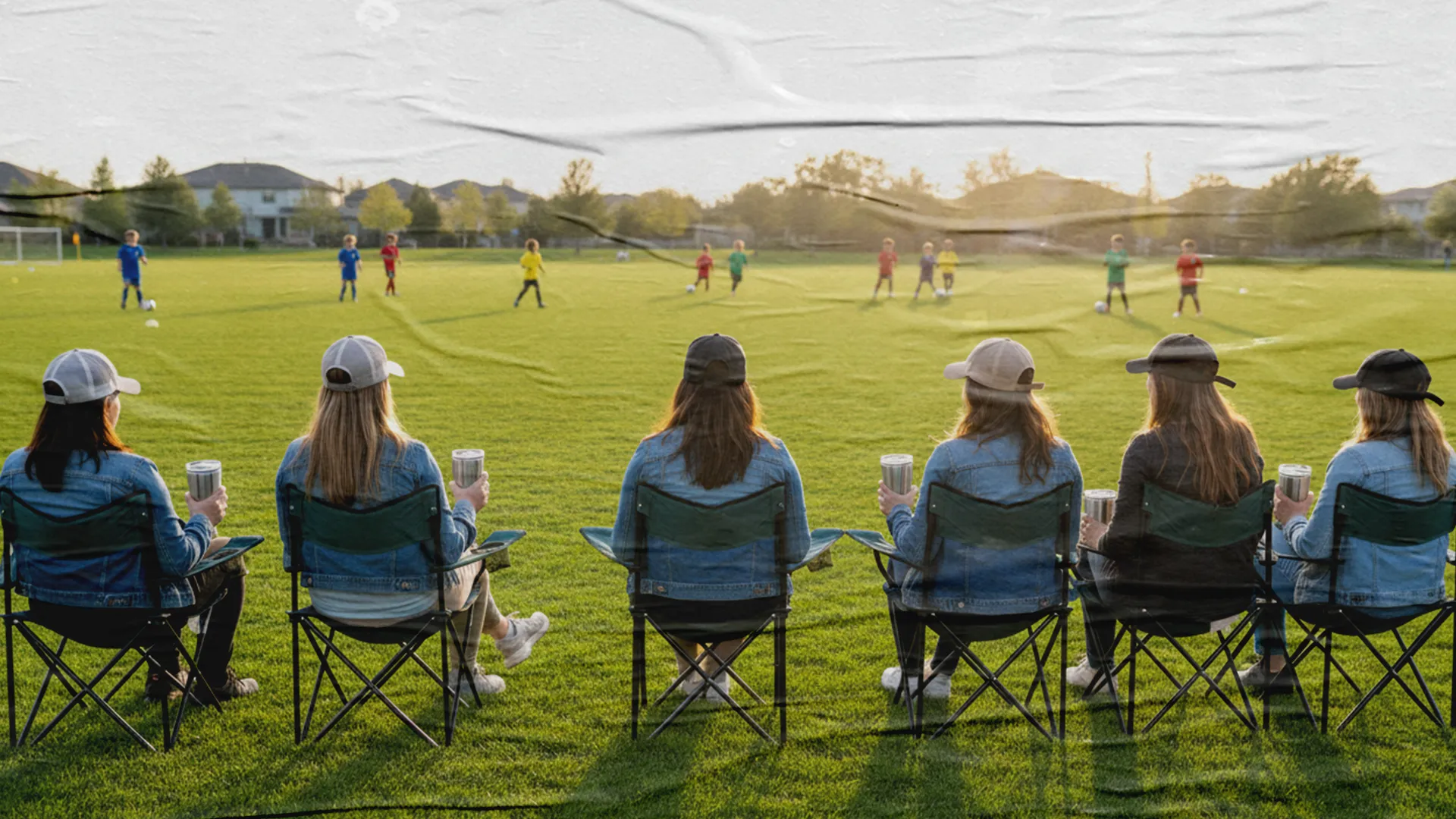
She's got a Yeti in one hand, a snack bag in the other, and three browser tabs open comparing protein powders between plays. She's your ideal customer. She's a sports mom. Every weekend, millions of them gather in one predictable, brand-friendly place: the sidelines of youth sports tournaments.
For the heads of marketing and experiential marketing at CPG companies, this is an opportunity that most brands are still sleeping on.
Sports Moms Control More Spending Than You Probably Realize
Let's start with the numbers, because they are staggering.
Women control an estimated $31.8 trillion in worldwide spending, and that share is growing. Within five years, they’re projected to control 75% of all discretionary spending.
Drill into the household level, and the picture gets even sharper: mothers make the primary purchasing decisions in 80% of American families, are responsible for 85% of household income spending, and remain the dominant grocery decision-makers at 56% versus 43% for men.
Millennial moms alone account for 85% of all consumer purchases.
Sports moms, soccer moms, volleyball moms, basketball moms. This isn't a niche demographic. They are the market.
Why CPG Brands Can't Afford to Ignore Sports Moms
CPG brands fixate on sports moms for one reason: strategy. Moms are category gatekeepers. When she picks a brand, she's picking it for herself, her kids, her spouse, and often her extended family. Win her, and you've won a household. Win a household, and you've potentially won a neighborhood, because sports moms talk.
That compounding loyalty effect is what makes sports moms so valuable. They don't just buy. They recommend, advocate, and repeat-purchase across 20-plus-year windows of household spending. As millennial sports moms' earnings increase, they represent some of the most durable long-term customer relationships any CPG brand can build.
Despite being everywhere in theory, sports moms are notoriously difficult to reach in practice.
The Attention Problem: She's Not Watching, She's Scrolling Past
More than half of American moms, 56%, say that marketers simply don't understand them. The numbers support their frustration. Sports moms average less than three hours of leisure time per day. They are time-poor, ad-saturated, and deeply skeptical of brands that speak at them rather than with them. Standard digital campaigns, even well-targeted ones, are fighting through enormous noise.
The answer isn't a better ad. It's a better location.
Stop trying to reach sports moms where they're distracted. Start showing up where they're already present. That means physical spaces, shared experiences, and moments when she's mentally available, not doom-scrolling at midnight.
Youth sports tournaments are exactly that kind of space. The soccer mom is there voluntarily. The basketball mom is in a positive emotional state because her kid is competing. The volleyball mom has dwell time, sometimes hours of it, surrounded by other sports moms just like her. The receptivity in that environment is categorically different from any digital touchpoint you can buy.
Conviction Takes More Than an Ad. It Takes a Sample and a Conversation.
Getting attention is step one. Turning that attention into a trial requires something more: a real experience with the product.
The most effective CPG activations with sports moms combine three things: product sampling, expert access, and a tangible incentive. Brands like Centrum have demonstrated this playbook by showing up at physical venues where their target consumer already gathers, putting product in her hands, and giving her someone knowledgeable to talk to.
At a youth sports event, this comes to life naturally. A tent near the concession area with cold samples of a new sports drink, a nutritionist available to answer questions, and a coupon she can use on her next grocery run. That's a complete conversion funnel built on a Saturday morning at a tournament. The soccer mom who samples your electrolyte drink at 9am is at the grocery store by Sunday. The basketball mom who got a coupon at halftime remembers it at the checkout.
74% of businesses are now incorporating experiential rewards into their loyalty strategies because lived experience converts in ways that media impressions cannot. When a sports mom samples your product, hears why it was formulated the way it was, and feels like your brand understands her life, she doesn't just buy. She remembers.
Loyalty Is Built Through Repetition and Relevance
Getting a sports mom to try your product once is a win. Getting her to choose it every week at the grocery store is the business.
Here's what makes youth sports an unusually powerful loyalty engine: the schedule is built in. Tournaments run every weekend, sometimes every other weekend, for months on end. If your brand is present at the first tournament, you have a natural opportunity to be there for the next one and the one after that. The cadence of youth sports seasons creates the kind of repeated brand exposure that drives long-term recall and preference.
It's not just repetition. It's the association. Your brand becomes part of a memory the sports mom values: her kid scoring a goal, her volleyball mom crew cheering in the stands on a hot afternoon, the moment she discovered that energy bar she now buys by the case. Experiences matched to customers' interests create meaningful memories, and those memories are what loyalty is actually made of.
Loyalty programs, tiered incentives, and exclusive early access to new products all reinforce this. The foundation, the reason a sports mom cares enough to engage with a loyalty program at all, is the experience she had with your brand in person, on a Saturday, surrounded by her people.
The High-Income Sports Mom Problem: Where to Find Her
Not all sports moms are equally easy to reach, and CPG brands targeting premium SKUs know this all too well.
Affluent, college-educated sports moms are your highest-value segment: less price-sensitive, values-driven, willing to pay for quality, and highly influential within their social networks. Once they adopt a brand, they advocate for it hard. They are also among the most difficult to reach at scale. They're not watching linear TV. They tune out generic digital ads. They have the resources to avoid interruption-based marketing and the discernment to dismiss anything that feels inauthentic.
Here's the exception: sport-specific youth tournaments.
Lacrosse, volleyball, and hockey moms fall into a different economic bracket than most sports mom audiences. Tournament registration fees alone run into the hundreds or thousands of dollars per family per season, before travel, hotels, gear, and food. The families who show up to these tournaments, week after week and season after season, skew heavily toward the affluent working-mom profile that CPG brands spend enormous digital budgets trying to reach through screens.
At a lacrosse tournament, she's right there. In a folding chair. With three hours of time to burn between games and zero inbox to check.
The Convergence That Changes Everything
Youth sports tournaments are uniquely powerful for CPG experiential marketing for one reason: everyone relevant is there at the same time.
The influencer, the child athlete who shapes what gets bought at breakfast, what goes in the snack bag, what energy drink gets added to the cart, is there competing? The decision-maker, the sports mom who will actually execute the purchase, is there watching, waiting, and receptive. The community of peer sports moms who shape her purchasing norms through recommendation and conversation is there, too.
The soccer mom trusts the brand of the soccer mom next to her. The basketball mom asks the basketball mom in the next chair which protein bar her kid swears by. These conversations happen organically at every tournament, every weekend, with or without your brand in the room.
You don't need a multi-touch digital campaign to create this alignment. The tournament does it for you. Your job is to show up with a compelling activation, put the right product in the right hands, and let the environment do what environments do.
Three things connect attention, conviction, and loyalty in a single afternoon:
- Attention: Your brand is physically present in a space the sports mom chose to be in
- Conviction: She samples the product, talks to an expert, and leaves with a reason to buy
- Loyalty: She sees you at the next tournament, and the next, until your brand is simply part of how her family's weekend is done
Fastbreak AI Knows Sports Moms
Fastbreak AI has spent years building relationships with youth sports tournament operators across the country, the people who control access to these events and the sports moms who fill the stands. Fastbreak Connect® is the product activation program that puts CPG brands inside those environments: curated experiential activations at lacrosse, volleyball, hockey, soccer, and basketball tournaments, in front of the exact sports mom segments that move your numbers.
We know where she'll be. We know which sports she watches. We know how to help your brand show up in a way that feels earned, not forced.
Connect with us at Fastbreak AI. Let’s create your next winning CPG activation, right where sports moms are most engaged. Reach out now, and we’ll show you how to get started.
Get in touch with Fastbreak AI to learn more about Fastbreak Connect
FAQs
How much purchasing power do sports moms actually control?
Women control an estimated $31.8 trillion in worldwide spending and are projected to control 75% of all discretionary spending within five years. At the household level, mothers make the primary purchasing decisions in 80% of American families and are responsible for 85% of household income spending, with millennial moms alone accounting for 85% of all consumer purchases.
Why are sports moms hard for CPG brands to reach through traditional advertising?
56% of American moms say marketers simply don't understand them, and sports moms average less than three hours of leisure time per day, making them time-poor, ad-saturated, and skeptical of brands that speak at them instead of with them. Affluent, college-educated sports moms are especially difficult to reach since they tune out linear TV and generic digital ads.
Why are youth sports tournaments an effective place to reach sports moms?
At a tournament, a sports mom is present voluntarily, in a positive emotional state, and often has hours of dwell time surrounded by other sports moms just like her. That receptivity is categorically different from any digital touchpoint a brand can buy, making it an ideal environment for product sampling and expert conversations rather than passive ads.
What makes a CPG activation effective at a youth sports tournament?
The most effective activations combine product sampling, expert access, and a tangible incentive, such as a tent offering cold samples, a nutritionist to answer questions, and a coupon for a future grocery run. This mirrors why 74% of businesses are now incorporating experiential rewards into their loyalty strategies, since lived experience converts in ways media impressions cannot.
Which sports draw the highest-value sports mom audience for CPG brands?
Lacrosse, volleyball, and hockey tournaments tend to draw a more affluent working-mom audience, since registration fees alone can run into the hundreds or thousands of dollars per family per season before travel, hotels, gear, and food. Families who show up to these tournaments repeatedly skew heavily toward the higher-income demographic that CPG brands often struggle to reach through digital channels.


