




Door sales feel fine until they aren't. One slow Saturday can leave you short on an event you spent months planning. Preselling your tickets shows you where you stand weeks before the day arrives. Here's how to sell tickets for an event in a way that protects your bottom line.
Executive Summary
- Preselling tickets locks in guaranteed revenue before event day, regardless of weather (subject to your refund policy) or walk-up turnout.
- Open ticket sales 8 to 12 weeks out and build tiered pricing with real deadlines to drive purchases at launch.
- 81% of ticket buyers want to know when tickets go on sale, so your email list is your most reliable presale channel.
- Actual scarcity, like showing "74 tickets left," converts buyers better than vague urgency claims.
- Fastbreak Ticketing™ delivers tickets by text or email for youth tournaments, and buyers don't need an app.
Why Door Sales Are a Risky Revenue Strategy
Venue deposits, equipment rentals, staffing, insurance: most event costs are fixed before a single attendee walks through the door. If you're counting on door sales to cover those bills, you're betting on things you can't control.
Weather turns. A bigger event pops up across town. Your marketing doesn't land the way you planned. Any of those scenarios can gut your walk-up numbers, and your costs won't adjust to match.
Mastering online event ticketing is how you know whether your event is financially viable before you're too far in to change course. Except for certain legal exclusions, every ticket sold in advance is guaranteed revenue, regardless of what happens on event day.
When to Start Selling Tickets
Most events should open ticket sales 8 to 12 weeks before the event date. Large conferences or festivals requiring travel planning need 4 to 6 months of runway. Smaller community events can often sell through in 3 to 4 weeks.
What matters as much as your launch date is understanding how sales actually behave over time. Ticket purchases cluster at the beginning and end of a sales window, with a slower middle stretch in between. Plan your pricing tiers, promotional pushes and urgency tactics around that curve, and you'll fill the gaps before momentum stalls.
How to Price Your Tickets for Presale Success
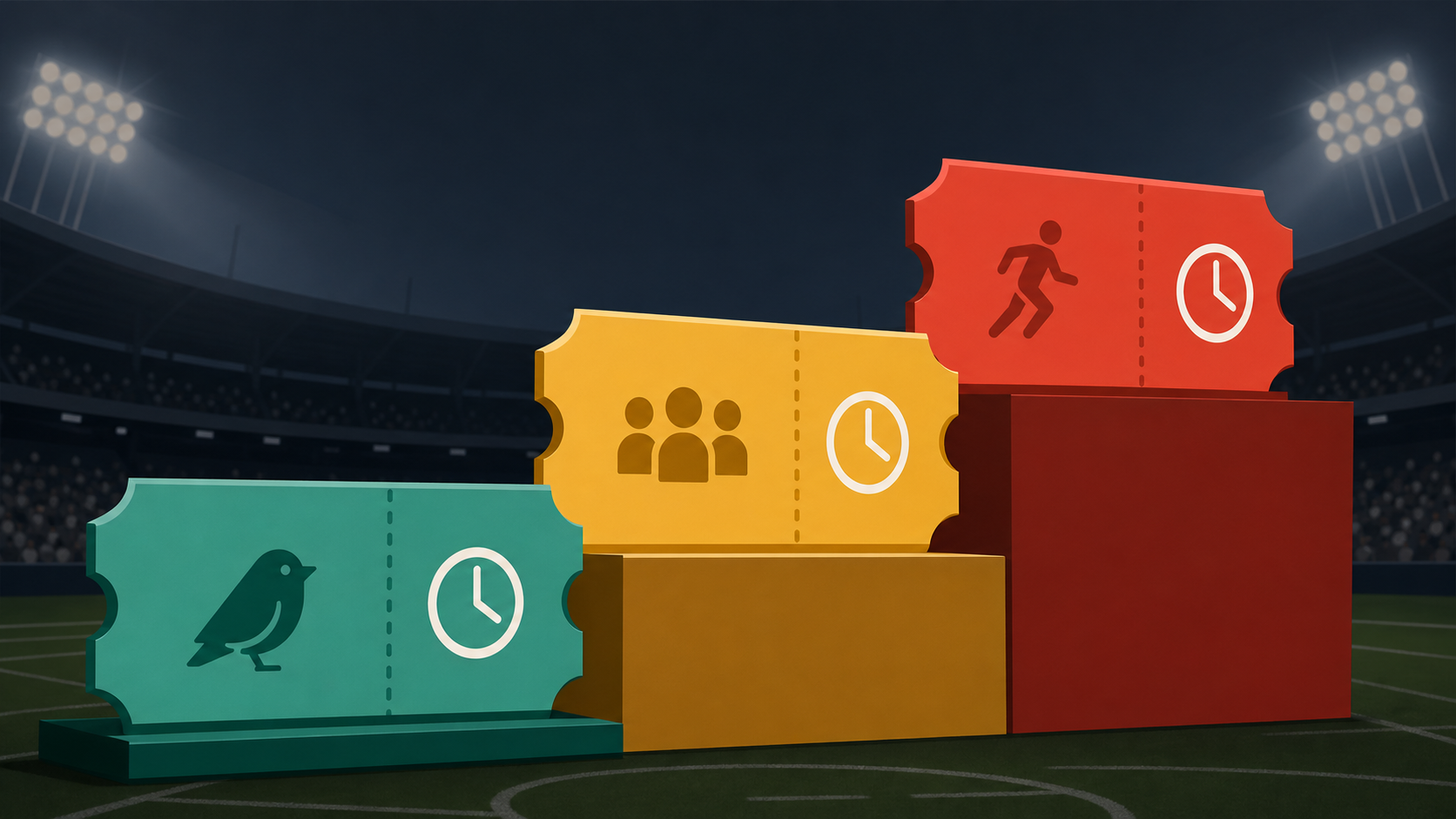
Tiered pricing does three jobs across your sales window. Early bird rates drive a burst of purchases at launch. General admission pricing holds steady through the middle stretch. A last-chance tier captures buyers who were watching and finally decide to commit.
Set your early bird price with a real deadline, and review your ticketing pricing so you know what each tier nets after fees. When the timer runs out, the price goes up. That sequence trains buyers to act and not wait.
- Limit early bird quantity. "First 100 tickets at this price" creates scarcity that a date deadline alone doesn't.
- Add a VIP or bundled tier at launch to capture high-intent buyers at every price point.
- Keep the price ladder visible so buyers see what the next tier costs.
According to the 2026 Ticket Buyer Report, 81% of ticket buyers want to hear when tickets go on sale for events they care about. Make the first tier worth acting on immediately.
How to Build an Audience Before Tickets Go on Sale
Pre-launch demand capture is simple in concept: collect interest before you have anything to sell. A landing page with a waitlist signup, a countdown timer and a few social teasers can generate a warm audience weeks before tickets go live.
Tactics worth building into your pre-launch window:
- Put up a landing page the day you announce. Capture name and email. That list is yours regardless of which ticketing service you use later.
- Run a countdown on social to the on-sale date. Tease the lineup, venue or early bird price without revealing everything.
- Pin your registration link on Facebook, Instagram and your bio so the opt-in is one tap away.
Those signups only pay off if you can reach them again. Email is that channel. Social reach is borrowed. Your list is yours.
How to Launch to Your Email List First
Send your presale to your email list before you announce anywhere else. Even a 24 to 48 hour head start gives your most loyal audience first access and creates a reason to stay subscribed.
A simple three-email sequence works well:
- Announcement email: exclusive early access, link live, deadline clear
- Reminder at 48 hours: how many tickets remain at the current price
- Last-chance email: sent the morning the early bird price expires
Keep the copy tight. State the price, the deadline and the link. According to the 2026 Ticket Buyer Report, email is one of the two strongest drivers of live event purchase decisions, alongside reviews. Past attendees already know your event, so they're your easiest buyers to reach.
The urgency in your emails should be real. If 100 early bird tickets exist, say so. When they're gone, raise the price. Manufactured scarcity breaks trust fast, and your list is too valuable to burn.
How to Use Social Media to Drive Presales
Organic posts build awareness. Paid ads close the gap. You need both, but timing matters.
Start with platform fit. Facebook and Instagram reach broad community audiences, especially parents and families. TikTok and Instagram Reels skew younger, so if your event targets under-35 attendees, short-form video should carry most of your pre-launch effort.
A simple content calendar for a two-week presale window:

- Week before on-sale: tease the event (venue, lineup, vibe) with no ticket link yet, just curiosity.
- On-sale day: post the link across every platform, pin it, put it in your bio, and run a paid ad that morning targeting people who've engaged with your page.
- Days 2 to 5: show social proof by reposting shares and noting how many tickets sold in the first 48 hours.
- Final 3 days: switch to urgency content around remaining tickets, price increases or deadlines.
Save your paid budget for on-sale day and the last-chance push. Organic content does the warming up; paid ads do the converting. Running ads too early on cold audiences burns spend before intent is there.
One thing worth avoiding: posting the same graphic repeatedly. Vary the format. A short venue video, a countdown Story and a plain-text post about ticket numbers all perform differently and keep your audience engaged through the sale.
How to Create Urgency Without Burning Trust
Urgency works when it's real. Fake countdown timers and invented "limited availability" notices might spike a few clicks, but they erode the trust you need to sell tickets to the same audience next year and may bring you legal headaches.
Real scarcity is straightforward: if you have 200 tickets, say so. Show how many are left. When the early bird tier sells out, close it and move to the next price. That sequence is credible because it actually happens.
A few tactics that hold up:
- Show remaining ticket counts once you're below 50% capacity. "74 tickets left" is more compelling than "limited availability."
- Announce price increases in advance, at purchase and in your reminder emails. "Price goes up Friday at midnight" gives buyers a fair heads-up.
- Add a time-limited bundle (parking, a program, early entry) for the first week only. When the window closes, it closes.
Your goal is a buyer who feels like they got the inside track. Buyers who were warned about a price change and acted in time feel like they won.
How to Use Group Discounts and Referral Incentives
Group buyers behave differently than solo ticket holders. When someone purchases tickets with friends or family, they've made a social commitment. That peer accountability tends to produce higher show-up rates and a better atmosphere at the event itself.
Group discounts work best with a clear threshold and a visible incentive, especially once you've made the business case for going cashless at the gate. Four tickets is a reasonable floor for most events. Keep the discount in the 10 to 15 percent range so the savings feel meaningful without cutting into your margin on a presale tier you've already priced.
Referral programs follow a different mechanic. You reward a buyer when someone they refer actually buys. A simple credit toward their next ticket or a small cash-back amount is enough. Make the referral link easy to share immediately after checkout, while the buyer's enthusiasm is highest.
A few things that make both programs work in practice:
- Set a firm expiration on group rates so buyers don't wait for their whole group to decide.
- Track referral links individually so you can see which buyers are driving the most traffic.
- Communicate the incentive before checkout, not buried in a confirmation email nobody reads.
Both tactics give your existing buyers a reason to do your marketing for you, which is the cheapest presale channel you have.
How to Keep Ticket Sales Moving Mid-Window
The middle of any presale window is where momentum slows. Your launch spike has passed, the deadline is too far off to create urgency and sales dip. Plan this stretch ahead of time and your final numbers will show it.
A few tactics that fill the gap:
- Send a "last tickets at this price" email when you're within 20 to 30 tickets of your next tier. The trigger is real inventory, not a countdown you invented.
- Post a social proof update like "187 people already registered," a low-effort piece of content that does real work.
- Drop a programming announcement mid-window. New information gives fence-sitters a reason to decide.
- Run a 48-hour flash bundle with an add-on (early entry, a reserved spot or a small perk) that expires before the deadline. Then confirm your gate-day scanning setup before the crowd arrives.
Map these touchpoints onto your calendar when you set your on-sale date. If you're running a six-week window, put a mid-window email on week three and a content drop on week four. The campaigns that sell out rarely do it on launch day alone.
How Fastbreak AI Helps Tournament Organizers Sell Tickets Before Game Day
Fastbreak Ticketing™ delivers tickets instantly by text or email, with no app or account required from buyers. Staff scan from phones they already carry and sidestep the no signal nightmare that can stall gates at crowded venues. That low-barrier experience removes the hesitation that kills presale conversions before they happen.
Organizers can also place sponsor messages on tickets, using their own sponsors or sponsors sourced through Fastbreak Connect, so each presale ticket sold becomes an additional revenue touchpoint beyond the gate. The Fastbreak App syncs schedules, scores and updates to families, which gives you a direct line to the people already engaged with your event.
If you're running youth tournaments and want to stop depending on walk-up revenue, the shift toward youth sports mobile ticketing makes presales as simple for your buyers as they are for your staff.
Final Thoughts on Building a Ticket Sales Strategy That Works
Presales secure your revenue and show you whether your event has real demand before game day. The email list you build before tickets go live, the tiered pricing you set up and the mid-window content drops you plan now are what separate a sold-out event from a stressful door count. Put these pieces in place once and they get easier every time you run an event. Contact the Fastbreak team to learn how Fastbreak Ticketing fits into your next event.
FAQ
How do I sell tickets for an event before the event date without relying on walk-up sales?
Open ticket sales 8 to 12 weeks out, build a waitlist landing page before you even list tickets, and send your presale to your email list 24 to 48 hours before any public announcement. Layer in tiered pricing with a real early bird deadline, a mid-window content drop to keep momentum going and a last-chance email the morning the lowest price expires. That sequence converts fence-sitters before event day arrives.
How do I increase ticket sales for an event during the slow middle of a presale window?
Send a "last tickets at this price" email once you're within 20 to 30 tickets of your next pricing tier, post a social proof update showing how many people have already registered and drop a programming announcement to give undecided buyers a reason to act. A 48-hour flash bundle (early entry, a reserved spot or a small perk) that closes before your final deadline can also move buyers who are watching but waiting.
Can I sell tickets online and get paid immediately without high platform fees?
Payout timing and fees vary by platform, so check each platform's payout schedule before you list your first ticket. Fastbreak Ticketing lets buyers purchase in seconds by text or email with no app or account, and your staff scan tickets from phones they already carry. You can also place sponsor messages on tickets to add revenue beyond ticket sales.


