







Executive Summary:
- Ice rink resurfacing requires 15-20 minutes per transition, a constraint that compounds across every rink and age division in your schedule.
- A single team withdrawal in a manual build ripples through pool balance, bracket seeding, rink assignments, and locker room rotations all at once.
- Stay-to-play hotel rebates and SMS-based gate ticketing with sponsor placements are revenue streams your schedule already makes possible.
- Directors who run ticketing, housing rebates, and sponsorships together can see meaningful additional event revenue per event, without raising team registration fees.
- Fastbreak for tournaments applies Zamboni buffers, coaching overlaps, and multi-venue drive time as set constraints at generation, not manual fixes after the fact.
Why Tournament Scheduling Is Different for an Ice Hockey Tournament Director
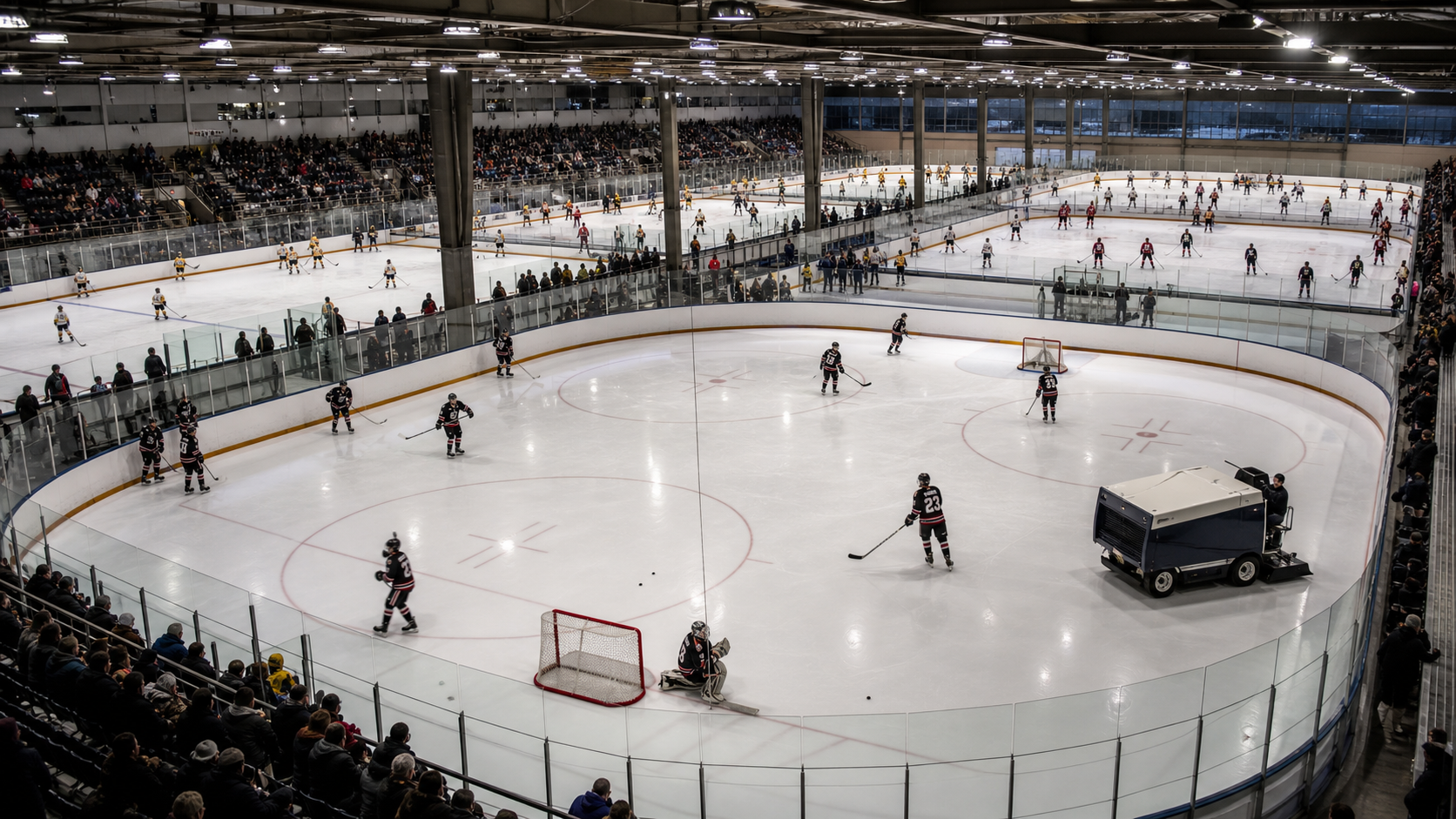
Ice hockey tournament scheduling carries constraints that simply don't exist in other youth sports. A basketball director can pack eight courts into one gym and call it done. A hockey director is coordinating across multiple arenas, managing a piece of equipment that runs between every single game, and aligning age-division rules that change period lengths across brackets simultaneously. Managing all of that inside a spreadsheet creates wasted ice time, frustrated families, and an event that's hard to grow. See how hockey tournament management software handles these constraints end-to-end.
The Ice Time Constraint No Other Sport Has
Ice rink resurfacing takes 15-20 minutes and must be factored into every slot change in a tournament schedule. That buffer compounds fast. Across four rinks running games from 7 AM to 10 PM, those Zamboni windows add up to hours of scheduled dead time that must be placed correctly or you lose ice and fall behind. Period lengths also vary by age division, so a mite bracket runs shorter slots than a bantam bracket. Scheduling those divisions sequentially in a spreadsheet creates conflicts the moment you layer them across shared ice.
Multi-Arena Logistics and the Drive-Time Reality
Most hockey events span two, three, or more standalone facilities, each with its own ice schedule, locker room rotation, and staff. Drive time between arenas is a real constraint, especially when a coach runs teams in two different age groups. Scheduling tools that treat each venue as an isolated grid surface these conflicts only on game day, when nothing can be fixed.
USA Hockey Compliance as a Scheduling Dependency
Before a single game slot gets placed, eligibility must be confirmed. Understanding rules vs priorities in automated tournament scheduling matters here: USA Hockey requires current registration, age-appropriate division placement, and SafeSport certification for all participating adults. When compliance verification runs in a separate system from registration, errors slip through at the worst possible moment, and fixes are manual and time-consuming.
Directors solving all of this across disconnected software to an all-in-one platform rebuild the same constraints from scratch every time. When anything changes, every layer needs a manual update, wasted ice costs money, and revenue growth becomes impossible without raising fees.
The Core Challenges of Tournament Scheduling at Scale
Building a hockey tournament schedule gets harder in a specific, nonlinear way as your event grows. Going from 16 teams to 64 does not simply multiply the work by four. It multiplies every dependency by every other dependency. Rink assignments, pool compositions, bracket seeding, Zamboni windows, and coaching availability all interact. Managing that web manually means any change anywhere requires rebuilding it all.
The Cascade Problem in Multi-Rink Scheduling
A single team withdrawal in hockey does not free up one slot. It ripples through pool balance, bracket seeding, rink assignments, resurfacing sequences, and locker room rotations. Every downstream constraint needs manual revalidation. The same cascade hits when a rink goes offline mid-event or a referee does not show. In a spreadsheet, there is no fast path to resolution. Directors can spend 10 to 15 hours rebuilding what should take minutes. The pool-to-bracket transition compounds this further: timing the cutover from pool play to elimination brackets without creating two-hour dead windows or three-game pileups is one of the genuinely hard problems in tournament scheduling, and it is where manual workflows break most visibly at scale.
Coaching Overlap Across Age Divisions
Youth hockey coaches frequently run multiple teams across different age divisions. When those teams play at the same time at different rinks, the conflict is real and often invisible in a manual build until game day. Managing coach conflicts and team rest time needs to be set as a constraint at the beginning of schedule generation, not surfaced during final review. When it is treated as an afterthought, fixes require touching games across multiple pools, which restarts the cascade problem.
The Registration-to-Schedule Gap
Directors using separate registration and scheduling systems face a manual handoff between registration close and bracket generation. Getting there requires manual verification of team counts, payment status, division assignments, and eligibility documents. Those steps live in different systems, and every handoff between them introduces transcription errors that have an impact on bracket accuracy before a single puck drops. Attitude of Gratitude runs over 1,000 teams across 10 to 15 venues in a single weekend and rebuilt that entire workflow to close that gap.
How a Unified Platform Handles Tournament Scheduling for Ice Hockey Events
The problem with manual hockey tournament scheduling isn't any one constraint in isolation. It's that each constraint depends on every other one, and a single change would ripple through all of them at once. A unified platform does exactly that: registration, scheduling, housing, and payments share one data layer, so every module draws from the same real-time state of the event.
The AI-powered sports scheduling software inside Fastbreak for tournaments is the same engine trusted by the NHL, AHL, and 100+ professional leagues worldwide. That's not a marketing bridge. It's a technical one. The same constraint-solving logic that runs pro league operations now runs your amateur hockey weekend.
Registration Feeds Directly Into Schedule Generation
When payment confirmation, eligibility verification, and division assignment flow directly into the scheduling engine, the gap between registration close and published schedule collapses from days to hours. Zamboni buffers, locker room windows, multi-venue drive time, and coaching overlaps are configured once as rules. The engine applies them across every division and rink simultaneously at generation.
| Scheduling Constraint | Manual Spreadsheet Approach | Integrated AI Scheduling |
|---|---|---|
| Zamboni resurfacing buffer | Set manually per slot | Auto-applied to every transition |
| Coaching overlap conflicts | Caught post-build, if at all | Flagged at setup, resolved at generation |
| Multi-rink drive time | Manual distance check | Constraint-solved during generation |
| Registration-to-schedule handoff | Manual export and re-entry | Real-time data flow, no handoff |
| Mid-event schedule repair | Full or partial manual rebuild | Minutes; only affected games touched |
Mid-Event Repair Without a Full Rebuild
When a rink goes down or a team forfeits, the cascade problem becomes real and immediate. An integrated engine trained on the full constraint set repopulates only the affected slots, pushes the updated schedule to the Fastbreak AI app automatically, and leaves every unaffected game untouched. Zamboni buffers and locker room rotations carry through the repair without any manual adjustments on your end.
Housing and Logistics Considerations for Ice Hockey Tournament Directors
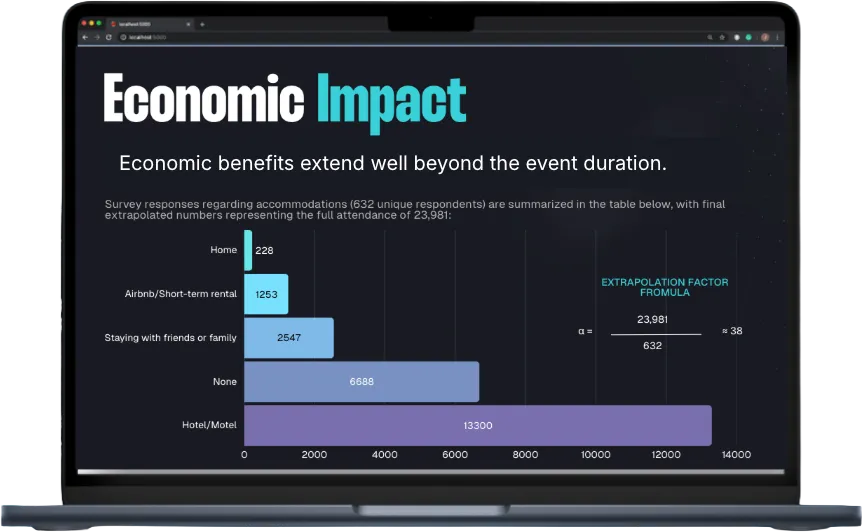
Ice hockey tournaments run multiple days almost by default. Families travel from hours away, rinks open early, and a 6 AM puck drop is routine at the competitive level. That makes hotel proximity to the arena a functional necessity. A family staying 40 minutes from the rink for a 6 AM game is not sleeping well, and that experience reflects directly on your event.
Stay-to-Play as a Revenue and Compliance Dependency
The best stay-to-play hotel management software handles what stay-to-play demands at most competitive youth hockey tournaments: you negotiate a hotel block, earn a rebate per room night booked through that block, and use that revenue to offset venue costs. The real work is monitoring compliance before attrition clauses trigger. Without a live dashboard, that monitoring is a manual cross-reference across booking confirmations, team rosters, and registration records. Connected housing management converts it into a visible revenue line you can track mid-event without touching a spreadsheet.
Schedule-First Housing Reduces Unnecessary Nights
Integrated with Fastbreak for tournaments, Fastbreak Travel applies a schedule-first approach: game times are optimized before registration opens to minimize overnight stays required per team. Families aren't booked into an extra hotel night because the schedule wasn't built with travel in mind. The rebate structure still delivers revenue to the operator. Generic stay-to-play platforms can't replicate that because they have no connection to the scheduling engine upstream. The youth volleyball tournament weekend guide shows how this same schedule-first approach applies across multi-day events.
Whole-Home Rentals and Coach Accommodation
Hockey families often prefer whole-home rentals over hotel rooms. Kitchen access, shared living space, and room for gear make more practical sense for a weekend with 6 AM ice times. Fastbreak Travel's inventory includes whole-home rentals with the same compliance enforcement and rebate structure as hotel bookings. Coach travel runs through the same workflow, paid from club funds and consolidated into the compliance block, which gives clubs a concrete retention benefit most programs can't offer without an integrated system.
Revenue Opportunities Embedded in Tournament Scheduling
Hockey tournaments already generate spectator crowds without any extra effort on your part. Multiple family members per team, games running across a full weekend at two or three rinks: that foot traffic is revenue waiting to be captured. The schedule makes it possible, because every game slot is also a ticketing touchpoint, a sponsor impression, and a room night on the compliance block.

Gate Ticketing at Multi-Rink Events
SMS-based mobile ticketing sends a QR code by text immediately after purchase. Families scan it from their phone at the gate, with no app to download, no account to set up, and no hardware required. The system processes credit-card payments on-site and stores ticket data directly on the scanning device, so gates keep moving even when rink WiFi drops. Every digital ticket also carries sponsor branding, which means each scan is a guaranteed sponsor impression at no added cost to you.
| Revenue Stream | Mechanism | Operator Effort Required |
|---|---|---|
| Gate ticketing | SMS QR tickets, cashless gate payment | Configure once per event |
| Hotel rebates | Per-room-night rebate from stay-to-play block | Monitored via live dashboard |
| Sponsor placements | Brand logos and offers on digital ticket passes | Sold once; delivered automatically |
Sponsorships Through the Ticketing Layer
Sponsor logos on digital event tickets, placed directly on passes, mean every gate scan at every rink across the full tournament weekend becomes a sponsor impression, with coupon redemption rates trackable after the event. You sell the inventory once. The mechanism runs inside the ticketing workflow without any additional setup per game.
Directors who run all three revenue streams together can see additional event revenue per event, without raising team registration fees.
Choosing a Platform for Tournament Scheduling as an Ice Hockey Tournament Director
Before committing to any scheduling software, ask the right questions. Not every scheduling software solves the same problem. Some fill slots sequentially and call it a schedule. Others run true constraint optimization, where Zamboni buffers, coaching overlaps, locker room turnover, and drive time between arenas are solved simultaneously at generation, not patched manually afterward.
Scheduling Depth Questions Every Hockey Director Should Ask
- Does the engine apply resurfacing buffers automatically to every transition, or do you configure each slot by hand?
- Can it solve coaching overlaps across age divisions at generation, or does fixing them require post-build drag-and-drop?
- When a rink goes offline, does it repair only affected games, or does the whole bracket need a rebuild?
- Does registration flow directly into the scheduler, or is there a manual export between the two?
Integration Criteria That Cannot Be Negotiated
A platform disconnected from housing and ticketing forces manual reconciliation every time a team registers or a room block updates. The integrated data flow, where a schedule change ripples through housing compliance dashboards and ticketing capacity in the same action, is the precondition for revenue stacking. Software that treats each module separately will not deliver the improvement in your processes that makes capturing ancillary revenue possible.
Pricing structures vary across the market. Assess total revenue impact per event, not subscription cost alone. The constraint-solving tech inside Fastbreak is trusted by 100+ professional leagues worldwide, including the NHL, and that same engine now runs amateur hockey weekends.
FAQ
How do you build a hockey tournament schedule that accounts for Zamboni resurfacing windows across multiple rinks?
Start by configuring resurfacing buffers as a standing rule before you generate the schedule, not as a manual slot adjustment afterward. Fastbreak for tournaments applies those 15-20 minute transition windows automatically to every game slot across every rink simultaneously, so the buffers compound correctly through a full day of play without requiring you to recalculate by hand each time a division changes.
Can I build a hockey tournament schedule without manually syncing registration data and bracket seeding?
Yes. When registration, payment confirmation, and eligibility verification flow into the scheduling engine directly, the handoff between registration close and published schedule collapses from days to hours. Fastbreak for tournaments runs that as one continuous workflow, so division assignments and team counts populate bracket generation without a manual export step in between.
What's the difference between sequential slot-filling scheduling software and true constraint optimization for a hockey tournament?
Sequential slot-filling places games one at a time and patches conflicts after the fact, which means coaching overlaps and Zamboni windows surface as manual fixes during final review. Constraint optimization solves venue availability, resurfacing buffers, coaching overlaps, and drive time between arenas simultaneously at generation. Conflicts get resolved before the schedule publishes, not surfaced on game day when nothing can be fixed.
How should I handle mid-event schedule repair when a rink goes offline at a multi-venue hockey tournament?
An AI scheduling engine that holds the full constraint set repairs only the affected slots and pushes the updated schedule to the Fastbreak AI app automatically, leaving every unaffected game untouched. With a manual spreadsheet, a single rink going down triggers a cascade through pool balance, locker room rotations, and resurfacing sequences that can take hours to rebuild.
What integration criteria should an ice hockey tournament director require before choosing scheduling software?
The scheduling engine must connect directly to registration, housing compliance, and ticketing in one data layer. A platform where a schedule change does not automatically update housing compliance dashboards and ticketing capacity forces manual reconciliation across every function, which blocks the revenue stacking that gate ticketing, hotel rebates, and sponsor placements make possible.


