






You might have noticed that your scheduling software generates brackets quickly but leaves you hunting for coach conflicts and uneven rest periods after the fact. Tournament fairness scheduling means solving these problems before publication, not after teams start complaining. When Coach Thompson is assigned to two simultaneous games or Team A gets half the recovery time of Team B, you're fixing avoidable mistakes instead of running your event.
Executive Summary:
- Coach conflicts and uneven rest time create competitive unfairness and force manual schedule fixes
- Heuristic scheduling tools generate brackets that require hours of post-publication cleanup work
- Fastbreak AI uses constraint-based optimization to eliminate coach conflicts mathematically before schedules publish
- The system calculates drive time between venues and balances rest periods across all teams simultaneously
- Fastbreak AI applies NBA-grade scheduling algorithms trusted over 100 major pro leagues to youth tournaments
What is Coach Conflict Scheduling and Team Rest Time Management
Rest time management controls the recovery window between games. If Team A plays at 9 AM and again at 10:30 AM while Team B gets three hours between matches, you've created an uneven competition before tipoff. A bracket optimized for rest gives every team a minimum 90-minute recovery window, so no squad walks into a semifinal already fatigued from a back-to-back.
Poor rest distribution also increases injury risk. Orthopedic specialists report that children now play three games in one day for their town league, travel team, and school, with insufficient recovery time leading to gradual ligament failure. Fatigued athletes make mistakes that can have consequences beyond a single tournament.
Both constraints multiply as event size grows. A 16-team bracket with five coaches managing dual responsibilities requires hundreds of manual checks. A 200-team multi-day tournament with varying rest requirements across age groups becomes nearly impossible to optimize manually. You end up with schedules that technically work but quietly penalize teams through poor rest distribution or put coaches in impossible positions.
How We Ranked Coach Conflict and Rest Time Scheduling Solutions
We assessed each solution against five requirements that determine whether a scheduling system solves conflict and rest problems or just moves the manual work somewhere else:
- First, coach identification and tracking across multiple teams. If you can't flag that Coach Smith runs both the U14 and U16 squads during registration, the system can't protect against conflicts.
- Second, automated conflict detection that runs continuously as the schedule builds, not as a post-generation report you fix manually.
- Third, multi-venue drive time support. When coaches move between facilities, the system should calculate realistic travel windows and prevent back-to-back assignments at opposite ends of town.
- Fourth, mathematical optimization for rest time allocation. Rule-based heuristics create uneven recovery windows.
- Fifth, integration depth with registration, housing, and facility management. Disconnected systems force you to export spreadsheets and manually cross-reference data, which reintroduces the human error you're trying to remove.
Best Overall Coach Conflict Scheduling Solution: Fastbreak AI
We use the same scheduling algorithms that manage the NBA, NHL, MLS, and 60+ professional leagues to solve coach conflicts and optimize rest time in youth tournaments. The system handles thousands of variables: coach availability, team rest periods, venue capacity, travel distance, and competitive balance.
Fastbreak AI is trusted by 100+ major professional leagues worldwide, including the NBA, WNBA, NHL, MLS, La Liga, and Ligue 1. That same engine now runs youth tournament schedules, giving amateur event operators access to the same mathematical precision that runs the biggest schedules in sports.
Our constraint-based scheduling engine finds the global optimum across tens of thousands of variables. Coach conflicts are eliminated before the schedule is published, not fixed manually afterward. The calculation accounts for direct conflicts (two teams playing simultaneously) and indirect conflicts (insufficient drive time between venues for coaches with consecutive games at different locations).
The system integrates with registration data to automatically map which coaches are associated with which teams. When the schedule generates, the AI blocks overlapping game times and creates buffer periods when coaches must travel between venues.
When weather delays, team dropouts, or last-minute changes occur, Fastbreak recalculates the entire schedule in seconds while maintaining coach conflict elimination and rest time fairness. The engine adapts dynamically without manual intervention.
Fastbreak connects the schedule to housing blocks, mobile ticketing, and sponsor activations through a single integrated platform. When a game time shifts, the ripple moves through lodging assignments, gate access, and brand placements automatically. Your staff spends time running the event rather than reconciling data across disconnected systems. The schedule drives downstream revenue opportunities across your entire operation.
Tourney Machine
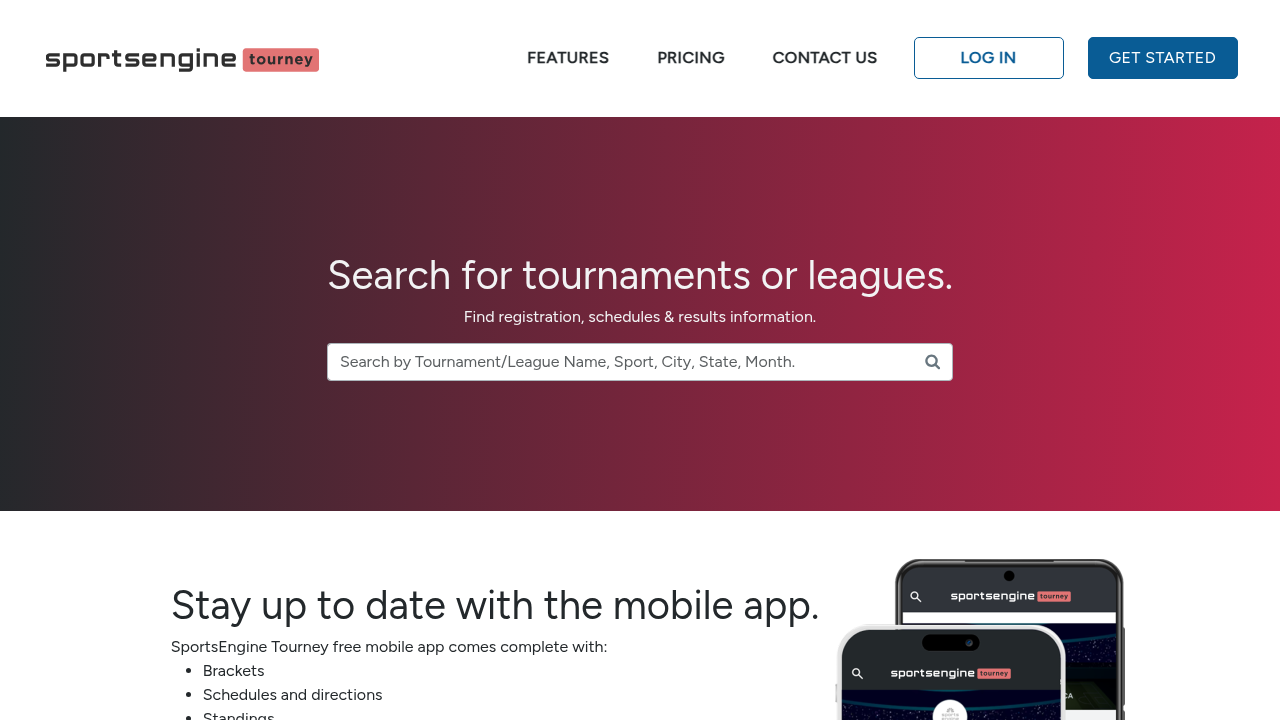
Scheduling software should prevent coach conflicts where one coach oversees multiple teams playing simultaneously. Tourney Machine, owned by SportsEngine, uses heuristic logic that typically requires manual fixes after auto-scheduling runs.
Key Features
Tourney Machine has a number of key features as it relates to managing coach conflicts and team rest time:
- Drag and drop editing for published schedules
- Bracket generation for single-elimination and round-robin formats
- Direct integration with SportsEngine's registration tools
- Cloud-based schedule distribution to teams and families
Limitations
- Cannot mathematically guarantee zero coach conflicts.
- Many operators report spending hours cleaning up overlaps after the automated schedule generates.
- The system ignores travel time between venues, which creates logistical problems when coaches manage teams at different sites across town.
The Bottom Line
Tourney Machine publishes brackets quickly but pushes the hardest optimization work onto your staff after the fact. It's good for small tournaments where you can absorb the labor cost of reviewing and manually adjusting schedules after initial publication.
GotSport
GotSport is the registration system many state soccer associations require for player cards and roster management. The scheduling tools work, but they don't optimize.
Key Features
GotSport has a number of key features as it relates to managing coach conflicts and team rest time:
- Player verification and roster management tied to state association compliance requirements
- Basic scheduling and bracket creation without conflict resolution or rest time balancing
- Per-player pricing
Limitations
- No coach conflict detection.
- You identify overlapping assignments yourself, then rebuild the schedule manually.
- The system won't balance rest time or optimize venue usage across large tournament fields.
The Bottom Line
GotSport manages compliance paperwork. It won't solve scheduling problems where coach availability and team rest matter. It's good for leagues that must use GotSport because their state association mandates it, and where scheduling complexity is minimal.
SportWrench
Volleyball-specific scheduling tools are built around the sport's wave structure and court rotation patterns. SportWrench serves that niche but breaks down when coach conflicts or multi-team rest constraints enter the equation.
Key Features
SportWrench has a number of key features as it relates to managing coach conflicts and team rest time:
- Wave scheduling and court rotations designed for volleyball tournaments
- Registration and bracket management within volleyball format templates
- Sport-specific workflows for pool play and bracket advancement
Limitations
- Template-based scheduling that cannot optimize for coach conflicts or rest time fairness.
- The system requires manual workarounds when constraints multiply.
- No support for multi-sport facilities or cross-venue travel time calculations.
The Bottom Line
SportWrench handles volleyball tournaments but lacks the mathematical engine needed to guarantee conflict-free schedules at scale. It's a good solution for single-sport volleyball operators who need wave logic and don't manage coaches across multiple teams or venues.
Playbook365
Playbook365 bundles housing, scheduling, and facility management into one system. The breadth is useful, but the optimization engine isn't built for complex constraints.
Key Features
Playbook365 has a number of key features as it relates to managing coach conflicts and team rest time:
- Housing coordination tied to tournament registration
- Facility booking and venue assignment
- Bracket generation and schedule publishing
- Payment processing and team communications
Limitations
- No AI-driven constraint solving.
- The system cannot guarantee coach conflict elimination or mathematically balance rest time across hundreds of teams.
- Pricing isn't published, which makes cost comparisons difficult before you're in a sales cycle.
The Bottom Line
Playbook365 is good for mid-sized events where housing logistics matter more than schedule optimization.
LeagueApps

LeagueApps is a club management system built for registration and member communication. The scheduling features use heuristic logic and third-party integrations, not constraint-based optimization.
Key Features
LeagueApps has a number of key features as it relates to managing coach conflicts and team rest time:
- Registration and payment processing for leagues and clubs
- Team and coach communication workflows
- Season scheduling with manual conflict management
- Partner integrations for background checks and travel booking
Limitations
- No native AI scheduling engine.
- Coach conflicts and rest time optimization require manual review or separate software.
- Travel and housing management depends on partner integrations, which creates data silos and adds subscription costs.
The Bottom Line
LeagueApps handles club operations but forces you to manage tournament logistics across multiple disconnected systems. It is good for year-round clubs where tournament scheduling complexity stays low or gets handled through external tools.
Feature Comparison Table of Coach Conflict and Rest Time Scheduling Solutions
| Feature | Fastbreak AI | Tourney Machine | GotSport | SportWrench | Playbook365 | LeagueApps |
|---|---|---|---|---|---|---|
| Automated Coach Conflict Detection | Yes | Manual review required | No | No | Manual review required | Manual review required |
| Mathematical Real-Time Optimization | Yes | No | No | No | No | No |
| Multi-Venue Drive Time Calculation | Yes | No | No | No | No | No |
| Real-Time Rescheduling with Constraint Preservation | Yes | Manual rebuild | Manual rebuild | Manual rebuild | Manual rebuild | Manual rebuild |
| Housing and Travel Integration | Yes | No | No | No | Yes (housing only) | Partner integrations |
| Professional League-Grade AI Scheduling | Yes | No | No | No | No | No |
Most solutions generate brackets that require manual conflict resolution. Fastbreak eliminates conflicts mathematically before publication.
Scheduling Technology Comparison
| Capability | Heuristic / Rule-Based | Constraint-Based Optimization (Fastbreak AI) |
|---|---|---|
| Conflict detection method | Post-generation report; manual fixes required | Eliminated before schedule publishes |
| Rest time balancing | Uneven; applied one team at a time | Mathematically balanced across all teams simultaneously |
| Rescheduling approach | Manual rebuild when changes occur | Full recalculation in seconds with constraint preservation |
| Scale handling | Degrades with event size; errors multiply | Processes tens of thousands of variables in a single pass |
| Staff effort after generation | Hours of cleanup per event | No manual conflict cleanup needed |
Why Fastbreak AI is the Best Coach Conflict and Rest Time Scheduling Solution
Other scheduling tools push conflict resolution and rest time balancing onto your staff after the bracket publishes. Fastbreak AI solves both constraints mathematically before the schedule goes live.
The difference comes down to how the calculation runs. See the FAQ for a breakdown of heuristic vs. constraint-based approaches. Fastbreak was co-founded by John Stewart, who built and sold MapAnything to Salesforce, alongside two PhDs in optimization science with backgrounds from Cornell and the University of Maryland. The same algorithms trusted by the NBA, WNBA, NHL, La Liga, and Ligue 1 now run your weekend tournament schedule, processing tens of thousands of variables across coaches, teams, venues, and time slots in a single pass. When athletes get insufficient rest, inflammation markers increase and performance drops. We model rest as a competitive fairness requirement.
Coach conflicts disappear because the system maps all coaching relationships during registration and blocks overlapping assignments during schedule generation. When you manage six coaches across 18 teams at three venues, the AI calculates drive time between facilities and creates buffer windows automatically.
The same engine that schedules the NBA season now runs your weekend tournament. You get professional-grade optimization without the manual cleanup work.
Final Thoughts on Eliminating Coach Conflicts in Tournament Scheduling
Manual conflict resolution after bracket generation wastes hours you don't have. Tournament fairness scheduling solves coach overlaps and rest imbalances before publication by modeling every constraint simultaneously. The AI maps coaching relationships during registration, calculates venue drive times, and balances recovery windows across hundreds of teams so your schedule works the first time.
When athletes get insufficient rest between games, inflammation markers increase and performance drops. That outcome is avoidable. Fastbreak AI models rest as a competitive fairness requirement and applies the same constraint-based scheduling algorithms trusted by the NBA, NHL, and MLS to your weekend tournament. Your staff stops spending event-day hours tracking down conflicts and starts running a competition teams will want to come back to. See how conflict-free scheduling works before your next event.
FAQ
How Do I Choose The Right Scheduling Software When I Manage Coaches Across Multiple Teams?
Start by confirming the system can automatically detect coach conflicts during schedule generation, not after. Then verify it calculates drive time between venues when coaches manage teams at different facilities. If the software requires manual conflict checks or post-generation cleanup, you'll spend hours fixing problems that shouldn't exist.
Which Scheduling Solution Works Best for Small Tournaments Versus Large Multi-Day Events?
Small single-venue tournaments with minimal coach overlap can function with basic bracket generators like Tourney Machine or SportWrench. Once you exceed 50 teams, manage coaches across multiple venues, or run multi-day events where rest time affects competitive fairness, you need constraint-based optimization that solves all variables simultaneously.
Can Scheduling Software Actually Reduce Injury Risk Through Better Rest Time Management?
Yes. Research on post-match fatigue shows that insufficient rest between games increases inflammation markers and degrades athletic performance. Mathematical optimization distributes rest periods evenly across all teams instead of giving some squads three-hour breaks while others play back-to-back games. Fair rest allocation reduces fatigue-related mistakes that lead to injuries.
What's the Difference Between Heuristic Scheduling and Mathematical Optimization?
Heuristic systems apply simple rules one team at a time, like "don't schedule Team A twice in one hour." Mathematical optimization analyzes every team, coach, venue, and time slot at once to find the best possible schedule across all constraints. Heuristics create schedules that technically work but quietly penalize teams through uneven rest or force manual conflict fixes afterward.
When Should I Switch From Manual Scheduling to Automated Conflict Detection?
If you spend more than two hours per event manually checking coach availability and fixing schedule overlaps, or if you've published a bracket with coach conflicts that forced last-minute changes, you're past the threshold where manual processes make financial sense. The labor cost of cleanup exceeds the cost of software that prevents conflicts before publication.


