






For thirty years, the sponsorship playbook pointed in one direction: buy proximity to a pro league, put your logo on a stadium, rent someone else's fans. That playbook is being rewritten, and the brands rewriting it aren't who you'd expect. Telecoms, insurers, and automakers are quietly moving real budget out of pro sponsorship and into youth sports fields, gyms, and tournament parking lots. A stadium sponsorship rents attention from a crowd of strangers. A youth sports sponsorship buys into a community that already speaks the language of the sport it loves, one built around kids working to get better at something, and that community pays a brand back in a currency a stadium never could. Both sides come out ahead.
Insurers: Buying Local Trust in the Moment It Matters Most
Insurance is a trust business before it's anything else, and trust is exactly what a national ad campaign struggles to manufacture. Regional carriers are finding something national competitors can't cheaply buy: local credibility. People don't feel loyal to a logo. They trust the carrier that shows up in their own community, supporting the same kids they're cheering for.
That trust gets built on the sideline, where a parent watching their child compete is about as present and unguarded as people get all week. A youth tournament runs on a shared language: the standings, the bracket, the specific pride of watching a kid improve over a season. When a regional insurer funds that experience, whether it's better fields, sponsored gear, or an event that just runs smoother, families notice, and what they notice sticks. That's a level of trust no billboard could ever buy. Families spend 7 to 10 hours at these events, fully present rather than scrolling, and in-person brand experiences convert in the 40 to 50 percent range compared to well under 1 percent for paid social. Post-event brand recall runs 50% to 70%, meaning most of the parents who see a carrier at an event remember the name afterward, at the exact time they're thinking about protecting their family.
Telecoms: Fighting Churn With Something a Billboard Can't Do
Regional carriers face a version of the same problem from a different angle: churn. Most subscribers don't leave because of price. They leave because they never felt like more than an account number, and a bill insert can't fix that. What keeps a customer is the sense that their provider is invested in the same community they are, not just collecting a monthly payment from it.
Youth sports gives telecoms exactly that kind of standing, at scale, in the specific markets they're trying to grow or retain. When a carrier sponsors the wifi at check-in or the livestream families use to catch a game from the parking lot, the tournament gets infrastructure it actually needed, and the carrier earns real standing with the people using it. That's the same math that works for insurers: families are on-site for hours, largely undistracted, and walking away with real recall of who showed up for their kids. For a business built on retention, that's worth more than a marketing nicety. It's a customer who renews without a second thought, in exchange for a tournament that ran a little better because the carrier was there.
Automakers: Meeting Car Buyers Mid-Decision, With Their Whole Family in Tow
Automotive brands have a narrower, more practical problem: finding actual car buyers in a context where a vehicle conversation makes sense. Youth sports solves that almost by accident. The parents filling tournament parking lots are overwhelmingly 30 to 50 years old, dual-income, already hauling gear and driving long distances to away games, living the exact use case a family vehicle is built for. Roughly 80% of them say they prefer brands that show up for the things they care about, and a youth tournament lets a car brand show up as part of that world instead of as an ad running alongside it.
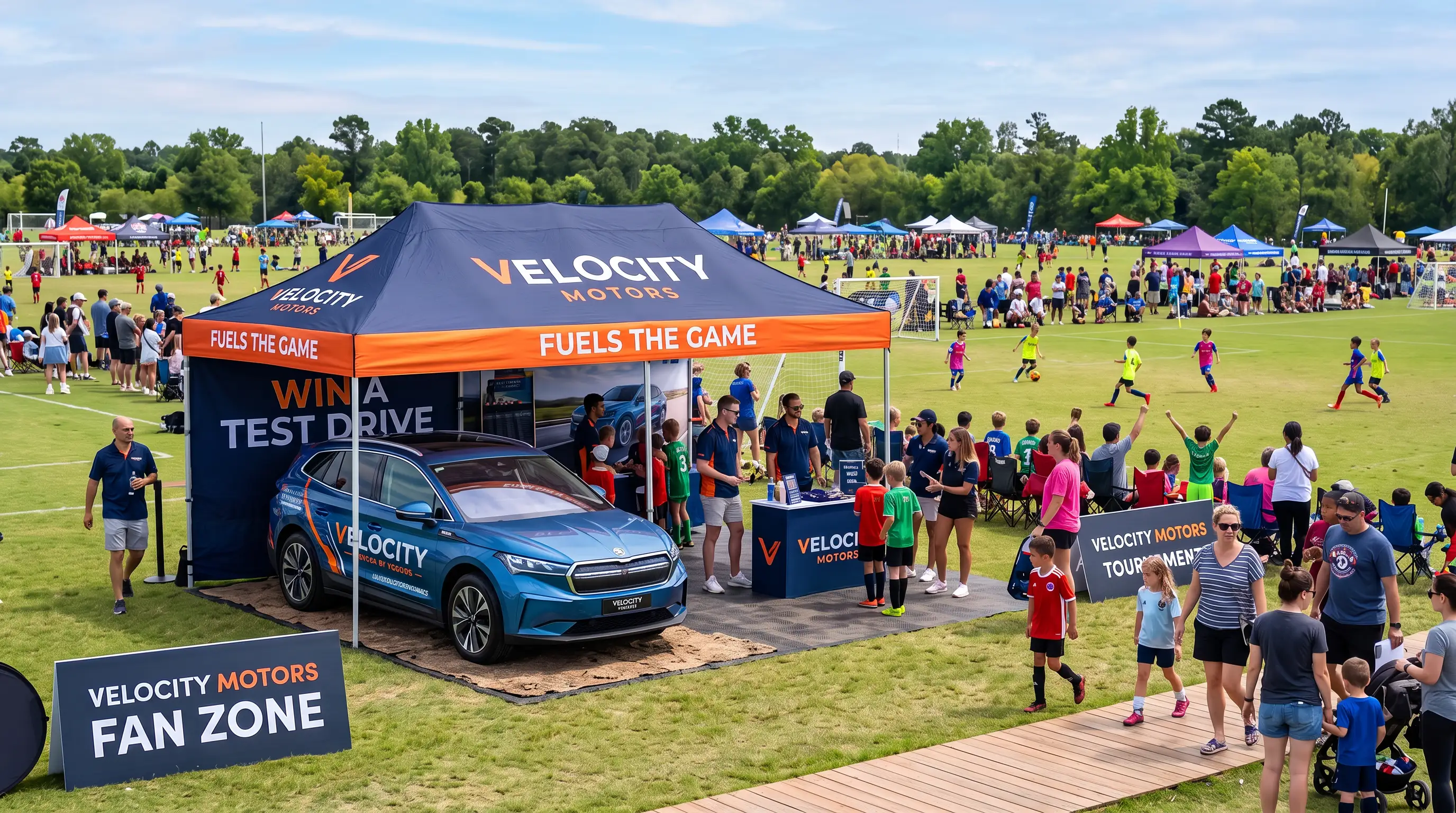
That's why the activations look different for automakers than a banner ad ever could: vehicle displays in the parking lot, branded drop-off and pick-up zones, test-drive conversations, hands-on product interactions, often paired with something the tournament actually needs, like shuttle service for families or a shaded rest area between games. A shuttle or a shaded tent makes the day easier for parents who've been on their feet since sunrise. In return, the brand gets something different. A parent sits in the driver's seat and pictures their own family in it. The payoff mirrors what insurers and telecoms see: in-person experiences drive 40% to 50% conversion from trial to purchase against 0.5% to 1% for paid social, post-event recall lands between 50% and 70%, and 73% of parents say they consider a brand after live event exposure.
The Common Thread
Trust, churn, and buyer conversion are three different problems, but three different industries keep arriving at the same fix. Youth sports offers a trade that pro sponsorship never could. A stadium deal is simple. A brand pays, a league cashes the check, thousands of people glance at a logo without a second thought. A youth tournament sponsorship runs on a longer loop. Real trust flows back to the brand, and the tournament ends up with better gear, better tech, or an easier day for the families running it. Parents and kids feel that difference, because they can see and use what the money actually bought. It's harder for a brand to fake, and a better deal for whoever's standing on the field.
Want to see what this could look like for your brand? Talk to the Fastbreak AI team about mapping your first activation.
FAQs
Why are telecoms, insurers, and automakers sponsoring youth sports instead of pro sports?
A pro sponsorship rents attention from a crowd of strangers, while a youth sports sponsorship buys into a community that already shares the language of the sport. Families spend 7 to 10 hours at a youth tournament fully present rather than scrolling, which gives brands sustained, undistracted exposure that a stadium logo can't replicate.
What kind of ROI do brands see from youth sports sponsorship compared to paid social?
In-person brand experiences at youth sports events convert in the 40 to 50 percent range, compared to well under 1 percent for paid social. Post-event brand recall runs 50 to 70 percent, meaning most parents who see a brand at an event still remember it afterward.
How does sponsoring youth sports help regional insurers?
Insurance is a trust business, and trust is hard to manufacture through national ad campaigns. By funding things like better fields, sponsored gear, or a smoother event experience, regional insurers build local credibility with parents at the exact moment they're thinking about protecting their family.
How does youth sports sponsorship reduce churn for telecom companies?
Most subscribers leave because they never felt like more than an account number, not because of price. When a telecom sponsors tournament infrastructure like check-in wifi or a parking-lot livestream, it earns real standing with the families using it, which translates into customers who renew without a second thought.
Why do automakers sponsor youth sports tournaments?
Tournament parking lots are full of 30- to 50-year-old, dual-income parents hauling gear and driving long distances, the exact use case a family vehicle is built for. About 80 percent of these parents say they prefer brands that show up for what they care about, and 73 percent say they consider a brand after live event exposure.


