





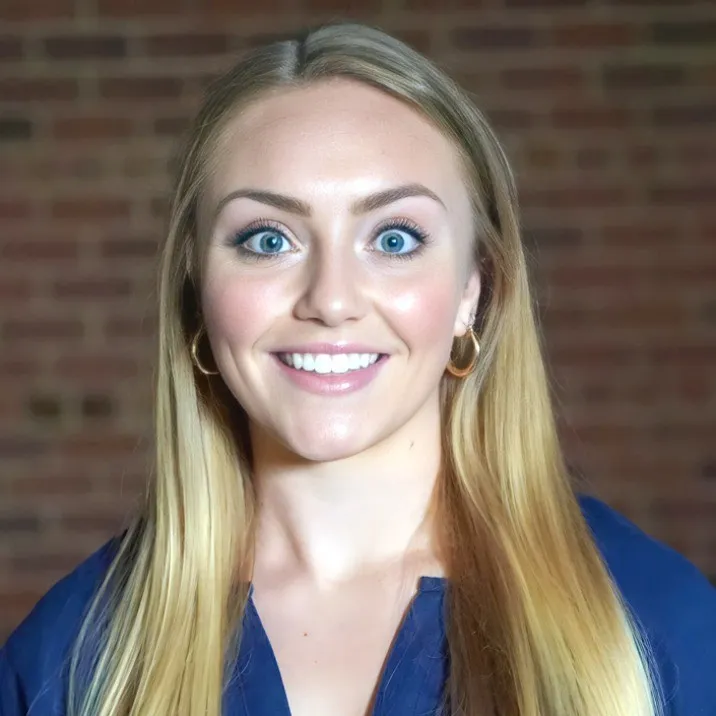
Jordan Taylor has spent the last several years working nearly every angle of the sports business, from fan engagement internships to premium sales to, most recently, customer success at an AI company serving stadiums and arenas. He grew up in Yorktown, Virginia, and studied political science and communications at Christopher Newport University before trading a planned law career for an internship with the Washington Commanders in 2019, executing rally events and fan engagement activations around training camp and watch parties.
1. Briefly share your background.
My name is Jordan Taylor, from Yorktown, Virginia, born and raised. I studied political science with a minor in communications at Christopher Newport University, and I broke into sports with a rally internship for the Washington Commanders in 2019, running fan engagement events like training camp and watch parties.
After graduating in 2020, I did inside sales for the Philadelphia 76ers, New Jersey Devils, and Prudential Center with Harris Blitzer Sports & Entertainment, then moved to Sports Business Journal as a sales planner. From there, I spent three seasons with the San Francisco 49ers as a suite activation representative, managing a book of 25 to 30 accounts, generating about $25 million in revenue, and renewing 14 accounts. I recently started a new role as a customer success manager at Mashgin, an AI company that builds self-checkout kiosks for venues like sports arenas, ski resorts, and convenience stores, where I'm focused on our sports and entertainment accounts.
2. Brands have more options than ever for where to put their marketing dollars. What makes an activation actually land with a brand partner, and what's your argument for sports sponsorship when a skeptic pushes back?
An activation really hits whenever the brand partner makes it their own. The one that comes to mind first is the Brock Purdy Toyota activation. In 2024, he bought his offensive line a bunch of Toyota trucks, and people were stunned. That's a pretty big gift to give a bunch of football players. Then in 2025, he took that same activation and gave it to military veterans instead, which made an even bigger impression on people.
That's part of a bigger shift happening in sports right now: athletes are becoming mega celebrities. LeBron James is the clearest example He's transcended sports entirely. He's not just an NBA player, he's a figure people look up to, whether it's for his personal life, his political takes, or now his move into golf. That's what happens when a brand really commits and makes something their own property instead of just slapping a logo on it.
For a skeptic, I'd point to how much this space has grown. Think about an NBA court: when we were growing up, there weren't all these ads and sponsors on the floor, and now there are so many more. Sports aren't going anywhere. Even with all the noise about AI and where tech is headed, I don't think athletes are replaceable. Right now, sports is a massive industry with a ton of room left to grow.
3. If you were advising a brand on where to put their sports marketing dollars right now, what would you tell them to start doing?
I'd say focus on naming rights, truthfully, because of the impact it has. It's the top of the food chain in terms of cost, but the benefits are just as big. We see this all the time: Staples going to Crypto.com, Heinz Field's rebrand for the Steelers. These places become part of the community's identity. Levi's landing that long-term naming deal for the 49ers' stadium is a great example of that done right, the naming rights become their own entity that coincides with the team. You think of the Lakers, you think of Crypto.com. You think of Levi's, you think of the 49ers. It shows how these dollars can produce something that stays strong for generations.
And then there's what Levi's did during the World Cup. They had to cover up their own logo at the stadium but the way they covered it up, everyone could still tell it was the Levi’s logo. That was free marketing, and really smart marketing. I don't have the metrics on how that translates into revenue, and that's one of the tough things about sports, but those impressions stick in people's minds for generations.
4. When a brand says they want "exposure," what do they actually mean, and how do you translate that into something you can deliver and measure?
When a brand says they want exposure, I think they really mean they want to be seen, but more than that, they want opportunities to be seen. It's one thing if your name is just on a pamphlet at some event as a sponsor. Real exposure is an avenue to connect, to network, to have your presence actually known. Sports Business Journal does this well at their own events, they have presenting sponsors, but those sponsors also show up with activations and pop-ups, talking to people directly, whether that's someone at the entry level or a VP or C-suite exec.
There are a lot of ways to deliver on that. A suite is one of them, being part of a premium club or suite membership within a sports team puts a brand in the room with other companies that are like-minded, that value sports and entertainment and business development the same way they do. And then all the events that come with it, with the 49ers, we ran road trips and golf tournaments for our suite holders that gave them exactly that kind of access. That's what exposure really means, and it's also how you end up being able to measure it.
5. How has what brands expect from a sports partnership changed since you started?
I saw this firsthand with the Niners: brands are a lot more forward now about what they want and what they feel entitled to. That makes sense given where we are as a society: AI, the brink of a tech revolution, everyone wanting to move fast. People don't want to sit around waiting for things to fall into place; they want to act, and the windows for budget decisions are a lot shorter-lived than they used to be.
The World Cup is the clearest recent example. I honestly didn't expect it to be this big in the U.S., but it's been a genuine cultural phenomenon. Watch parties everywhere, even across the Bay Area, in places you wouldn't necessarily call sports towns. That tells me what brands are going to expect going into the next Super Bowl, or the next World Cup, or the LA Olympics in 2028: being at the front of these moments, moving quickly on the opportunity instead of waiting to see how it plays out. You see it with new franchises too, like the Valkyries, brands positioning themselves early because they see the value in capitalizing on a cultural moment before it fully arrives, and in helping build the community around it.
6. Sponsorship and brand activation are changing fast, more data, more demand for measurable ROI, more competition for attention at events. Where do you see the biggest shift happening in the next few years, and which brands are already ahead of it?
The biggest change I see in the next few years is with sports betting. It's already prominent. It's pretty much infiltrated every single sport, even though there are a lot of legal questions still getting worked out. I think that's where you'll see the biggest shift in brand activation: brands tacking onto sportsbooks, whether that's a naming deal or straight sponsorship of a sportsbook or casino.
Even in states where sports betting itself isn't legal, like California, prediction markets are filling that gap, and that's the direction things are trending across the country. The Wizards and Capitals having a sportsbook in their arena is a good example of where teams are headed. And with LeBron partnering with DraftKings, and other athletes doing the same, I think it's only going to become more present than it already is. Once the legality piece gets fully sorted out, the brands and teams that got ahead of that curve early are going to be the ones that come out on top over the next five years.
7. How do you keep a partner engaged during an off-season or a rough stretch on the field when they're starting to question the value of the partnership?
This is always a tough thing to navigate, because if a team is playing well, these questions just don't come up as much. I was in exactly this position my second season with the 49ers, we made the Super Bowl my first season, and then went 6-11 the next with the 11th overall pick. Nobody outright questioned the partnership, but the engagement definitely dwindled. That's when I made sure to check in on my suite partners and keep people excited for the next season.
It comes down to the relationship you've already built and the real reason people are in this in the first place, whether it's the business opportunities, whether they genuinely love the team, or whether they just want a great place to bring coworkers and clients. Honing in on that real why, and being attentive to it, is the best way to keep someone engaged through a rough stretch. Sometimes you have to sweeten the deal a little, but for most of these bigger sports partnerships, people are in it for a reason that doesn't just evaporate because the team is losing, which is a good thing. The harder case is when there's a change in leadership on the partner's side, a new president or CEO who wasn't around for the original reason. That's when you have to make sure whoever steps in understands the reasoning behind the partnership and feels that value too. At the end of the day, a suite is basically an extension of a company's office, they're going to keep bringing clients there no matter what's happening on the field.
8. What's one piece of advice you would give to someone who aspires to work in sports?
I'd split my advice into a mental half and a practical half. Mentally, sports is very much a grind. Much like being an athlete, you have to show up every day, be a good teammate, be available and ready. From what I've seen, if you want to go far in sports, you have to be comfortable being uncomfortable. That might mean a role you don't love, or working for a team you never wanted to root for. I'm a lifelong Celtics fan who spent years working for the 76ers, and at the time that felt almost sacrilegious. But those experiences, across every job I've had, have genuinely shaped who I am today. I started at the bottom in season tickets and worked my way up through sales, then premium, and now this. You have to be willing to put in that work and stay ready for the grind.
It's a lot like the real thing on the field: someone drafted in the seventh round, like Brock Purdy, doesn't just walk in and start. He had to prove to Kyle Shanahan and John Lynch that he belonged on the roster, then that he belonged as the third-string quarterback. He got some breaks when players ahead of him got hurt, and the moment he got his shot, he made the most of it. Less than a year later, Trey Lance got traded, Purdy was the starting quarterback, and the team made the Super Bowl. That's the mentality you need, prove yourself, and trust that the grind pays off.
On the practical side, I'd tell someone to target a specific region rather than casting a wide net. Coming out of college, I made the mistake of applying everywhere: New Hampshire, Phoenix, LA, New York, Miami, all of it. It looks good on paper, but it doesn't really work that way in practice. Focusing on one region compounds faster, because sports is a small world once you're inside it. Everyone knows everyone to some degree. All it takes is a great interview with one team in a city, and even if they don't hire you, they'll often connect you with someone at another team nearby who's a perfect fit for you. That happens constantly. It's a lot harder to build that kind of momentum if you're applying to the Knicks one day and the Lakers the next.
9. What's your favorite sports moment, on or off the field?
There are so many ways I could go with this one, but the first thing that comes to mind is Super Bowl 58. I hate how cliché an answer that is, but truly going to a Super Bowl is something I never imagined I'd do in my life. I had the opportunity to take my wife, and experience the Super Bowl weekend with my friends, coworkers, and suite partners.
Off the field, the happiest I've been in sports is the Celtics winning it all in 2024. I've been a Ravens and Orioles fan since 2007, but the Celtics are different. I fell for them because basketball was my favorite sport growing up, the Wizards were terrible, and I was just in awe of Paul Pierce. I became a bandwagon fan of a guy I thought was the greatest ever, and almost twenty years later, I'm a real one. My favorite metaphor in life is never settle, and the Celtics proved that to me the hard way. For years they were good but never great. Losing to the Lebron Heat teams and then again against the Lebron Cavs teams in 2017 & 2018, then the cherry on top being the heartbreaking loss in the 2022 Finals to the Warriors that we should have won.
Then the Marcus Smart trade happened. He was my favorite player besides Tatum, and I was devastated to see him go for Jrue Holiday and Kristaps Porzingis. I remember thinking, this isn't going to move the needle. I was completely wrong, that exact season, they won the championship. That taught me you can't just go off history. All it takes is a few breaks going your way, and suddenly you're champions. I watched this team be good for my entire life, and in 2024 they finally became great, beating the Mavericks in a run that felt earned. It's not always cut and dry on paper. Sometimes you just have to have faith, and never settle.
The Game Behind the Game
Jordan Taylor's path, rally intern to inside sales to suite activation to customer success, is really a tour through every point where a fan turns into a business relationship. His answer on naming rights makes the case plainly: the value of a sports partnership isn't just the logo, it's the years of accumulated trust that logo represents to a community. And his answer on keeping partners engaged through a losing season lands on the same truth Fastbreak AI is built around: a partnership's value has to be visible and provable independent of what's happening on the scoreboard.
That's the gap Fastbreak AI closes for the brands. Taylor talks about naming rights and suite memberships as relationships built over years, not single transactions, and that same problem shows up for brands trying to reach families at youth sports events. Sponsoring one tournament at a time does not build the kind of presence Taylor is describing. It just produces a pile of one-off deals with no connective thread between them.
Fastbreak Connect can be that connective thread and turn the one offs into a consistent presence that builds the relationship for a brand that Taylor is speaking about. It aggregates youth sports events across a region or the country into a single coordinated program, so a brand gets one contract and one point of contact instead of a different negotiation for every weekend tournament. Fastbreak's team shows up on-site as the brand's representative at every event, running the ambassadors, the booths, and the logistics so the brand's own team never has to be there. That's the same kind of trust Taylor describes a suite holder building with a team over multiple seasons, just built at scale across thousands of youth sports events a year instead of one stadium.
It also solves the measurement problem Taylor raises when he talks about brand impressions that are hard to put a number on. Every Connect activation captures first-party data through in-event surveys, along with photo and video content brands can use well after the event ends. That turns a good feeling about an activation into something a brand can actually point to and defend, which is the same shift Taylor sees coming for sponsorship dollars across the entire industry.
About Top of the 9th
Top of the 9th is a Fastbreak AI original series featuring the athletes, organizers, and operators who make youth and amateur sports exceptional.


