


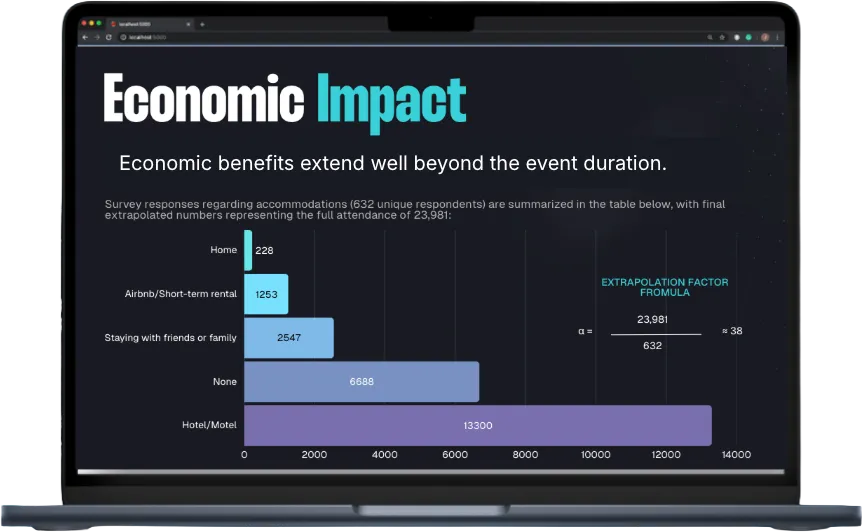





Everyone knows spreadsheets work fine when you're scheduling 10 teams. The problem hits when you're at 60 teams across multiple divisions, dealing with facility blackout dates, referee availability windows, and rest requirements that all interact in ways manual review can't catch. League directors switching from spreadsheets to AI scheduling aren't doing it because spreadsheets suddenly stopped working. They're doing it because their leagues stopped being simple enough for spreadsheets to handle. AI scheduling holds every variable at once, flags conflicts before they become parent complaints, and turns mid-season disruptions into fixes you approve instead of schedules you rebuild.
Executive Summary
- Manual scheduling for leagues can take 15 to 40 hours per season and breaks when conflicts surface mid-season
- AI scheduling solves for all constraints at once, fields, referees, rest windows, catching conflicts before they reach coaches
- Directors gain fairer schedules that apply consistent rules across all teams, reducing disputes and back-and-forth
- Fastbreak AI handles multi-field league operations with the same constraint logic used in professional sports scheduling
The Hidden Costs of Spreadsheet Scheduling for League Directors
The real cost of spreadsheet scheduling rarely shows up in a single line item. It accumulates across dozens of micro-failures that league directors absorb quietly until something breaks.
Consider the time alone. League directors commonly report spending anywhere from 15 to 40 hours building a schedule manually, depending on league size. Every constraint added, referee availability, facility blackout dates, travel distance limits, multiplies that time because spreadsheets have no awareness of how one change ripples through the rest of the grid.
Where the Breakdown Points Tend to Cluster
Most league directors running spreadsheets hit the same three failure points that sports scheduling software solves:
- Conflict detection only happens if the director catches it manually, which means double-booked fields and same-day rematches often survive into published schedules. Parents and coaches find these problems first, not the director.
- Mid-season changes require rebuilding large portions of the schedule by hand. A single field closure or team withdrawal can cascade into hours of rework that disrupts weeks of games.
- Version control is informal at best. When multiple staff members touch the same file, mismatched copies circulate and the schedule that actually gets communicated may not match what anyone intended.
These failures carry real downstream costs: referee no-shows from miscommunicated assignments, frustrated families who lose confidence in league organization, and directors spending weekend mornings patching schedules instead of running games.
The compounding problem is that spreadsheets are static by design. A league schedule is not a document you finish; it is something you manage continuously through a season. That mismatch between the tool and the task is where most of the hidden cost actually lives.
What Happens When Manual Scheduling Hits Scale
When a league director manages 10 teams, a spreadsheet works. Columns hold, formulas cooperate, and a few hours on a Sunday afternoon produces a workable schedule. Scale that to 60 teams across multiple age divisions, three facilities, and a rotating set of referee assignments, and the math stops being manageable by hand.
Common scheduling problems for sports leagues follow predictable patterns at scale, as sports league scheduling research documents:
- Double-bookings surface only after coaches have already committed to travel, forcing last-minute reshuffles that erode trust with families and venue staff alike.
- Rest equity breaks down when schedules are built game by game instead of across the full season, leaving some teams with back-to-back games on the same day while others sit idle for weeks, problems that specialized scheduling software can prevent.
- A single change, like a field going offline or a team withdrawing, requires manually auditing every downstream game to check for conflicts, a process that can take hours with no guarantee of catching every error.
- Referee coordination falls out of sync with the game schedule, because most spreadsheet workflows treat officiating as a separate document instead of a constraint built into the schedule itself.
The volume of interdependencies is what breaks manual workflows. A league schedule is not a list of games; it is a problem where fields, teams, time slots, referees, and rest windows all interact simultaneously, and as research on sports scheduling complexity documents, the number of possible arrangements grows overwhelming even in modest-sized leagues before real-world constraints are added. Spreadsheets solve for one variable at a time. AI scheduling solves for all of them at once, flagging conflicts before they become phone calls.
How AI Scheduling Software Actually Works for Leagues
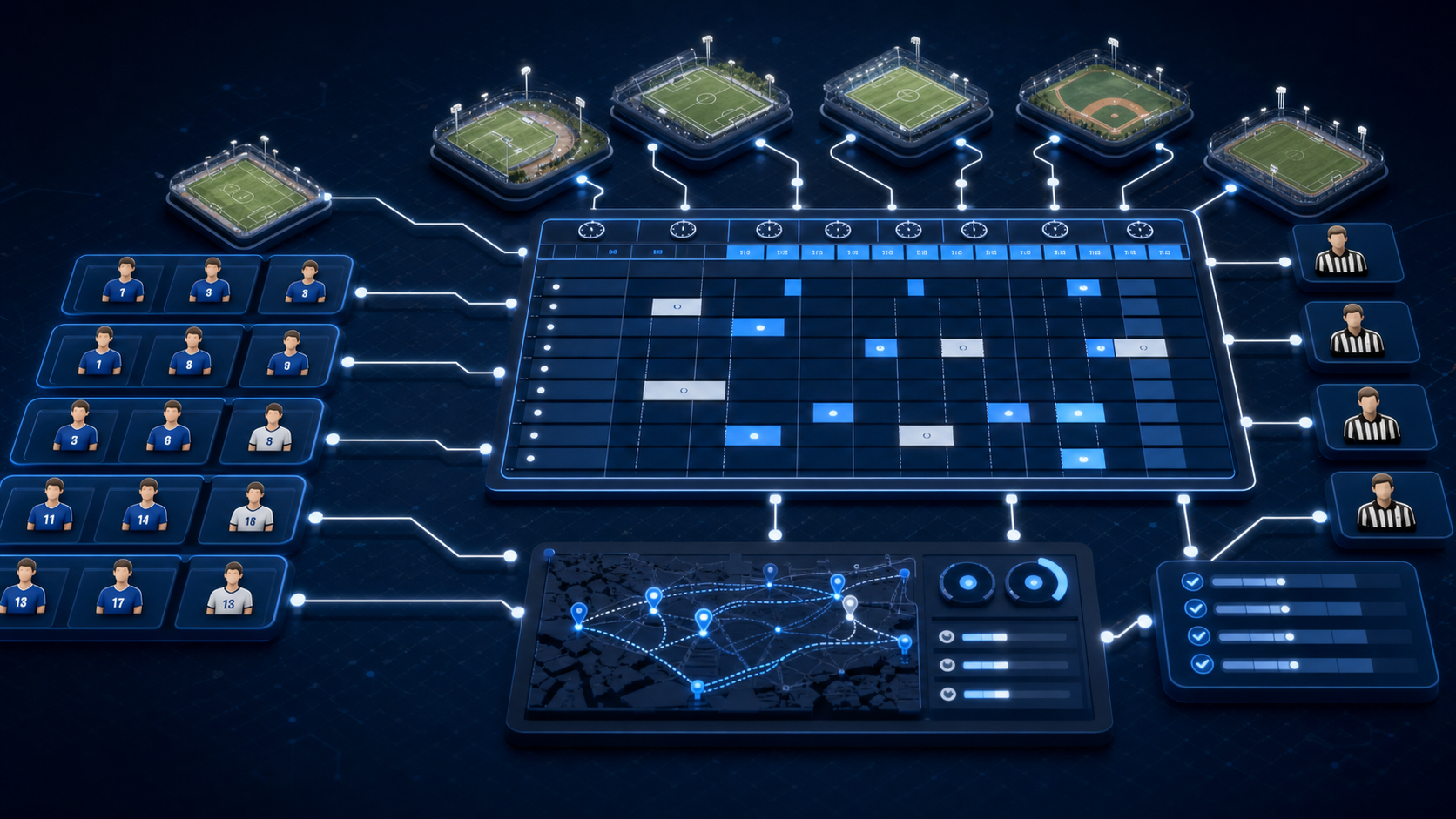
League scheduling software built on AI works differently from rule-based automation or simple constraint solvers. Where a spreadsheet requires a director to manually check every conflict, and older software just flags problems without resolving them, AI scheduling engines actively generate and test thousands of schedule permutations to find arrangements that satisfy the most constraints simultaneously. Fastbreak's scheduling engine powers 100+ professional leagues worldwide, including the NBA, NHL, and MLS. That same optimization logic is now available to amateur league directors.
The core process works in three stages:
- The director inputs the variables that define the league: number of teams, available venues, field or court counts, game durations, rest requirements between games, and any known conflicts like school events or holidays.
- The AI engine runs through permutations, weighing each constraint against the others to produce a schedule that gets as close to every requirement as possible, instead of stopping at the first workable arrangement the way manual methods do.
- When something changes, such as a venue dropping out or a team withdrawing, the engine re-optimizes around the affected games without touching the rest of the schedule.
Speed is only part of what separates this from spreadsheet work. The AI can hold dozens of competing constraints in parallel and resolve conflicts that a director working through a grid would miss entirely. A volunteer referee shortage on Sunday mornings, a team that shares players with another roster, a venue with lighting that cuts off at dusk, or minimizing team travel distance: these variables interact in ways that compound quickly past what manual review can catch before the schedule goes out.
For league directors, the practical result is that first-draft schedules that previously took days to build and multiple revision cycles to refine can be ready within minutes, already checked against the full constraint set.
The Shift Driving Software Adoption in 2026
Sports scheduling has always been labor-intensive, but the gap between what spreadsheets can handle and what leagues actually require has widened considerably over the past few years. Field availability, referee assignments, team travel windows, rest equity between games, weather contingencies: each variable multiplies the complexity, and spreadsheets treat every change as a manual rebuild from scratch.
That friction has a real cost. League directors managing mid-size recreational or competitive leagues can spend anywhere from 15 to 20 hours building a single schedule, and that estimate climbs fast when conflicts surface mid-season. A team withdraws, a field goes dark, a referee blocks off a weekend, and the whole grid collapses. In a spreadsheet, that means touching dozens of cells, re-checking every constraint by eye, and hoping nothing slips through.
What's changed in 2026 is the maturity of AI scheduling platforms, their availability. Early versions required lengthy configuration cycles, offered limited conflict resolution, and were priced for enterprise buyers. Current AI scheduling software reads full constraint sets (field windows, team availability, travel distance, rest rules) and produces compliant schedules in minutes, with onboarding timelines measured in days months and pricing models accessible to organizations of any size.
Why the Tipping Point Landed in 2026
Three overlapping pressures accelerated adoption this year:
- Leagues grew in structural complexity as more organizations expanded to multi-field, multi-day formats that spreadsheets were never designed to handle at scale.
- Directors who absorbed the time cost of manual scheduling during lower-volume seasons hit a ceiling when registration numbers climbed, making the labor trade-off impossible to ignore.
- AI scheduling software became accessible at price points and onboarding timelines that removed the barrier of a long implementation cycle.
The result is a measurable migration away from spreadsheet-based workflows, not because spreadsheets stopped working for simple cases, but because leagues stopped being simple.
What League Directors Gain Beyond Time Savings

League directors who move away from spreadsheets often cite time savings first, but the practical gains run deeper than recovered hours.
Conflict Visibility Before It Becomes a Problem
Spreadsheets show you what you entered. AI scheduling shows you what those entries create. When a gym becomes unavailable, a team drops out, or a referee is double-booked, the system flags the conflict and recalculates around it automatically, what AI scheduling for multi-venue tournaments is built to handle. Directors who manage venues across multiple sites find this particularly valuable: a change at one location no longer requires manually auditing every downstream game, a capability central to multi-venue league management software.
Fairer Schedules That Hold Up to Scrutiny
Manual scheduling tends to favor whoever gets built first. AI scheduling applies consistent rules across every team: rest time between games, travel distance between venues, home/away balance, and bracket seeding. The result is a schedule coaches and teams are less likely to dispute, which reduces the back-and-forth that eats into a director's week.
A Record That Travels With the Season
Every scheduling decision made in an AI system is logged. When a parent or coach questions why a game was placed where it was, directors have a clear answer backed by the system's own logic, not a memory of a spreadsheet session from three weeks ago.
A Cleaner Path From Registration to the First Game
In a disconnected workflow, registration data lives in one place and the schedule lives somewhere else. Directors spend time manually cross-referencing team counts, division sizes, and venue needs before they can build anything. When those two systems are connected, registration feeds directly into scheduling. Divisions populate automatically, team counts stay current, and the schedule reflects the actual league without a manual reconciliation step in between.
Revenue Opportunities That Spreadsheets Can't Reach
A league schedule built in a spreadsheet is just a document. A schedule built on a connected platform opens up revenue streams that exist alongside it: ticketing for spectators, integrated travel booking for away teams, and sponsor placements that reach families across the full season. Directors who move to a connected platform don't just save time on scheduling, they gain access to revenue channels that a standalone spreadsheet can never support.
A Better Experience for the Families Showing Up Every Week
Families don't see the hours behind a schedule. They see whether they can find the game time on their phone, whether the standings are current, and whether they get notified when something changes. The Fastbreak AI app puts schedules, scores, standings, and real-time updates in one place for every family connected to the league. Directors spend less time fielding "what time is our game?" messages. Families arrive informed. That experience is what keeps registrations returning the following season.
"But We've Always Done It This Way": Answering the Real Hesitations
Most league directors who switch to AI scheduling had one or more doubts before they did. Here is what some of those common concerns actually look like when you test them against reality.
"It's Too Complex to Switch"
The concern here is usually about data migration and setup time. In practice, most AI scheduling platforms are configured around your existing league structure: your divisions, your venues, your constraint rules. You are not rebuilding from scratch. You are telling the system what you already know, and letting it do the work your spreadsheet couldn't. Directors who expect a months-long implementation typically find the first working schedule is ready within a week of setup.
"Spreadsheets Are Free"
Spreadsheets have no licensing cost. The actual cost is the 15 to 40 hours per season spent building schedules manually, the additional hours patching mid-season conflicts, and the parent complaints and coach frustration that follow when errors make it through to published schedules. The time cost alone, at any reasonable estimate of a director's hourly value, far exceeds what AI scheduling software costs to run. That calculation gets worse every time a field closes or a team withdraws and you rebuild by hand.
"My League Is Too Small for AI"
Size is not the determining factor. The determining factor is whether your constraints interact in ways that manual review misses. A 20-team league with three venues, a referee pool, and rest requirements between games has enough complexity for AI scheduling to catch conflicts a spreadsheet would not. Fastbreak for leagues is built to be accessible for organizations of any size, with no upfront licensing fees, no seat costs, and costs that scale only as the platform processes payments. You do not need a large league budget to get started.
"Our Volunteers Won't Learn New Software"
This one comes up often and almost always resolves faster than expected. AI scheduling platforms built for amateur leagues are designed for non-technical users: the people running them are often volunteers, part-time staff, or league directors who did not come from a technology background. If someone can build a schedule in a spreadsheet, they can configure one in Fastbreak. The constraint inputs are the same variables they already know. The difference is the system catches the conflicts instead of them.
Not every AI scheduling platform is built for the specific demands of league operations. Before committing to a new system, test these capabilities against your actual workflow.
What to Look for in an AI Scheduling Solution
League directors choosing AI scheduling software should check for these capabilities:
- Schedule conflict detection that accounts for facility availability, referee assignments, and team rest windows simultaneously, beyond time slot availability in isolation. Understanding the rules vs priorities framework helps directors know what to look for here. A platform that checks one variable at a time will still let a double-booked referee slip through if field availability looks clean. The right platform catches all of it at once, before the schedule publishes.
- Handling of mid-season disruptions such as weather cancellations, venue changes, or team withdrawals without requiring a full rebuild from scratch, capabilities that tournament scheduling software for youth sports must deliver. When a field goes offline Friday night, the platform should reassign affected games and surface the fix for your approval by Saturday morning. The rest of the schedule stays untouched.
- Integrated registration, payments, and standings in one connected system, not siloed across separate platforms. When registration feeds directly into the schedule and standings update live from results, directors stop manually data across systems. Division counts stay current, team lists stay accurate, and nothing needs to be re-entered.
- Mobile access for participants: schedules, scores, and real-time updates available on a phone without requiring a separate login. Families should find game times and receive notifications the moment something changes. A director who still fields "what time is our game?" messages all weekend hasn't solved the communication problem.
- Bulk communication capabilities that notify affected teams, coaches, and officials automatically when a schedule change occurs, so directors are not manually sending individual messages. When a game moves from one field to another, every connected parent, coach, and referee should receive the update in the same action that saves the change, not as a separate manual step.
- Reporting outputs that give league administrators a clear record of schedule changes, game history, and field usage for end-of-season reviews or facility negotiations. A full change log answers the parent or coach question of why a game moved when it did. Field usage summaries give you concrete data to bring to venue renewal conversations.
- An onboarding process that includes live walkthroughs instead of a document handoff, since behavior change in a league office requires demonstration, not a manual. A walkthrough built around your actual divisions and venues removes the friction of switching in a way that a PDF never can.
- Venue and play surface management built into the scheduling system, so court and field assignments are tracked in the same platform that builds the schedule. Surface conflicts get caught before the schedule publishes, not on game day.
- Ticketing and travel integrations that connect spectator ticketing and away-team hotel booking to the same platform. These are the revenue channels a standalone scheduling solution can never reach.
The right AI scheduling software reduces the number of decisions a director has to make manually each week, without removing the control they need when something goes sideways. Fastbreak for leagues covers all of it in one connected platform: registration, AI-powered scheduling, venue and play surface management, scores, standings, and rankings.
How Fastbreak Brings Pro-Grade AI Scheduling to Amateur Leagues

Fastbreak was built to handle the complexity that breaks spreadsheets and generic scheduling software. The scheduling engine is the same one powering schedules for 100+ professional leagues worldwide, including the NBA, NHL, and MLS. It applies that same logic to the multi-field, multi-division, multi-day reality that amateur league directors actually manage.
When a field goes down or a team withdraws mid-event, the schedule repairs itself around the change in minutes without touching unaffected games or brackets. Directors don't rebuild from scratch. They approve a fix.
The core difference from spreadsheet-based scheduling comes down to constraint handling. Fastbreak holds every rule simultaneously: field availability windows, referee assignments, team rest intervals, travel distance between venues, and bracket integrity. Changing one variable doesn't break everything else.
What This Looks Like in Practice
Romeoville Live, a basketball tournament operation, ran multi-court scheduling across dozens of simultaneous games using Fastbreak for tournaments. The kind of event where a single field conflict in a spreadsheet cascades into hours of manual correction. That is the same pressure that led tournament directors to switch from spreadsheets. With Fastbreak, those conflicts get caught before the schedule publishes, not after teams are already on site.
For league directors managing recurring seasons instead of single events, the same logic applies to week-over-week scheduling: home and away balance, venue rotation, bye week distribution, and referee availability, all resolved without a cell-by-cell rebuild every Monday morning.
Ready to Schedule Smarter?
The shift from spreadsheets to AI scheduling isn't about chasing new technology. It's about recognizing that a modern league schedule carries more interdependencies than manual methods can reliably manage: fields, teams, referees, rest windows, and travel constraints all interacting at once. Fastbreak for leagues handles all of it in one connected platform: registration, AI-powered scheduling, venue and play surface management, scores, standings, and rankings. If your current process has you patching schedules on weekends instead of focusing on the league itself, we can show you what changes.
FAQ
What is AI scheduling for sports leagues?
AI scheduling for sports leagues is software that generates complete game schedules by processing all league constraints at once: field availability, team rest windows, referee assignments, travel distance, and bracket rules. Instead of building a schedule manually by checking one variable at a time, the system runs through thousands of permutations to find arrangements that satisfy the most constraints simultaneously, then flags any conflicts before the schedule publishes.
How long does it take to set up an AI league schedule?
Once you input your constraints (teams, venues, game durations, rest requirements, referee availability), Fastbreak can generate a complete draft schedule in minutes. Initial setup of your league configuration typically takes a few hours the first time. After that, each new season builds on the same structure, so the setup work drops considerably from season to season.
Can small leagues use AI scheduling software?
Yes. League size is not the deciding factor. The real question is whether your constraints interact in ways that manual review can miss. A 20-team league with multiple venues, a referee pool, and rest requirements between games already has enough complexity for AI scheduling to catch conflicts a spreadsheet would not. Fastbreak for leagues is built for organizations of any size, with no upfront licensing fees and no seat costs.
What's the difference between AI scheduling and traditional scheduling software?
Traditional scheduling software typically flags conflicts after you've already built the schedule manually. AI scheduling generates the schedule itself, holding all constraints at once and resolving conflicts before the schedule is ever published. When something changes mid-season, AI scheduling re-optimizes around the affected games in minutes, with no full rebuild required.
How does AI handle last-minute schedule changes?
When a field closes, a team withdraws, or a referee becomes unavailable, the scheduling engine re-optimizes around the affected games in minutes without touching the rest of the schedule. You review and approve the repair instead of rebuilding manually. What used to take hours of cell-by-cell rework becomes a single review step.
Is AI sports scheduling software expensive?
Cost depends on the platform. Fastbreak for leagues has no upfront licensing fees and no seat costs. The platform generates revenue through a small per-transaction fee on payments processed through it, so organizations of any size can get started without a large software budget. For most directors, the more relevant cost question is the 15 to 40 hours per season currently spent on manual scheduling. That time cost typically exceeds what AI scheduling costs to run.


