






Your AI sports scheduling software probably isn't doing what you think it's doing. Most tools fill available time slots and call it optimization, leaving you to manually fix coaching conflicts, balance travel distance, and prevent venue double-bookings. Real optimization math accounts for thousands of constraints at once, the same way NBA and NHL schedules get built. The difference shows up when a field closes and you need to reschedule 40 games without breaking your entire bracket structure.
Summary:
- AI scheduling software platforms use advanced, optimization and math to assign games across venues while solving for travel, rest, and conflicts
- Most platforms fill time slots with basic rules; true optimization solves thousands of constraints simultaneously
- Fastbreak AI created the scheduling engine trusted by NBA, NHL, and MLS — it can schedule 1,000+ teams in minutes
- Integrated housing rebates offset software costs without raising registration fees
- Fastbreak AI combines scheduling, housing, ticketing, and revenue tools in one system built for multi-venue operations
What are AI scheduling tools for multi-venue sports tournaments?
AI scheduling tools for multi-venue sports tournaments use algorithms and optimization math to automatically build game schedules across multiple facilities. They process constraints like venue availability, travel distance, coaching conflicts, rest requirements, and competitive balance to create workable tournament brackets. The gap between AI scheduling and manual methods shows up at scale. A spreadsheet works for 20 teams at one gym, but over 3.2 million youth sports leagues now use management software to handle complex scheduling at scale. 200 teams across six venues over four days? The math breaks down. You're managing thousands of constraints at once.
These AI scheduling tools test every valid schedule combination to find the best solution. They cut total travel time, prevent back-to-back games without rest, balance bracket difficulty, and stop double bookings before they happen.
How we ranked AI scheduling tools for multi-venue tournaments
We assessed these tools based on five key features that separate real optimization from basic time slot assignment:
- First, the math. Does the tool calculate for minimum travel distance and balanced rest periods, or does it just fill available time blocks? Most software labels itself "AI" when it's really running simple if-then rules.
- Second, multi-venue coordination. Can the system prevent double bookings across facilities while balancing field usage? Tournament directors juggling six venues need more than shared calendars.
- Third, integration depth. Does scheduling sync with housing blocks, ticket gates, and payment tracking? Or do you export a CSV and manually update three separate systems?
- Fourth, real-time flexibility. When a venue floods or a field gets damaged, can you reschedule 40 games in minutes without breaking the entire bracket structure?
- Fifth, coach conflict tracking. If a coach oversees two teams at different venues, does the system automatically stagger their game times to allow travel between sites?
These criteria matter because families spent $1,016 on youth sports in 2024, a 46% jump since 2019. Rising costs put pressure on organizers to run tighter operations without passing every inefficiency onto parents through higher registration fees.
Best Overall AI Scheduling Platform for Multi-Venue Tournaments: Fastbreak AI
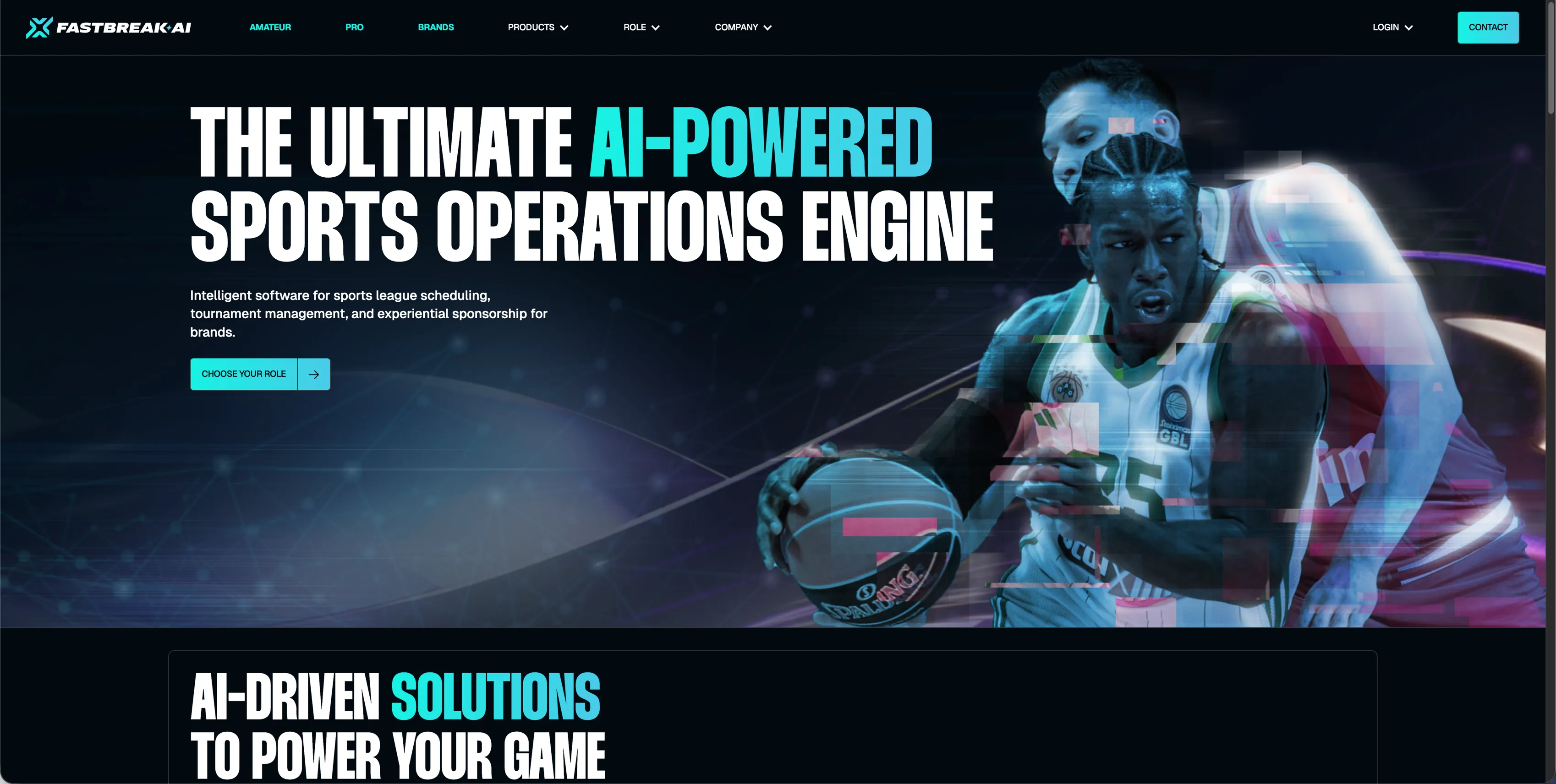
Fastbreak AI for tournaments runs the same optimization engine trusted by the NBA, NHL, and MLS. That math handles thousands of variables at once to generate conflict-free schedules for 1,000+ teams across multiple venues in minutes.
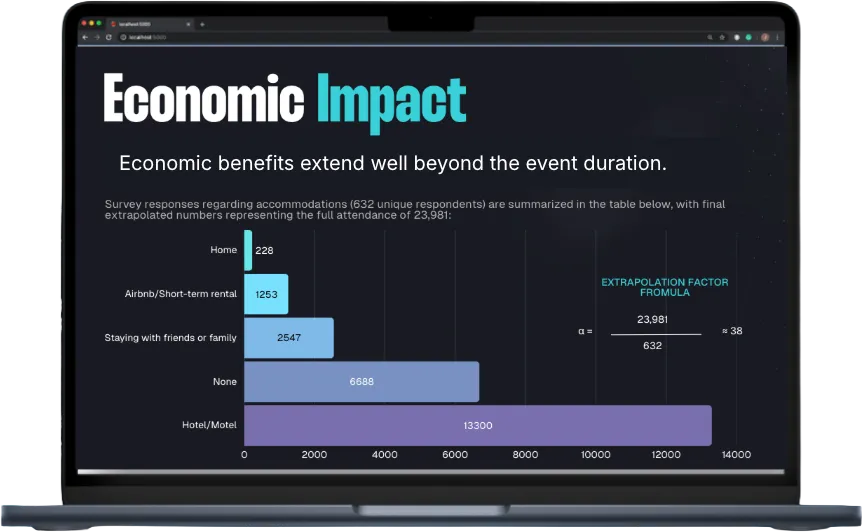
The system solves for travel distance, coaching conflicts, venue capacity, and rest periods at the same time. It accounts for team hotel locations and check-in times when assigning game slots, preventing double-booking coaches working multiple teams or needing travel time between venues. When weather forces changes, the engine reschedules in real time and updates ticketing gates and mobile apps automatically. The scheduling engine connects directly to hotel inventory systems, so bracket timing accounts for which teams are staying near which venues.
In addition to providing an optimization engine, built on AI, for multi-venue sports tournament scheduling, Fastbreak also provides teams a way to generate additional revenue through channels like housing rebates, adds sponsor placements directly onto digital tickets, and offers AI-powered event photography through facial recognition. Tournament directors offset software costs while keeping registration fees stable for families.
Tourney Machine
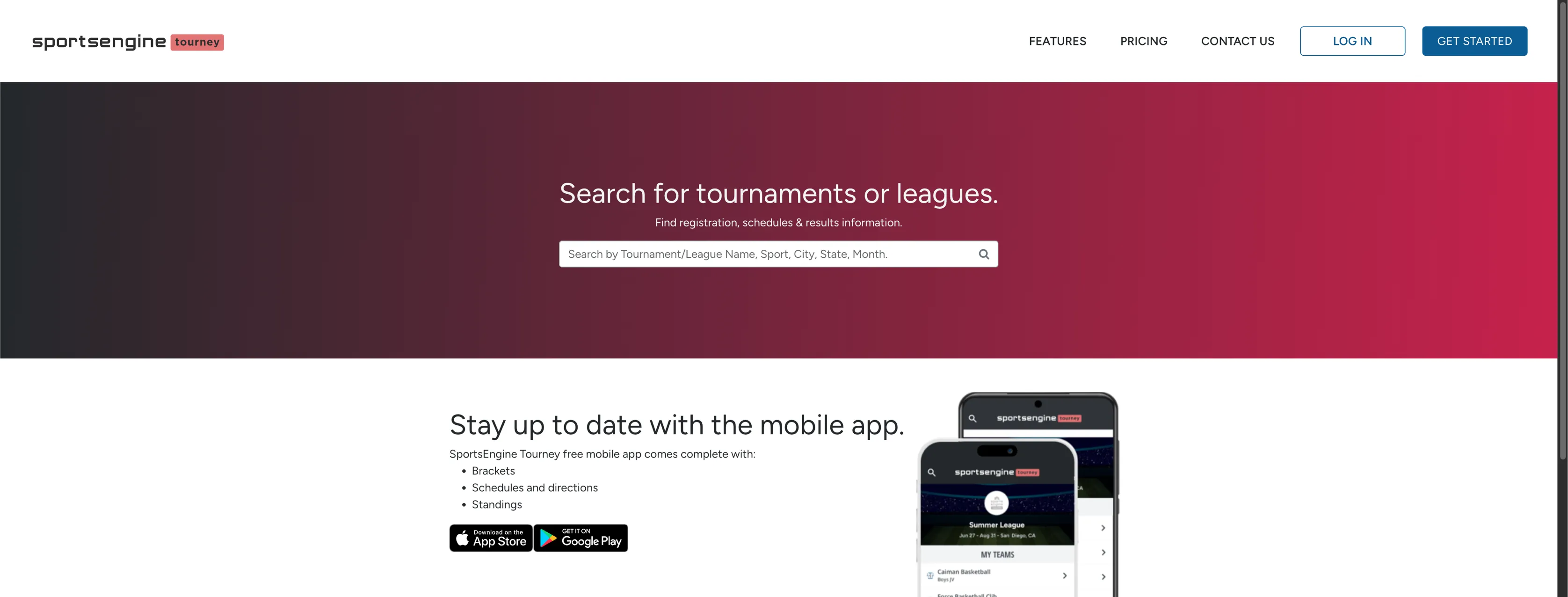
SportsEngine operates as a consolidated youth sports management platform built through acquisitions, combining Tourney Machine for scheduling, SportsEngine HQ for league operations, and NCSI for background checks. The system handles registration, payment processing, and basic tournament brackets under a single vendor contract. The value proposition focuses on administrative consolidation instead of optimizing operations.
Key Features
- Team registration with integrated payment processing and waiver collection
- Tournament scheduling through Tourney Machine with bracket generation and public viewing
- Background check integration via NCSI for coach and volunteer screening
- Website builders for league and tournament pages with mobile-responsive templates
Limitations
- There is no AI or schedule optimization, just a scheduling grid
- Registration data doesn't flow cleanly into scheduling, requiring manual data transfer between modules.
- The scheduling engine uses heuristic logic that fills time slots instead of optimizing for travel distance or coaching conflicts.
- No native housing management or hotel block tracking for multi-venue tournaments.
- Mobile ticketing lacks sponsor placement capabilities or revenue generation tools beyond basic registration fees.
- Multi-venue coordination requires manual bracket adjustments when managing facilities across different locations.
Best For
SportsEngine Tourney works for single-venue leagues and small tournaments where administrative consolidation matters more than logistics optimization. If you need state association compliance tools and basic scheduling without managing multiple vendor contracts, the platform covers key functions. The system fits organizations favoring breadth of features over depth in any single area.
GotSport
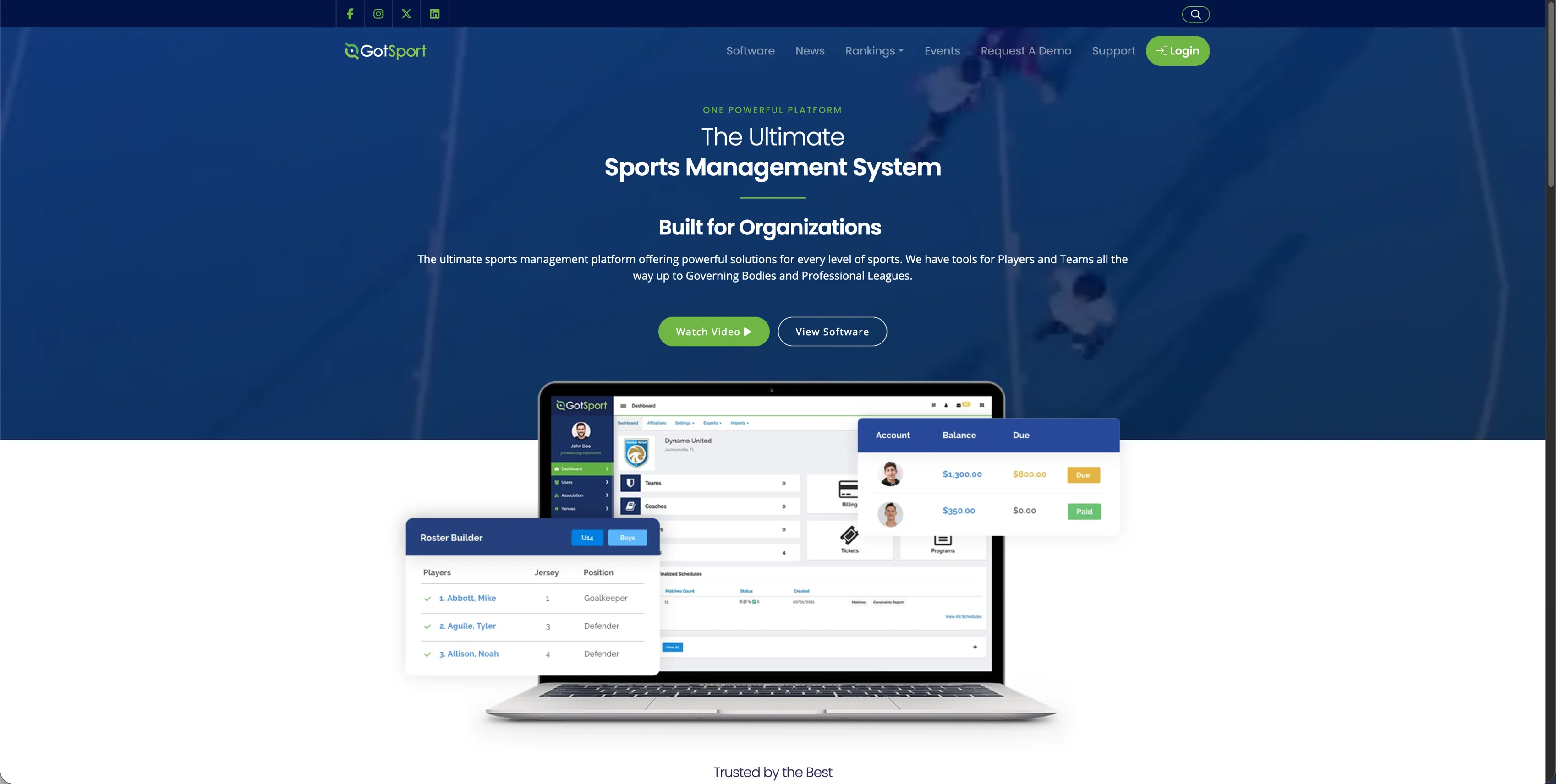
GotSport serves as the mandated registration system for many state soccer associations, focusing on player eligibility verification and roster compliance instead of tournament logistics optimization. The platform functions primarily as a credential management system that makes sure players meet state association requirements before competing. The tool focuses on regulatory compliance over improving operations.
Key Features
- There is no AI or schedule optimization, just a scheduling grid
- State association integration for automated player pass verification and eligibility tracking
- Registration forms with digital waiver collection and payment processing
- Basic scheduling and bracket display with public-facing tournament pages
- SportsReg verification system for player credentials and roster compliance
Limitations
- No optimization for travel distance, venue utilization, or coaching conflicts across multiple facilities.
- The interface requires a lot of manual work for complex multi-venue coordination and schedule adjustments.
- Housing management, mobile ticketing, and revenue generation tools are absent beyond basic registration fees.
- Scheduling uses simple time slot assignment instead of constraint-based optimization math.
Best For
GotSport works for organizations that need state association compliance and credential verification as their primary function. If your state soccer association mandates the platform for player eligibility, it handles registration and compliance requirements. The system fits leagues where regulatory tracking matters more than improving scheduling or revenue generation.
Playbook365
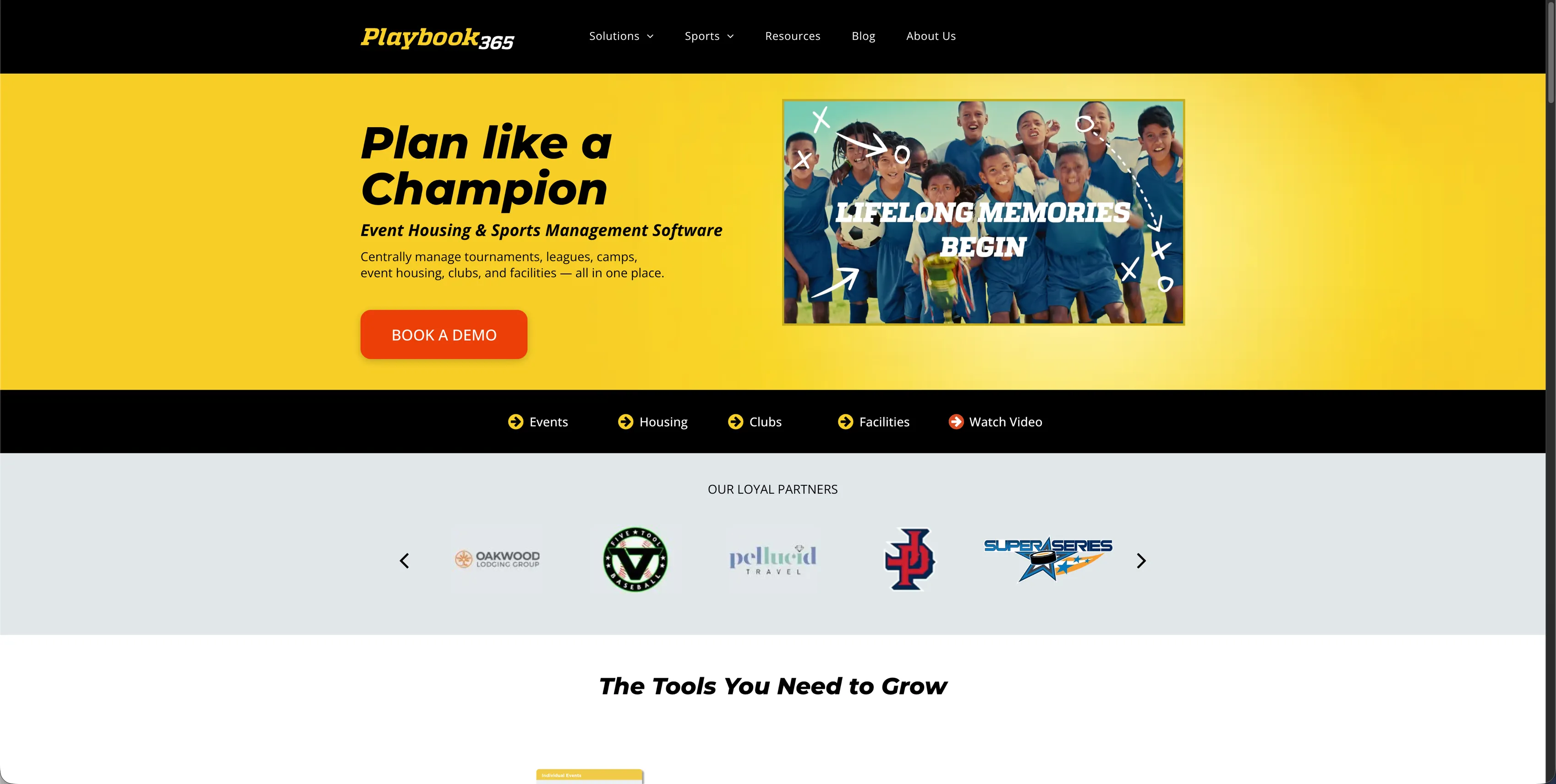
Playbook365 bundles tournament scheduling with housing management, facility booking, and registration tools in a single platform. The system consolidates multiple operations functions under one vendor contract, reducing the number of logins and integrations required. The value proposition focuses on administrative convenience instead of mathematical optimization.
Key Features
- Tournament scheduling with bracket generation and public-facing event pages
- Housing management for team travel coordination and hotel block tracking
- Facility booking and venue coordination tools for multi-site events
- Registration and payment processing with customizable forms
Limitations
- There is no AI or schedule optimization, just a scheduling grid
- Scheduling uses basic time slot assignment instead of constraint-based optimization for travel distance or coaching conflicts.
- No mathematical engine to balance rest periods, venue utilization, or geographic clustering across hundreds of teams.
- Mobile ticketing lacks sponsor placement capabilities or revenue generation tools beyond registration fees.
- AI-powered photography and consumer app experiences are absent from the platform.
Best For
Playbook365 works for organizations that value administrative consolidation over scheduling optimization. If you need basic tournament management across multiple functions without advanced logistics math, the platform covers key functions. The system fits smaller events where manual bracket adjustments are manageable and optimization complexity isn't required.
LeagueApps
LeagueApps serves community clubs with ongoing league operations. The system handles registration, communication, and coach coordination but relies on third-party integrations for tournament functions. The platform focuses on recurring league management instead of multi-venue tournament logistics.
Key Features
- Registration and club management workflows designed for repeat league schedules
- Team communication and coaching coordination tools
- Basic scheduling for recurring league play at familiar facilities
- Partner integrations for background checks and participant verification
Limitations
- There is no AI or schedule optimization, just a scheduling grid
- Multi-venue tournament scheduling requires manual coordination without mathematical optimization for travel or coaching conflicts.
- Housing management and travel coordination depend on third-party integrations that create data friction across systems.
- No native mobile ticketing with sponsor placement capabilities or revenue generation tools beyond registration fees.
- Scheduling works for league rotation but doesn't optimize venue utilization, rest periods, or geographic clustering mathematically.
Best For
LeagueApps works for community clubs running seasonal leagues with straightforward scheduling needs at consistent venues. If you manage recurring league play with familiar facilities and need communication tools over tournament logistics, the platform handles key functions. The system fits organizations where league operations matter more than complex multi-venue tournament optimization.
Why Fastbreak AI is the best AI scheduling tool for multi-venue sports tournaments
Most scheduling software fills time slots. Fastbreak AI solves logistics problems that cost you real money.
The difference shows up when you're managing 200 teams across six venues. Other tools generate brackets and leave you to manually fix coaching conflicts, rebalance travel distance, and prevent double bookings. You export CSVs, update housing spreadsheets, email new schedules, and hope nothing breaks. Fastbreak uses constraint-based optimization that accounts for venue capacity, coaching overlaps, hotel locations, and rest requirements simultaneously. When a field closes, the system recalculates affected games in minutes and pushes updates directly to team apps and ticket scanners.
At the end of the day, just remember that when you go with Fastbreak AI, you're installing the same tournament scheduling software that powers the NBA, NHL, and MLS.
Final thoughts on selecting scheduling tools for multi-venue sports tournaments
The difference between basic scheduling and tournament logistics automation shows up when something breaks. A flooded field, a coaching conflict, a venue closure. You can spend hours rebuilding brackets manually, or you can let the system recalculate in minutes. Better infrastructure means you stop reacting to problems and start preventing them before registration opens.
FAQ
Which AI scheduling tool works best for tournaments with more than 100 teams?
Fastbreak AI handles 1,000+ teams across multiple venues using constraint-based optimization that solves for travel distance, coaching conflicts, and rest periods simultaneously. Other tools require manual bracket adjustments that break down at scale.
How do I choose between scheduling software that just fills time slots versus tools that optimize logistics?
Test whether the system prevents coaching conflicts automatically, calculates total travel distance, and reschedules in real time when venues change. If you're manually fixing these issues after the bracket generates, you're using a time slot filler, not an optimizer.
Can scheduling software actually generate revenue or just reduce costs?
Fastbreak AI generates additional revenue through housing rebates and places sponsor ads directly on digital tickets. Most scheduling tools only reduce administrative time without creating new revenue streams.
What's the difference between heuristic scheduling and mathematical optimization?
Heuristic tools use simple if-then rules that work for small brackets but fail when managing hundreds of teams across multiple venues. Mathematical optimization tests thousands of constraint combinations simultaneously to find the best solution for travel, rest, and facility usage.
When should I switch from spreadsheets to AI scheduling software?
When you're managing more than 50 teams across multiple venues, or when manual schedule changes take more than two hours to complete. At that scale, spreadsheets can't prevent double bookings or optimize travel distance without a lot of time investment.


