






Your league schedule probably took days to build, and you're still getting texts about teams playing back-to-back games or driving two hours between venues. Most sports scheduling software treats scheduling like a digital calendar where you fill time slots until everything fits somewhere. Mathematical optimization solves a different problem: it calculates the best arrangement across all your constraints at once, balancing travel, rest, and venue availability without you touching a single game. The technology that builds NBA seasons now works for youth leagues, and the difference shows up in fewer complaints and more time back in your week.
Executive Summary
- Sports scheduling software ranges from basic bracket builders to optimization engines that solve for travel, rest, and venue constraints across thousands of games
- Mathematical optimization reduces manual conflict resolution which can save a lot of time and headaches in schedule planning across multiple venues with lots of teams
- Most platforms charge subscription fees without revenue tools; you pay for software instead of earning from ancillary income streams
- Fastbreak AI uses the same constraint-based machine learning engine that schedules NBA and NHL seasons, trusted by 100+ professional leagues worldwide
- Fastbreak AI for clubs will bring the same AI scheduling engine and connected platform to club directors managing tryouts, rosters, practice schedules, and parent communications with no upfront licensing costs
- Integration architecture matters: unified systems eliminate manual data exports between registration, scheduling, group travel, and ticketing functions
What is Sports Scheduling Software?
Sports scheduling software builds game schedules, assigns venues, and coordinates teams across leagues and tournaments. Basic tools arrange games into time slots. Optimization engines calculate the best possible arrangement across thousands of constraints: travel distance, rest periods, venue availability, referee assignments, and competitive balance.
The sports scheduling software market is projected to grow rapidly as organizations move away from manual processes. The broader sports management software sector reflects rising demand for platforms that handle registration, payments, communication, and logistics in one system.
For amateur sports, scheduling software handles team rosters, facility management, and parent communication. For professional leagues, it manages broadcast windows, arena contracts, and travel logistics worth millions of dollars.
How We Ranked Sports Scheduling Software
We assessed scheduling platforms on criteria that separate administrative conveniences from real back-end infrastructure. Your choice depends on whether you need a digital calendar or a system that solves for constraints and revenue. Here's what we looked at:
- Mathematical optimization vs. rule-based scheduling. Does the software calculate the optimal arrangement across all constraints, or simply fill time slots sequentially?
- Integration depth. Can schedule data flow directly into housing, ticketing, and communication systems without manual exports?
- Revenue generation capabilities. Does the tool unlock ancillary income through travel rebates, gate fees, or sponsorships?
- Scalability across competition levels. Can the system handle both 50-team youth sports tournaments and multi-league professional schedules?
Best Overall Sports Scheduling Software: Fastbreak
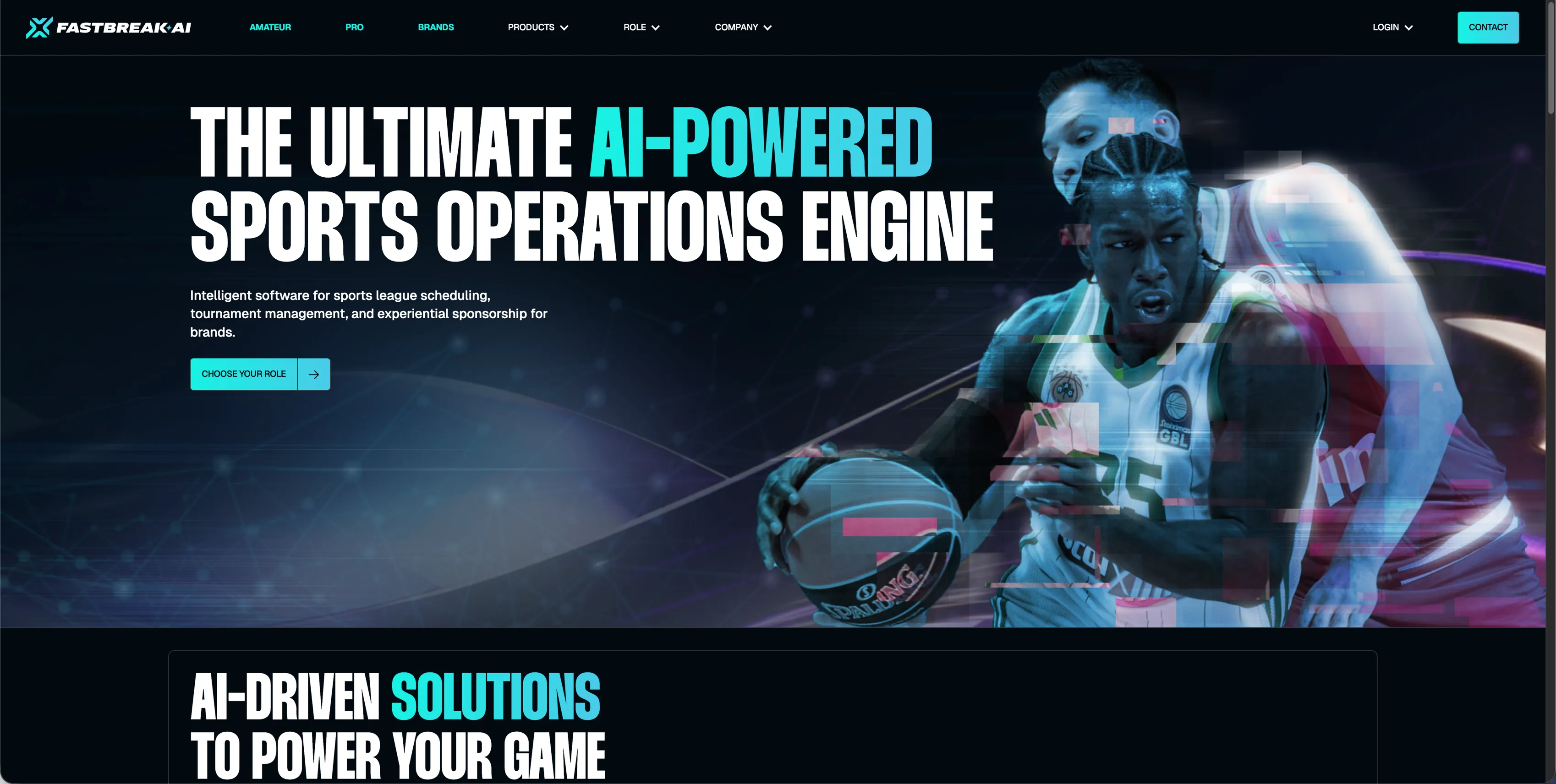
Fastbreak AI is the sports scheduling platform built on the same constraint programming engine that creates NBA, NHL, and MLS season schedules. Eight PhDs solve for venue conflicts, travel distance, rest requirements, and competitive fairness across thousands of games in minutes, connecting that schedule to hotel rebates, mobile ticketing, and sponsor revenue in one unified system. Fastbreak AI for clubs will extend the same platform to club directors, covering everything from tryouts and roster management to practice scheduling and year-round team communications.
Key Features
Fastbreak AI's core capabilities for tournament directors include:
- AI scheduling engine that calculates the best arrangement across venue conflicts, travel distance, and rest requirements, solving thousands of variables in minutes
- Integrated with Fastbreak AI for tournaments, Fastbreak Travel manages hotel room blocks and generates rebate revenue as teams book housing through the registration portal
- Fastbreak Ticketing for mobile gate entry with offline scanning and sponsor coupons embedded in digital wallet passes
- Fastbreak AI app giving families a single place for schedules, scores, and venue maps throughout the event
- Bi-directional registration portal that connects team sign-ups to housing and payment workflows without manual data exports
- Fastbreak AI for clubs: an end-to-end club management platform combining registration, payments, AI scheduling, compliance, communication, and analytics for competitive youth sports organizations, with no upfront licensing fees
Limitations
Fastbreak AI is built for tournament operators running events at scale. Single recreational teams or small leagues that need basic communication and volunteer coordination will find the platform exceeds their requirements. Organizations looking for a free or low-cost consumer app will find more suitable options among the simpler platforms in this list.
The Bottom Line
Fastbreak AI is the right choice for tournament directors who want to move past bracket builders and generate revenue from hotel rebates, ticket sales, and sponsor activations at every event. The AI scheduling engine, combined with integrated housing and ticketing, turns your schedule into a repeatable revenue model per event. Club directors can look to Fastbreak AI for clubs, which brings the same platform to year-round club operations, from tryouts and roster management to practice scheduling and team communications.
Stack Sports
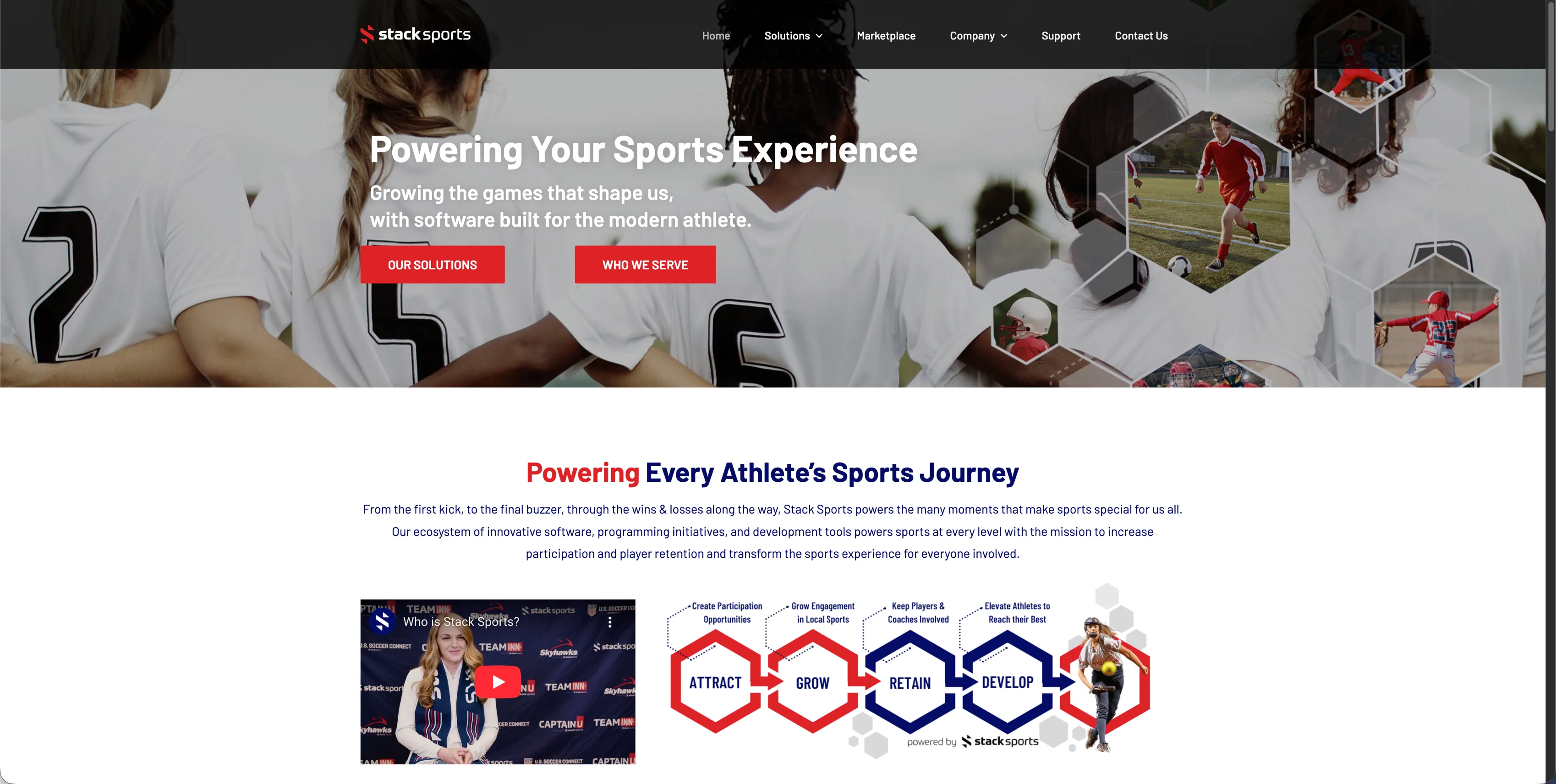
Stack Sports operates as a holding company that acquired multiple youth sports brands (PlayMetrics, Sports Connect, Tourney Machine, NCSI) and bundles them into annual subscriptions ranging from basic club management to tournament operations. The platform handles registration, practice scheduling, and bracket building, but the acquired products weren't built to work together which means that roster data from one system requires manual CSV exports to flow into another.
Key Features
Stack Sports includes these scheduling and tournament capabilities:
- Club management tools for practice scheduling and field coordination
- Background check integration through NCSI acquisition
- Registration and payment processing across multiple products
- Modular pricing structure where features are sold separately
Limitations
Integration friction between acquired brands creates data silos where registration in HQ does not flow to scheduling in Tourney Machine.
The Bottom Line
Stack Sports covers club operations but lacks unified scheduling optimization and integrated revenue tools that tournament operators need to monetize events. It is good for existing clubs that need day-to-day practice management and already have separate tournament operations handled elsewhere.
GotSport
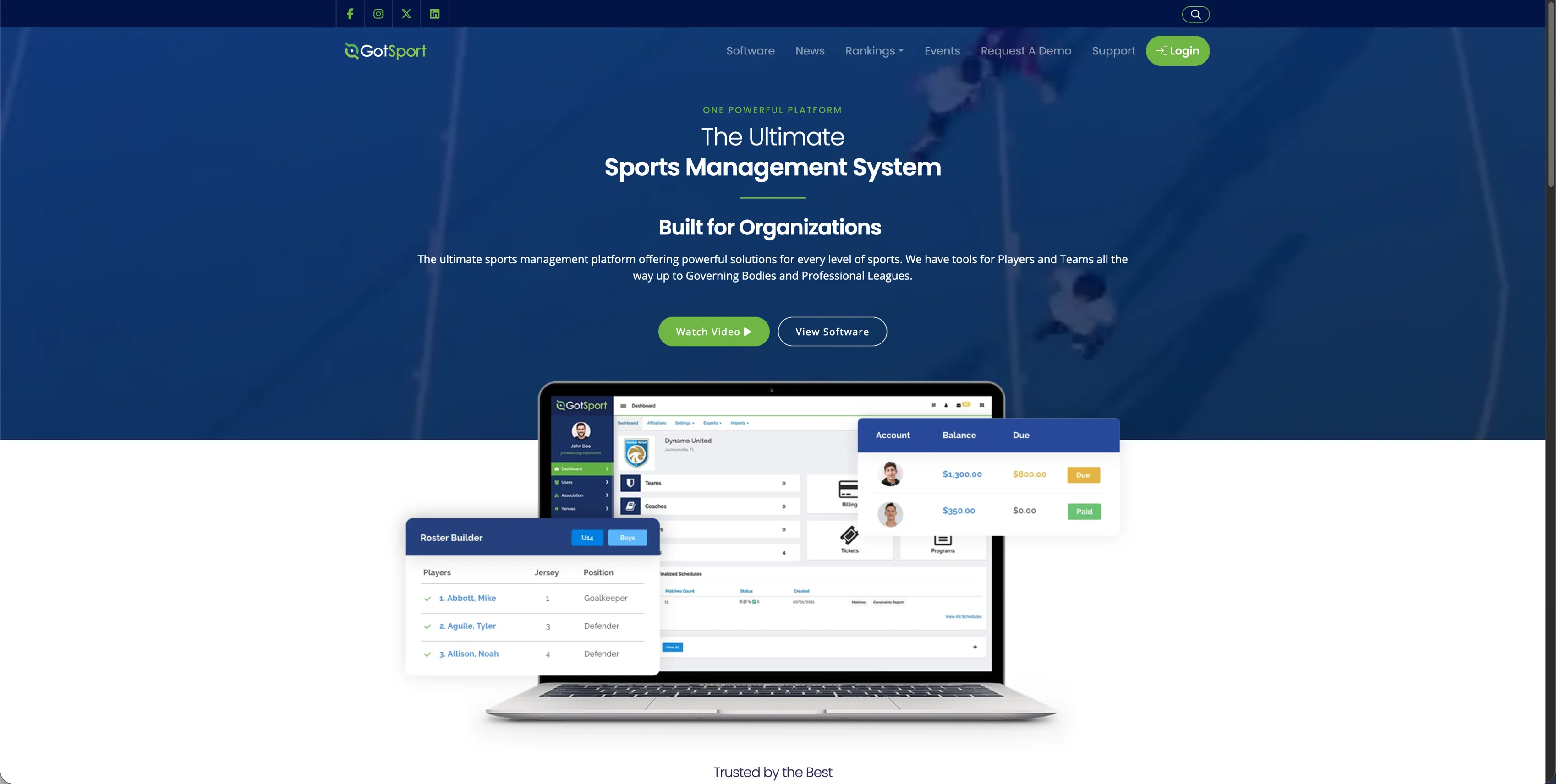
GotSport is a sports management platform that provides tools for league and tournament organizers to handle online registrations, team and player management, and scheduling. It centralizes administrative tasks for youth and amateur sports, making it easier to run events and communicate with participants.
Key Features
GotSport's core capabilities for league and tournament organizers include:
- Player card management and roster verification systems for state associations that need to track eligibility across multiple seasons and leagues
- SportsReg integration that connects registration data to eligibility databases, helping associations verify player credentials before competition begins
- Per-player pricing model which scales with the number of participants processed through the system
- Digital documentation storage for birth certificates, medical waivers, and consent forms required by governing bodies
Limitations
GotSport doesn't have any built-in revenue tools. You'll need separate systems for hotel commissions, mobile ticketing, or tournament monetization features.
Their schedule generation capabilities are linear. They'll help you fill in a schedule, but don't help with optimization or the elimination of conflicts.
The Bottom Line
This option works well for state associations that need centralized player eligibility verification and compliance documentation for sanctioned league play.
SportsEngine Tourney
SportsEngine operates under NBC Sports Next and combines registration tools (SportsEngine HQ) with tournament brackets (Tourney Machine, acquired in 2019). The platform handles youth league administration through annual subscriptions, but the acquired products weren't built to work together from the ground up.
Key Features
SportsEngine offers several features for scheduling leagues and tournaments:
- Annual subscriptions depending on tier
- Bracket builder through Tourney Machine for tournament scheduling
- Registration system via HQ for roster and payment collection
- Streaming video through SportsEngine Play as separate add-on
- Communication tools for coaches and parents within the platform
Limitations
SportsEngine has several limitations related to scheduling for leagues and tournaments:
- The bracket tool fills time slots in sequence without solving for travel, rest, or venue constraints
- Conflicts get resolved by dragging games around the schedule until they fit somewhere
- Registration data in HQ sits separate from Tourney Machine scheduling
- Moving roster information between systems requires CSV exports, manual reformatting, and fresh imports every time a roster changes
- The subscription processes registrations and displays brackets but doesn't book hotel blocks, sell tickets, or connect sponsors to inventory
- Revenue from ancillary sources requires separate contracts and manual coordination outside the system
- Interface design reflects the 2019 acquisition timeline, not modern UX standards
The Bottom Line
SportsEngine works for leagues where multiple administrative needs (registration, scheduling, communication) support the annual subscription cost and where manual data transfers between modules fit existing workflows.
TeamSnap One
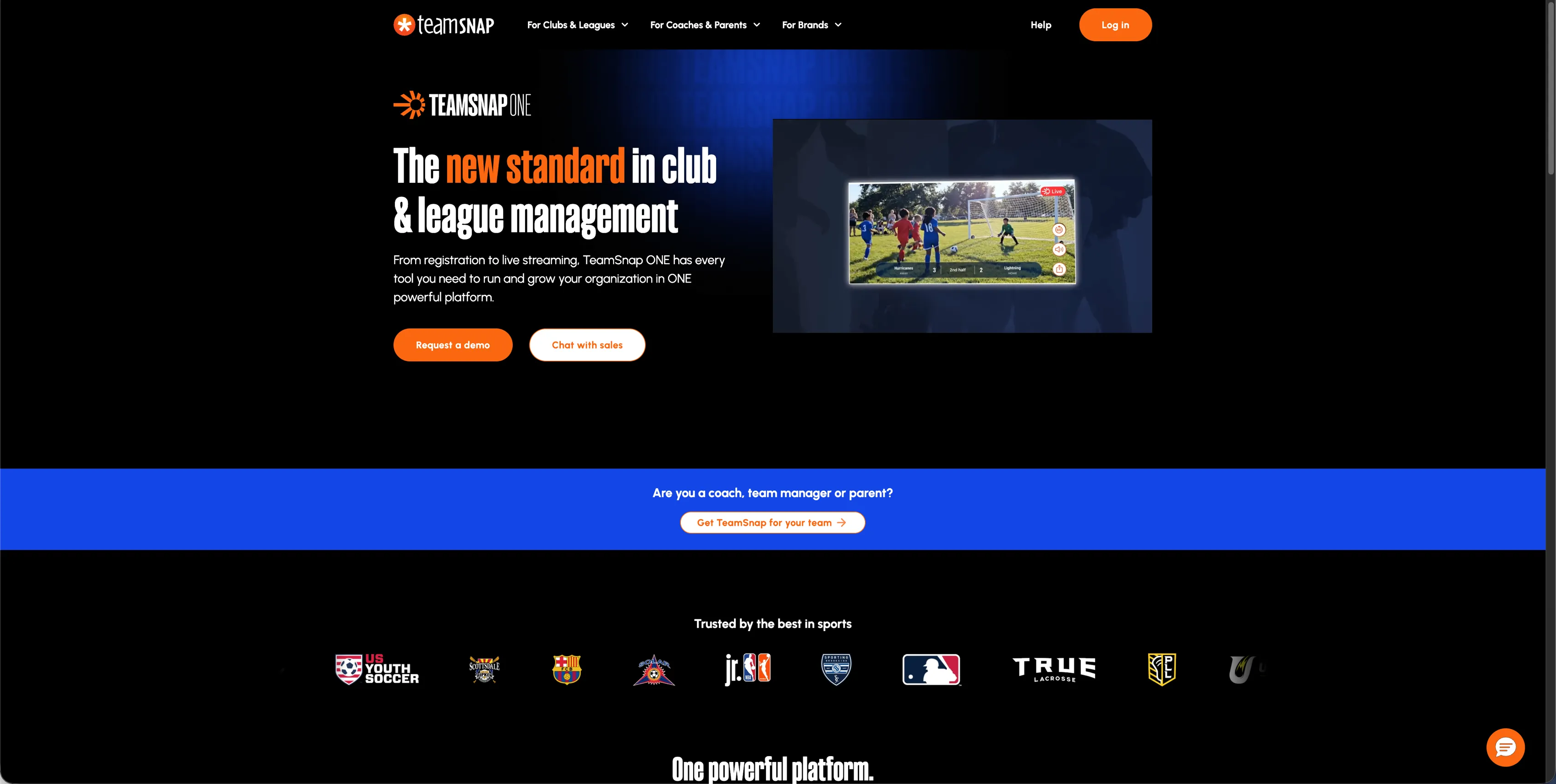
TeamSnap is a sports team and league management app that simplifies scheduling, communication, and player availability tracking for coaches, players, and families. It provides tools for organizing games and practices, sharing updates, and managing rosters and payments in one easy-to-use platform.
Key Features
Here are TeamSnap One's key capabilities for league and tournament management:
- Team chat and messaging for parents and coaches to coordinate practices, games, and team activities without needing separate group text threads or email chains
- Snack schedule and carpool coordination for recreational teams managing volunteer responsibilities across the season
- Individual team roster management that tracks availability and attendance at the team level
- Subscription pricing ranging from free to premium tiers based on feature access
Limitations
Data stays siloed at the team level, which blocks league-wide reporting or financial management. The subscription model charges organizers without providing hotel rebates, ticket revenue, or photography that generate income.
Very limited level of automated scheduling, even though the promise is there.
The TeamSnap app is filled with ads, or individuals have to pay for a subscription.
The Bottom Line
TeamSnap handles team chat. Tournament directors need league-wide scheduling optimization, travel compliance, and revenue-generating capabilities that turn events into profit centers. It is good for individual recreational teams needing basic communication and volunteer coordination without multi-team tournament requirements.
LeagueApps
LeagueApps is a sports management platform that helps leagues and clubs run operations with tools for online registration, scheduling, payments, and participant communication. It centralizes administrative workflows so organizers can efficiently manage seasons, events, and member engagement in one system.
Key Features
LeagueApps offers these capabilities for leagues and tournament organizers:
- Club management tools with league coordination and registration forms
- Third-party partnerships with Yardik and Ankored for verification
- Setup fees plus recurring subscription costs
Limitations
Core features like travel and verification require separate partner integrations. Setup fees and subscription costs add up fast without built-in scheduling or housing management.
The Bottom Line
This option works for clubs that can absorb high upfront costs and ongoing partner fees for basic functionality.
Playbook365
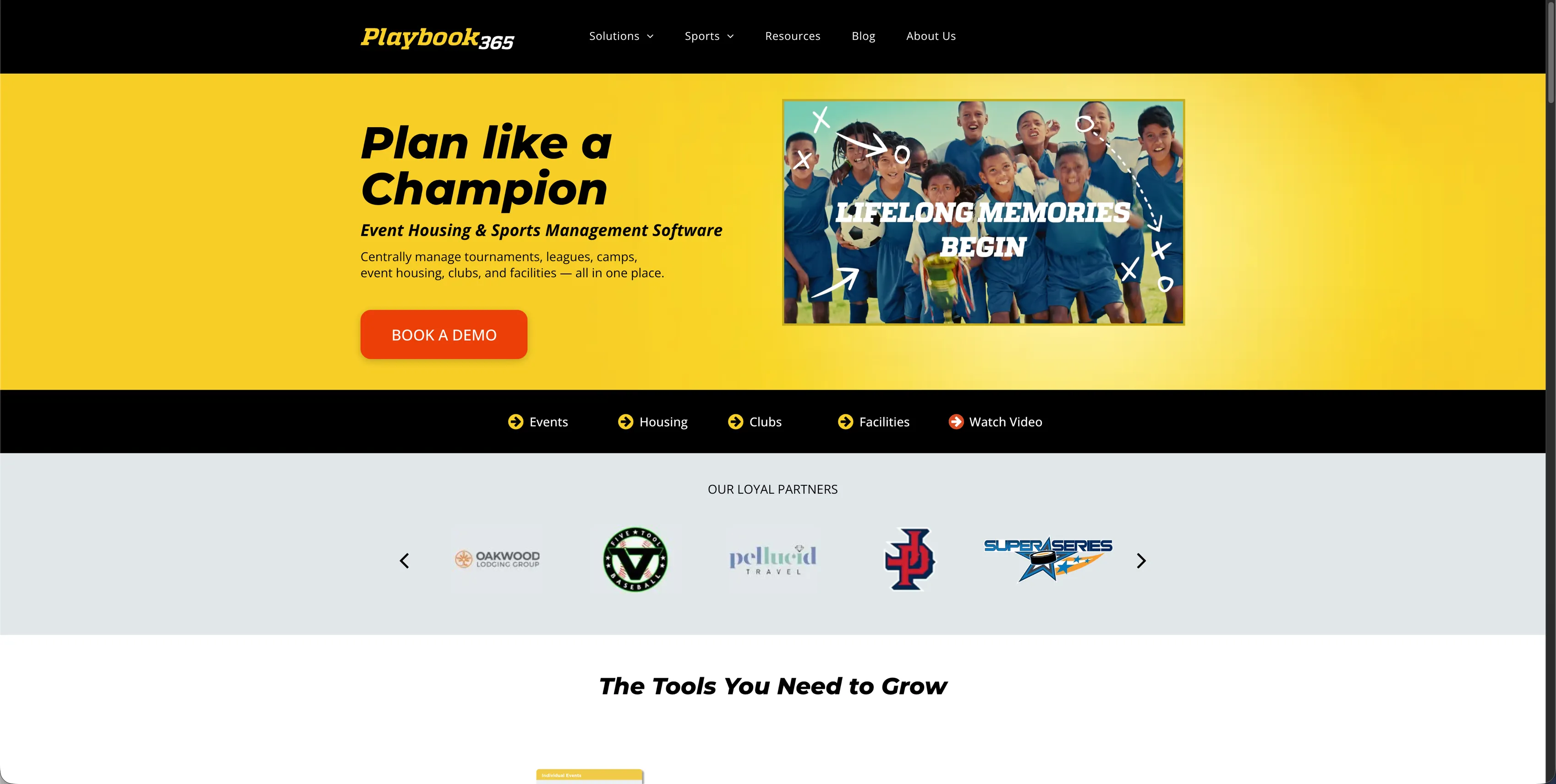
Playbook365 is a sports and team management platform that provides tools for organizing schedules, tracking player availability, and communicating with teams and families. It helps coaches and administrators manage logistics and stay connected throughout the season.
Key Features
Playbook365's capabilities for multi-sport scheduling and tournaments include:
- Housing coordination for multi-venue tournaments
- Facility booking and calendar management
- Registration with payment processing
- Quote-based pricing structure
Limitations
No mathematical optimization solving complex travel and venue constraints. No mobile ticketing or photo revenue capabilities.
The Bottom Line
Playbook365 is suitable for multi-sport facility operators running local tournaments with straightforward logistics.
High-Level Side-by-Side Comparison
While it's relevant to dig into each platform and compare them against their features, what's more important is to understand how each platform handles three core needs: AI optimization, whether the system unifies core functions (like scheduling, booking, etc.), and how it can help generate additional revenue. The table below provides that high-level overview.
| Platform | AI Optimization | Unified System | Revenue Generation | Best For |
|---|---|---|---|---|
| Fastbreak AI | Yes | Yes | Yes | Tournament directors; Club directors |
| Stack Sports | No | No | No | Existing clubs |
| GotSport | No | Partial | No | State associations |
| SportsEngine | No | No | No | Leagues |
| TeamSnap | No | No | No | Recreational teams |
| LeagueApps | No | No | No | Local clubs |
| Playbook365 | No | Partial | No | Facility operators |
Why Fastbreak is the Best Sports Scheduling Software
Fastbreak AI runs on the same constraint programming engine that builds NBA and NHL seasons. Eight PhDs solve for tens of thousands of variables simultaneously to optimize travel, rest, and venue usage. The unified database connects scheduling to housing rebates and mobile ticketing, creating ancillary revenue per large event. With Fastbreak AI for clubs, the platform is expanding to serve club directors who need year-round scheduling, registration, and communications in one place with no upfront licensing fees.
Final thoughts on selecting sports scheduling software
Your sports scheduling software either costs you money or makes you money. Fastbreak runs on the same constraint programming that builds NBA seasons, connecting schedule optimization to hotel rebates, gate revenue, and photo sales. Most directors pay subscription fees for bracket builders. Smart operators use infrastructure that generates revenue per event through integrated revenue capabilities that turn tournaments into profit centers. Club directors now have something to watch for as well: Fastbreak AI for clubs, bringing the same connected platform to year-round club operations with a free-to-adopt, per-transaction model.
FAQ
How do I choose the right sports scheduling software for my league?
Start with your revenue model and scale. If you run tournaments with 100+ teams and need hotel rebates, mobile ticketing, and sponsor inventory, you need optimization infrastructure like Fastbreak. If you manage a single recreational team with basic communication needs, a consumer app like TeamSnap works fine. Match the platform to whether you're running a business or coordinating volunteers.
What's the difference between mathematical optimization and basic bracket builders?
Basic bracket builders fill time slots in sequence and leave you to manually fix conflicts. Mathematical optimization solves for thousands of variables at once (travel distance, rest periods, venue capacity, and competitive balance) to calculate the best possible schedule. The difference shows up in reduced travel costs, fewer scheduling conflicts, and fairer competition across all teams.
Can scheduling software actually generate revenue for my organization?
Yes, if the system connects scheduling to monetization capabilities. Fastbreak generates revenue per large event through hotel rebates and mobile ticketing with sponsor placements. Most scheduling platforms are a line-item expense. Revenue-focused platforms turn your schedule into the foundation for multiple income streams.
Which sports scheduling platforms work best for multi-sport organizations?
You need a system built on sport-agnostic architecture that handles basketball, soccer, volleyball, and other sports through the same scheduling engine. Fastbreak supports multiple sports for tournaments and leagues, and Fastbreak AI for clubs, will bring multi-sport support to club management as well. Tools like SportWrench lock you into volleyball-only workflows. Avoid platforms that require separate products for each sport, otherwise you'll end up with data silos and duplicate subscription costs.
Do I need separate systems for scheduling, registration, and housing?
Only if you want to manually export CSVs and copy data between platforms every time a roster changes. Unified systems like Fastbreak connect scheduling, housing, ticketing, and communication through one database where changes flow automatically. For clubs in particular, Fastbreak AI for clubs is launching with registration, scheduling, compliance, and communications all built into one platform. Separate systems create administrative overhead that wastes hours and increases error rates at scale.


