





.png)

When a team drives 45 minutes to one complex, then another 50 minutes to a second venue two hours later, they've just added $30 in fuel costs and two hours of frustration to their weekend. Multiply that across 200 teams, and poor logistics cost your participant base thousands in aggregate waste. But, basic bracket software can't prevent this because it assigns games based on availability, not on whether those assignments actually reduce drive time. Tournament logistics software that runs mathematical optimization calculates the shortest total travel distance across your entire event while respecting competitive balance, rest periods, and venue capacity.
Executive Summary:
- AI scheduling cuts travel distance by solving for shortest routes across all teams simultaneously
- Fastbreak uses NBA-level math to optimize 1,000+ teams across venues in minutes, not months
- Integrated housing, ticketing, and sponsorship tools turn tournament operations into a profit center, no longer simply a cost to manage
- Heuristic schedulers create brackets; optimization engines minimize cumulative drive time
- Fastbreak powers 100+ professional leagues worldwide, including the NBA, NHL, and MLS
Why Travel Distance Matters More Than Ever in 2026
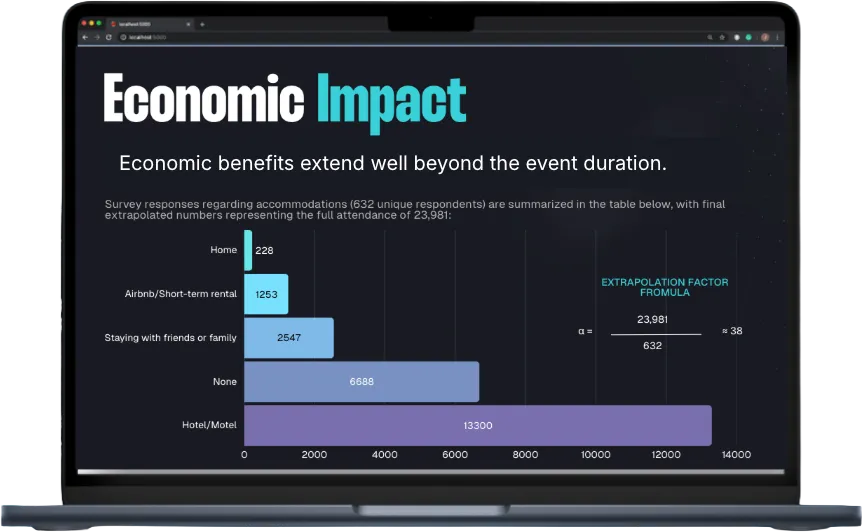
According to the Aspen Institute's Project Play survey, the average U.S. sports family now spends over $1,500 annually on their child's sports experiences, a 46% jump since 2019. According to the same survey, travel and lodging are the single largest line item for families with high school athletes, accounting for nearly $456 per year per child in that age group alone. Parents posting in club Facebook groups are openly comparing your event against a cheaper one two hours away. That comparison happens before registration closes.
The events growing in 2026 are the ones that make it easier for families to show up and give clubs a clear reason to come back next year. Minimizing unnecessary drive time is one of the clearest signals you can send that your event respects what families are already spending.
What is Tournament Logistics Software for Minimizing Team Travel Distance?
Tournament logistics software automates game scheduling, facility assignments, and bracket organization for multi-day events. The core question sounds simple: which teams play each other, when, and where? The answer gets complicated when you're managing hundreds of teams across dozens of venues while trying to minimize drive time for families. Tournament logistics software treats travel distance as a solvable math problem. The resulting tournament schedule is optimized so that teams have to travel the least while maintaining competitive play.
For youth sports parents, that cost adds up fast. Fuel and hotel bills for multi-day tournaments often exceed registration fees.
How Scheduling Algorithms Reduce Drive Time
The software ingests data about where each team originates (zip codes or city names from registration), then calculates geographic distance between home locations and every available venue. When it builds the schedule, it assigns matchups and venues to keep teams closer to home or cluster their games at the same site throughout the day. Basic systems use simple rules like keeping teams at the same facility for back-to-back games. Advanced AI sports scheduling uses constraint-based math to calculate the shortest total travel distance across the entire event, the same way delivery companies optimize fleet routes.
That same origin data serves a second purpose at travel events. When multiple teams from the same city or region register for the same tournament, the scheduling engine can recognize that those teams likely already face each other in local league play. A properly configured constraint tells the system to keep same-region teams in separate brackets or on opposite sides of the draw, so families who drove three hours to compete get the cross-regional matchups they were looking for. Teams that play each other every Saturday at home shouldn't have to travel a full weekend just to replay a local rivalry.
When considering a software solution to your tournament scheduling logistics, keep in mind the different scheduling algorithms that might be used:
- Basic bracket generator. This is a basic engine that requires the user to manually avoid conflicts when scheduling.
- Heuristic algorithm. This is a rules-based engine that is fast and creates workable, fair schedules under real-world constraints, accepting near-optimal results in exchange for speed, flexibility, and consistent reliability.
- Machine learning/AI. This is an intelligent system that carries out the same functions as heuristics and also optimizes the results, taking tournament scheduling one step further than a heuristic algorithm.
The Impact of Reduced Travel
Reducing the amount of travel has a number of benefits to participants across the tournament:
- For parents, less travel time means happier families, fewer no-shows from tight turnarounds, and lower fuel costs that make your event more accessible. Families remember chaotic, exhausting tournaments. They also remember when logistics worked.
- For players, the more time spent traveling means the less time resting for upcoming games or matches.
- For coaches, optimized scheduling means they won't miss games for different teams they are coaching. For example, a coach might be running two teams in different age brackets, both of which are at the tournament.
- For organizations, you can recruit teams from a wider geographic area without worrying that distant participants are spending more time driving than playing.
How We Ranked Tournament Logistics Software
We assessed each software option against five criteria that directly impact whether you can deliver a low-travel tournament without exceeding your budget or drowning in manual work:
- AI scheduling optimization capabilities
- Ability to minimize total team travel distance
- Multi-venue coordination features
- Integration with registration and housing systems
- Revenue generation tools
AI Scheduling Optimization Capabilities
Can the software process hundreds of variables at once to find the mathematically shortest total travel distance across all teams? Or does it just assign games to available fields without asking whether a different arrangement would cut collective driving time? The answer shows in the actual schedule: a basic system hands you the first workable bracket it finds, while an optimization engine runs through thousands of combinations and returns the one with the lowest total travel distance.
Ability to Minimize Total Team Travel Distance
Some systems let you manually assign teams to divisions by geography, which helps but still leaves you guessing. Others treat travel distance as a solvable constraint that sits alongside rest time, field availability, and competitive balance. The question is whether the software can actually ingest team origin data and calculate distance to each venue, then factor that into scheduling decisions. Does it treat "minimize travel" as a feature you toggle on, or as a core mathematical objective baked into how it builds every schedule?
Multi-Venue Coordination Features
Running games across six complexes in different parts of the county creates logistical chaos if your software treats each venue as a separate island. We looked for systems that can manage field assignments, referee scheduling, and equipment needs across multiple sites from a single dashboard. Real-time updates matter when double-booked tournament fields go down and you need to shift games without breaking the travel optimization you already built.
Integration with Registration and Housing Systems
If team rosters live in one system, hotel blocks live in another, and schedules live in a third, you're stuck copying zip codes into spreadsheets and hoping nothing changed. We favored software where registration data flows directly into the scheduling engine, and where housing coordination shares the same database. That connection turns "where is this team staying?" from a detective mission into a data field that auto-populates.
Revenue Generation Tools That Offset Software Costs
It's an investment that pays for itself before the first game starts. We looked for features that create new revenue streams instead of just digitizing old processes. If the software saves you time but still leaves you hunting for ways to cover rising costs, you're only halfway there.
Best Overall Tournament Logistics Software: Fastbreak AI

Fastbreak AI is the only platform on this list built on the same scheduling engine that generates season calendars for the NBA, NHL, and MLS. That math matters when you're trying to minimize travel distance for 400 teams across a multi-day event. Where basic bracket software applies rules like "keep teams at the same venue for back-to-back games," Fastbreak's AI processes every possible venue assignment and matchup combination to calculate the schedule that produces the shortest cumulative drive time for all participants while respecting rest periods, field availability, and competitive balance.
Key Features
- AI-powered scheduling engine calculates mathematically optimal schedules that minimize total travel distance across all teams
- Real-time data flow between registration, scheduling, housing, and ticketing eliminates manual exports
- Sponsor marketplace connects national brands to events and handles onsite activation
Limitations
- Requires upfront time investment to input venue data and define scheduling constraints properly
- Advanced optimization features may have a learning curve for first-time tournament directors
- Pricing structure differs from simple monthly subscription models used by basic bracket tools
- Maximum value requires running integrated revenue streams (housing, ticketing, sponsors) together
- Best suited for multi-venue events instead of single-facility recreational leagues
Bottom Line
Directors managing large-scale competitions where mathematical optimization saves families hours of drive time while creating new profit centers will see the highest return on investment.
TeamSnap
TeamSnap handles team communication and roster management for individual squads. It covers the basics for a single coach managing one team, but it wasn't built to solve travel distance problems across multi-team events. The software focuses on practice schedules, snack rotations, and parent messaging instead of tournament logistics optimization.
Key Features
- Team messaging and schedule sharing for individual squads
- Snack schedule coordination and basic roster management
- Mobile app for parents to track practice times
- Basic payment collection for team fees
- Availability tracking for practices and games
Limitations
- No multi-venue tournament scheduling or bracket generation capabilities
- Cannot calculate or minimize travel distance across multiple teams
- Lacks AI-powered optimization for game assignments and venue selection
- No integrated housing management or hotel rebate programs
- Missing revenue generation tools like ticketing or sponsor activation features
Bottom Line
TeamSnap works best for individual team coaches managing a single squad who need a simple way to communicate practice times and snack rotations to parents. Recreational teams playing at one local facility benefit most from the platform. Tournament directors running multi-day events with 100+ teams across multiple venues need software built for travel distance optimization and complex logistics coordination, which TeamSnap cannot provide.
SportsEngine (Tourney Machine)
SportsEngine owns multiple products including Tourney Machine, a bracket and schedule publishing tool that has seen limited advancement since its acquisition. The software handles basic tournament bracket generation and online schedule publishing but lacks the mathematical optimization needed to minimize travel distance across multi-venue events. Registration data in SportsEngine HQ doesn't flow automatically into Tourney Machine, requiring manual exports and imports between systems.
Key Features
- Bracket generation and online schedule publishing with drag-and-drop interface
- Standard tournament format templates for common bracket structures
- Integration with SportsEngine HQ for registration (requires manual data transfer)
- Basic game assignment tools to avoid double-booking fields
- Public-facing tournament websites for schedule viewing
Limitations
- Uses basic heuristic scheduling instead of mathematical optimization for travel distance
- Registration data doesn't flow automatically from SportsEngine HQ to Tourney Machine
- No native housing management or hotel coordination capabilities
- Cannot calculate cumulative drive time savings across all participating teams
- Missing revenue generation features like integrated ticketing or sponsor activation tools
Bottom Line
Tourney Machine works best for small local tournaments with minimal travel considerations that just need brackets published online without complex optimization requirements. Youth organizations running single-venue events where all teams live within a 20-minute radius can use the basic bracket tools effectively. Tournament directors managing multi-day events across multiple venues with teams traveling from a 60+ minute radius need AI-powered optimization software that actually minimizes cumulative travel distance, which Tourney Machine cannot provide.
Stack Sports
Stack Sports acquires youth sports software brands and connects them under one contract. That approach creates a portfolio of tools, each originally built for different purposes, instead of a single system designed to solve tournament logistics. The portfolio includes club management features for practice and field scheduling across multiple acquired brands.
Key Features
- Club management tools for daily practice scheduling and facility booking
- Registration and payment processing through acquired legacy products
- PlayMetrics operates inside the Stack ecosystem alongside other brands
- Enterprise pricing bundles multiple products under one contract
- Background check integration through partner vendors
Limitations
- Integration challenges between acquired legacy codebases mean data doesn't flow across systems
- No native AI-powered travel distance optimization for tournament scheduling
- Missing integrated housing management or hotel rebate programs
- Lacks mobile ticketing that works offline at remote field complexes
- No revenue generation tools like sponsor activation or gate fee processing
Bottom Line
Stack Sports works best for existing club organizations with large budgets that favor daily practice scheduling over tournament event optimization and have dedicated staff to manage multiple system integrations. Premium clubs running recurring seasonal leagues at fixed facilities benefit most from the portfolio approach. Tournament directors running multi-day events where travel distance minimization and revenue generation determine profitability need purpose-built optimization software that Stack Sports cannot provide.
LeagueApps
LeagueApps started as a registration and payment processor for recreational leagues. The software handles season-long play where teams meet weekly at the same location. That design shows when you try to use it for multi-day tournaments with travel optimization requirements.
Key Features
- League registration and payment processing for recurring seasonal play
- Basic scheduling for fixed-location weekly games and practices
- Website builder and email communication tools for participants
- Background check integration through third-party partner vendors
- Team roster management and division organization
Limitations
- Scheduling engine uses sequential availability logic instead of mathematical optimization for travel distance
- Housing management and ticketing require separate vendor contracts with disconnected data flows
- Real-time schedule updates don't propagate automatically across partner integrations
- No native hotel rebate programs or revenue generation tools beyond transaction fees
- Setup fees vary; verify current pricing at LeagueApps.com before budgeting, as costs differ by plan and partner service fees
Bottom Line
LeagueApps works best for recreational leagues running season-long play at one or two fixed facilities where teams live within a 15-minute radius and travel logistics aren't a consideration. Local youth organizations managing weekly games at the same park benefit most from the registration and payment features. Tournament directors running multi-day events where minimizing travel distance across multiple venues determines whether families drive two hours or four hours over a weekend need purpose-built optimization software that LeagueApps cannot provide.
Feature Comparison Table of Tournament Logistics Software
The table below compares core features that impact your ability to minimize travel distance and generate revenue from tournament operations. We focus on capabilities that separate basic bracket generators from logistics optimization software.
| Feature | Fastbreak AI | TeamSnap | SportsEngine | Stack Sports | LeagueApps |
|---|---|---|---|---|---|
| AI Travel Distance Optimization | Yes | No | No | No | No |
| Multi-Venue Tournament Scheduling | Yes | No | Limited | Limited | Limited |
| Native Hotel/Housing Management | Yes | No | No | No | No |
| Integrated Gate Ticketing | Yes | No | No | No | No |
| Real-Time Schedule Updates | Yes | No | Limited | Limited | Limited |
| Revenue Generation Tools | Yes | No | No | No | No |
| Mathematical Optimization Engine | Yes | No | No | No | No |
Understanding What Separates The Providers
The dividing line runs through the optimization engine row: software built on heuristic scheduling, using simple rules like "keep teams at the same venue," can't calculate whether moving one game saves 40 cumulative minutes of drive time across all participants. Mathematical optimization treats the full schedule as a math problem, solving for the combination of game assignments, time slots, and venue pairings that produces the lowest total travel distance without breaking competitive balance or rest requirements.
That math becomes the foundation for everything else:
- AI travel distance optimization requires processing thousands of variables simultaneously, which explains why most tournament software skips it.
- The same engine that minimizes drive time also handles real-time schedule adjustments without breaking your carefully optimized assignments.
- When weather delays games or a field goes down, the system recalculates instead of forcing you to manually rebuild brackets.
Multi-venue coordination separates tournament-specific software from team management apps. TeamSnap was built for single-team communication, so multi-venue scheduling doesn't exist in its design. SportsEngine and LeagueApps offer limited bracket generation across venues but lack the optimization layer that turns "games are assigned to fields" into "games are assigned to fields in a way that minimizes total drive time."
Revenue generation tools matter because software that costs money without making money back stays a budget line item you resent paying. Native housing management, integrated ticketing, and sponsor activation features change logistics software into a profit center.
Real-time updates across the entire system close the loop. Registration changes propagate to scheduling, housing, and ticketing instantly because they share the same database. You're not exporting CSVs or waiting for partner integrations to sync. A roster update appears everywhere simultaneously, which matters when you're managing 200 teams and families expect accurate information without refresh delays.
The comparison shows why building a tournament schedule in software designed for rec league rotations creates friction. Those products answer different questions for different use cases. Tournament logistics software built on mathematical optimization treats travel distance reduction as a solvable problem that generates measurable value: fewer complaints, better retention, and revenue streams that offset operating costs.
Why Fastbreak AI is the Best Tournament Logistics Software for Minimizing Travel Distance
Every other option on this list treats travel distance as something you adjust after the schedule is built. Fastbreak AI is the only platform on this list that solves it with math while building the schedule, powered by the same AI engine trusted by 100+ professional leagues worldwide.
When you ask most tournament software to create a bracket, it assigns matchups based on seeding, then slots those games into available time slots at available venues. If you want to reduce travel, you manually drag games around and hope you didn't just create a rest period violation or double-book a referee. The software gives you a canvas. You do the optimization work yourself.
Our AI engine inverts that process. You define your constraints: competitive balance, minimum rest between games, venue capacity, referee availability, and travel distance minimization. The software calculates every possible combination of matchups, time slots, and venue assignments, then returns the schedule that best satisfies all constraints at once. Travel distance isn't something you adjust after the fact. The math accounts for it from the first whistle.
Fastbreak is also built to generate revenue that offsets what families spend. The integrated housing management system delivers hotel rebates per room night. Mobile ticketing lets you charge gate fees per ticket with offline scanning that works at remote complexes. Sponsor tools connect national brands directly to your event, paying you for access while we handle onsite activation. A tournament running all three revenue streams can add net income before games start, which gives you room to keep registration fees stable even as insurance and facility costs climb.
Final Thoughts on Choosing Tournament Logistics Software
The math behind tournament logistics software determines whether you're publishing brackets or actually minimizing the cumulative hours families spend driving. The right choice depends on your event scale: single-venue recreational leagues have different requirements than multi-day tournaments drawing teams from a 60+ mile radius across several complexes. The right platform also generates revenue that offsets what families spend, giving your event room to grow without passing rising costs on to participants.
FAQ
How do I choose the right tournament logistics software for my event size?
Start with whether the software can actually minimize travel distance through mathematical optimization, not basic bracket generation. If you run events with 100+ teams across multiple venues, you need AI-powered scheduling that calculates cumulative drive time as part of the schedule build. Smaller single-venue events with local teams can work with simpler bracket tools, but you'll still waste time on manual adjustments that optimization software handles automatically.
Which tournament logistics software works best for multi-venue events?
Software built on mathematical optimization engines handles multi-venue complexity better than tools designed for single-site brackets. Look for systems where venue assignments, matchup scheduling, and travel distance calculations happen simultaneously in one process, not as separate steps you coordinate manually. Real-time updates across all venues from a single dashboard prevent the chaos of managing disconnected field assignments when weather or equipment issues force last-minute changes.
Can tournament logistics software actually generate revenue to offset costs?
Yes, if the software includes integrated housing management, mobile ticketing, and sponsor activation features. A large tournament running all three can add net income before games start, turning software from a budget expense into a profit center that pays for itself.
Can tournament scheduling software prevent same-region teams from playing each other at a travel event?
Yes. When teams register with their city or zip code, the scheduling engine can identify which teams are from the same area and already face each other in local league play. A properly configured constraint tells the system to keep same-region teams in separate brackets or on opposite sides of the draw. Families who drove three hours to compete get the cross-regional matchups they were looking for, not a rematch against the team they play every Saturday at home. That separation is built into the schedule from the start, not patched in afterward.
What's the difference between heuristic scheduling and AI optimization for travel distance?
Heuristic scheduling fills the schedule using a fixed set of rules, checking whether each assignment avoids obvious conflicts but never calculating what the cumulative driving impact is across all participants. AI optimization treats the schedule as a math problem where game times, venue assignments, and matchups are all variables, then solves for the arrangement that minimizes total drive time while keeping rest periods and competitive balance intact. In practice, a heuristic system produces a workable bracket; an optimization engine produces a schedule where each assignment was chosen because it reduces overall miles driven.
When should I switch from basic bracket software to optimization-focused logistics software?
When travel complaints from families start affecting registration numbers, or when you're spending more than five hours manually adjusting schedules to reduce drive time. If your events draw teams from a 60+ minute radius across multiple venues, basic bracket generators can't calculate the travel impact of each scheduling decision. The switch makes sense when the cost of lost registrations and manual schedule management exceeds what optimization software would cost and generate in new revenue.
How do I set up stay-to-play hotel blocks for a youth sports tournament?
Start by estimating your room nights based on expected out-of-town team count and average party size, then contact hotels near your venues to negotiate a room block contract. Key contract terms to nail down are the attrition clause (what percentage of rooms you must fill to avoid penalties), the release date (when unsold rooms revert to the hotel's general inventory), and the cancellation policy. A stay-to-play policy requires registered teams to book within your official block, which protects you from attrition penalties and gives your event the power to negotiate better rates. Tournament logistics software with native housing management handles block contracts, team booking links, and room-night tracking in one place, so you can see fill rates in real time and release unclaimed hotel room blocks before the deadline instead of guessing.
What are best practices for managing coach conflicts and rest time in amateur tournament schedules?
Two issues create the most friction: a coach running multiple teams in different age brackets, and back-to-back games that leave players with too little recovery time. For coach conflicts, the scheduling engine needs to know which staff member is linked to which teams so it avoids overlapping game times across their rosters. For rest periods, set a minimum gap between games as a hard constraint before the schedule builds, not as a manual fix afterward. AI-powered scheduling software treats both as mathematical constraints that get solved simultaneously with travel distance and venue assignments. The result is a schedule where a coach can run a U12 game, grab a water, and make it to the U14 field on time, and where players aren't warming up for their third game of the day on two hours of rest.
How can a tournament operator add revenue beyond registration fees without raising team costs?
Three revenue streams work without increasing what teams pay. First, housing rebates: hotels pay a per-room-night fee when your event drives bookings through an official block, so the revenue comes from the hotel, not families. Second, gate ticketing: mobile ticketing with offline scanning lets you charge spectators per entry without cash handling or staffing a box office. Third, sponsor activation: national and regional brands pay for direct access to your participant and fan base, covering onsite signage, digital placements, and experiential activations. Each stream works independently, but they compound when they share the same data. Understanding revenue, margin, and cash flow helps you see how a participant registered for your event is also a housing booking and a ticketed spectator, which makes the audience more valuable to sponsors. Platforms like Fastbreak that integrate all three let you run them together without managing separate vendor contracts.
What analytics and feedback does Fastbreak provide after each event to help brands optimize performance?
After each event, Fastbreak Connect gives brands reporting on which sports, age groups, and regions drove the most engagement with their activation. That data covers attendance by demographic, interaction rates at physical and digital touchpoints, and geographic distribution of participants. Instead of guessing where a sponsorship budget performed best, brands can see which event types and age divisions produced the highest response and use that to direct their next investment. Over multiple events, the reporting builds a picture of which markets are worth activating in and which aren't, so budgets go toward the audiences that respond.
How does Fastbreak Connect handle logistics for brands with physical activation assets that travel to multiple events?
Fastbreak Connect includes roadmapping capabilities for brands that bring physical assets like trailers, pop-up structures, or branded vehicles to events. The platform maps asset routing across an event calendar, accounting for travel between venues and setup windows so activation crews know where to be and when. Instead of coordinating a multi-event tour through separate spreadsheets and emails, brand teams can manage the schedule, asset locations, and activation details inside Fastbreak Connect. For brands running high-frequency touring activations, that coordination layer cuts the overhead of moving equipment across regions and keeps every stop on the road map aligned with the broader campaign plan.


