





There's a budget line sitting in most city halls that tournament directors can claim, and the ones who ask first tend to win it. A city’s Convention and Visitors Bureau (CVB), or sometimes a regional sports commission, exists to bring visitors into the community and fill hotel rooms. A well-run youth sports tournament is exactly the kind of event they'd love to attract and support.
The operators who tap into that relationship early turn it into one of their biggest advantages, and there’s plenty of upside still on the table for the ones who reach out first. It’s a win on both sides.
What a Sports Commission Actually Offers
A CVB isn't just a logo you can put on your website. Depending on the market, they can offer:
- Introductions to hotel partners and help negotiating room blocks
- Connections to facilities, vendors and permitting contacts
- Marketing support, social promotion and local media outreach
- Volunteers or event-day staffing in some markets
- Bid funds, event grants or in-kind contributions tied to measurable tourism impact
None of that costs you anything to ask for, and most of it directly improves your margin without touching your entry fee.
Why They Want You
Understand this before you pick up the phone: they want you as much as you want them. Room nights and documented economic impact are the numbers your local tourism office is measured on, the same way retention and margin are the numbers you’re measured on. When your 200-team tournament fills three hotel blocks over a weekend, packs local restaurants on Friday and Saturday night, and sends families to the gas stations, coffee shops, and stores in between, you become the win their annual report is built to show. Every out-of-town team you bring is a line item they can point to when they justify their budget to the city. So walk in as a partner with a shared goal, not someone asking for a favor. You’re handing them exactly the outcome they were hired to produce, and helping both sides hit their number in the process.
How to Make the Ask
Timing and evidence win this conversation. Reach out at least six months before your event so their team has room in the budget cycle to say yes and plan around you. Come prepared with your dates, projected attendance, age groups, expected visitor origins, and estimated hotel room needs, laid out on a single page they can forward to their board.
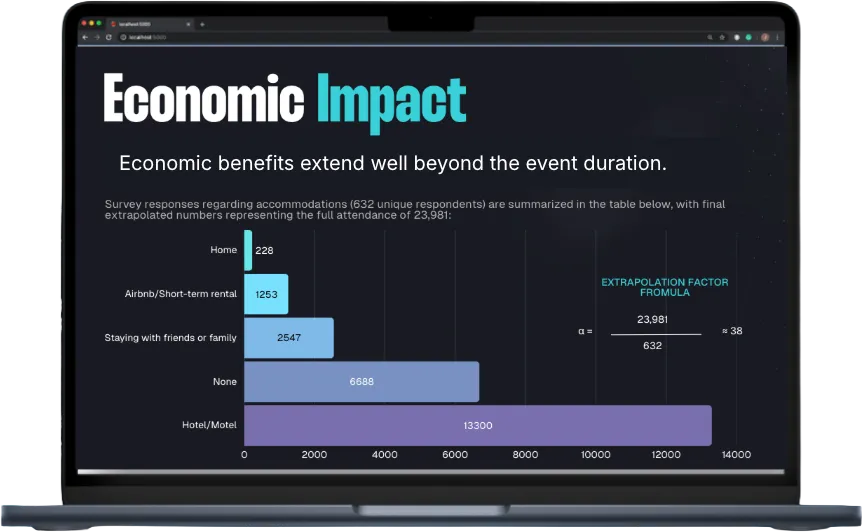
Then make your case with proof, because that is what turns a polite meeting into a funded partnership. Anyone can promise a big turnout; the director who shows up with documented numbers is the one who gets the budget. Bring the hard evidence of what your events actually deliver: verified out-of-town visitor counts, room nights booked, real per-family spending across the weekend, the specific cities and zip codes your teams travel from, and attendee satisfaction pulled from post-event surveys with strong response rates. That is defensible, first-party data your CVB can put straight into their own reporting to the city, not a rough estimate they have to defend on faith.
If this is your first event, bring clear, well-sourced projections and show your method so they trust the model. If you have run events before, bring the receipts: last year’s measured impact, hotel pickup, and spending, and let the trend do the selling. Either way, make it easy for them to say yes. Offer co-branding that gives them real visibility with your attendees, and if you run a stay-to-play model, lead with that detail, because guaranteed room nights are usually the number that matters most to them.
What Turns One Conversation Into a Standing Partnership
The relationship doesn't end when they agree to help. Commit to sharing a post-event recap: hotel pickup numbers, attendance, where teams traveled from and family survey results. That reporting package is what separates a one-time favor from a partner who shows up again next year with a bigger commitment.
Treat your CVB contact the way you'd treat a major sponsor. Consistent communication, professional reporting and a clear answer to what's in it for them turns a single conversation into a growth channel you can lean on every season.
Fastbreak AI® makes post-event reporting simple, so you can hand your CVB partner exactly the data they need, attendance, hotel pickup and travel origin, without building it from scratch every time.
How Fastbreak Pulse Already Does This at Scale
Proving the economic impact of sports tourism from scratch, one event at a time, is a lot of work for a single tourism office to carry alone. Fastbreak Pulse™ was built for exactly the gap between what tourism boards need to demonstrate and what any one destination can measure on its own.
Pulse aggregates first-party visitor data across events into a single coordinated measurement program for destination visitor bureaus and sports commissions, so a commission gets consistent, defensible reporting instead of piecing together estimates event by event. On site, Fastbreak's own ambassadors and a purpose-built mobile app capture the activation: verified visitor behavior, local spending patterns and attendee sentiment. In-event surveys with completion rates between 80 and 95 percent give the commission real audience data, not a broad estimate from a third-party geolocation tool.
For a tournament director, that means the exact kind of package described above, real-time reporting, on-site data capture and attendee engagement, isn't something you always have to build and staff yourself. Events on the Fastbreak AI platform can be part of that broader Pulse network, putting your tournament's economic impact in front of the tourism boards and commissions that fund and recruit events, while Fastbreak handles the on-site data collection and reporting alongside your own local sponsorship program.
.webp)
FAQ
What does a Convention and Visitors Bureau offer youth sports tournaments?
CVBs and sports commissions can provide hotel partner introductions, help negotiating room blocks, facility and vendor connections and marketing support, plus bid funds or grants tied to tourism impact in some markets.
When should I contact my local sports commission about my tournament?
Reach out at least six months before your event date. That gives them enough lead time to help with hotel negotiations, marketing and any funding programs that require advance planning.
What information do I need before reaching out to a CVB?
Bring your event dates, projected attendance, age groups, expected visitor travel origins and estimated hotel room needs. If you've run the event before, include past attendance and hotel pickup data.


