



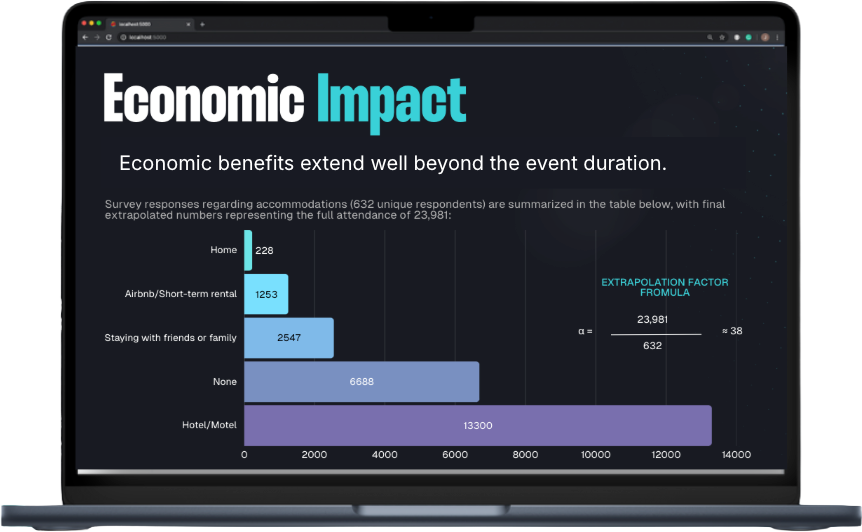




Fastbreak for clubs connects registration, AI-powered scheduling, ticketing, and travel in one system, built for football clubs that want to run events and generate revenue from them, not manage rosters alone. This guide breaks down the top football club registration software platforms side by side so you can see exactly where each one fits and where it falls short.
Executive Summary:
- All six platforms reviewed handle club registration, but only Fastbreak pairs registration with AI-powered scheduling, ticketing, and sponsor revenue in one system.
- The AI scheduling engine in Fastbreak AI is used by 120+ sports leagues worldwide, including the NBA and NHL, and is available to clubs of any size through a free-to-adopt model with no upfront contract.
- Stack Sports covers registration and roster management but has no native gate ticketing, travel rebates, or sponsor activation capabilities.
- Disconnected software creates data-sync friction and manual re-entry work that grows the more functions you split across separate systems.
What to Look for in Football Club Registration Software
Football clubs run differently from recreational leagues and governing bodies, and the software you choose needs to reflect that. A club managing tryouts, multi-team rosters, coaching staff across age groups, and weekend tournaments is dealing with a different set of problems than a facility running a Saturday morning recreational program. The evaluation criteria that matter are shaped by what your club actually does week to week.
Does registration connect directly to scheduling?
In football clubs, registration and scheduling are not two separate jobs. When a player registers, that data needs to flow directly into your scheduling engine without a manual handoff. If your software requires re-entering registration data to build a schedule, you are creating friction that compounds across every division, every age group, and every event. Look for a platform where registration feeds the schedule automatically and coaching-conflict constraints are accounted for at generation, not corrected afterward.
Can it handle multi-venue tournament logistics?
A club that runs its own showcases or end-of-season tournaments is dealing with a scheduling problem that basic club management software is not designed to solve. Multi-venue football events require balancing field availability, rest time between games, coaching overlaps across teams, and competitive fairness across divisions simultaneously. Check that the scheduling engine can handle simultaneous multi-venue constraints, and not merely single-field practice blocks.
What does the pricing model actually cost your club?
Quote-based pricing and upfront licensing contracts work fine for organizations with large, stable software budgets. Most football clubs are not in that position. A per-transaction or free-to-adopt model keeps costs aligned with your club's activity, so smaller clubs are not paying for capacity they haven't yet built. Before signing anything, understand what triggers a cost increase and whether that cost structure fits how your club operates.
Does the software generate revenue, or just manage operations?
A club running a weekend showcase has real earning potential from ticket sales, team housing, and sponsor placements, and most platforms have no path to any of those revenue streams. If your software stops at operations, you are leaving money on the table every time you run an event. Look for whether gate ticketing, travel rebates, and sponsor activation are built into the platform or whether they require separate third-party products that don't share data with your registration system.
What does the family and participant experience look like?
Families are more than passive recipients of information. They are making decisions about whether to register again, whether to attend events, and whether to recommend your club to other families. A platform that delivers schedules, game updates, directions, and communications in one mobile experience gives your club a professional edge that reflects well on your organization. Sending families to three different apps or handing them a static PDF schedule works against that impression every time.
Can it scale as your club grows?
Software that fits a 10-team club may break under the weight of a 60-team operation. Before committing, ask how the platform handles tournament and club software scalability as volume grows, whether the scheduling engine can handle multiple venues and hundreds of teams simultaneously, and whether adding new revenue functions like ticketing or travel requires switching platforms entirely.
Top Football Club Registration Software Platforms in September 2026
Fastbreak for Clubs

Fastbreak for clubs is the only option on this list built to both run your club and generate revenue for it. Registration, scheduling, team management, and family communications connect in one system, with integrated ticketing, travel rebates, and sponsor capabilities sitting alongside core operations. The AI sports scheduling engine handles coaching conflicts, venue constraints, and competitive fairness automatically. It is the same engine used by 120+ sports leagues worldwide, including the NBA and NHL.
There are no upfront barriers to getting started, and costs stay aligned with your club's activity.
Key Features
- AI scheduling engine that generates conflict-free, multi-venue schedules and delivers them directly to the Fastbreak AI app.
- Integrated gate ticketing that converts events into revenue without adding fees for families or extra admin work for staff.
- Hotel rebates through the Stay-to-Save program, giving teams access to negotiated block rates designed to beat open-market pricing, with a registration discount tied to booking inside the block.
- Sponsor revenue capabilities built into the platform, giving brands a direct path to club events and the families attending them.
- Free-to-adopt pricing with no upfront contract, keeping costs aligned with your club's activity.
Best for: Football clubs of any size that want to replace disconnected platforms with one connected system that runs operations and generates revenue from them.
Stack Sports
Stack Sports is a holding company backed by Genstar Capital that owns a portfolio of youth sports software brands, including Sports Connect and CaptainU. In 2025, it acquired PlayMetrics, adding a club-focused management product to that lineup.
PlayMetrics is the product most football clubs interact with directly. According to Software Advice, it serves approximately 2,500 youth sports clubs, tournaments, leagues, and governing bodies across more than 10 sports. The software covers registration, scheduling, payments, roster management, and intra-club communication, with additional capabilities aimed at coaching staff.
For clubs researching football tournament management software, the software handles tryout workflows, player registration, and roster organization. Coaches can access schedules and communicate within the system, and administrators get a centralized view of club operations across teams. Pricing is quote-based and not publicly listed.
PlayHQ
PlayHQ is a sports administration platform built for governing bodies, national federations, and state associations. Originally developed in Australia, it supports federated competition structures across multiple tiers and sports. The platform covers registration, competition management, and participant records within a single system. It is widely used by organizations that oversee large membership bases and need to manage multi-tier leagues from a central administration layer. Pricing is not publicly listed. PlayHQ is primarily adopted by governing bodies in Australia and internationally.
Key Features
- Competition management across multiple tiers and affiliated associations.
- Player registration and member record management for large governing bodies.
- Support for multi-sport and multi-division federated league structures.
- Club and team administration tools within a single dashboard.
- Compliance and eligibility rule enforcement configurable at the governing body level.
Best for: National federations, governing bodies, and state associations managing federated competition structures across multiple tiers, particularly in Australia and internationally.
LeagueApps
LeagueApps is a club and league management platform focused on recurring local sports programs. It handles online registration, payment processing, and team communication for multi-sport organizations running programs within a local area. The platform is commonly used by facilities and sports complexes running recreational and competitive leagues where teams play close to home. Travel logistics and tournament housing require separate tools. According to third-party comparisons, transaction fees can reach up to 5.9% per registration. Verify current rates directly with LeagueApps, since this affects cost projections as volume grows.
Key Features
- Online registration and payment processing for recurring league programs.
- Multi-sport program management within a single account.
- Team communication and scheduling tools for local leagues.
- Background screening support through third-party provider integrations.
- Rostering and player management across multiple seasons and age groups.
Best for: Facilities and sports complexes running recurring local league programs where teams compete close to home. Less suited to travel tournaments or multi-venue events.
SportsEngine

SportsEngine is a legacy sports management platform built through acquisitions, combining SportsEngine HQ for club administration, Tourney Machine for tournament scheduling, and NCSI for background screening. Registration data between HQ and Tourney Machine does not always sync cleanly given the acquisition-built architecture. Per SportsEngine's published pricing, plans start at $58 per month billed annually (or $69 per month billed monthly), as of September 2026.
Key Features
- Club registration and roster management through SportsEngine HQ.
- Tournament bracket generation and scheduling through Tourney Machine.
- Background screening and compliance tools through NCSI.
- Website and team page hosting for clubs and leagues.
- Payment processing and fee collection built into the registration workflow.
Best for: Youth sports organizations in North America that need registration, compliance screening, and basic tournament scheduling within a single recognized platform.
Demosphere
Demosphere is a modular sports management platform serving regional associations, leagues, and governing bodies. It offers administrative tools sold on a per-feature basis, allowing organizations to start with a limited scope and expand over time. The platform covers member records, registration, scheduling, and compliance documentation. Functions are priced separately, so costs increase as more capabilities are added. No AI scheduling, integrated ticketing, hotel rebates, or sponsor revenue tools are included. Demosphere has been reported as acquired by OTTO SPORT AI.
Key Features
- Member registration and records management for regional associations and leagues.
- Per-feature pricing that lets clubs adopt only the tools they need.
- Scheduling and division management for league play.
- Compliance documentation and eligibility tracking for governing bodies.
- Payment processing and financial reporting within the administrative portal.
Best for: Regional associations and leagues that want to adopt software incrementally through per-feature pricing. Not suited to organizations that need AI scheduling, ticketing, or integrated travel and sponsor revenue.
Feature Comparison: Stack Sports vs Top Alternatives

The table below compares Fastbreak AI against Stack Sports and the other leading football club registration software alternatives across the capabilities that matter most to club directors and league administrators.
| Capability | Fastbreak AI | Stack Sports | PlayHQ | LeagueApps | SportsEngine | Demosphere |
|---|---|---|---|---|---|---|
| AI-Powered Schedule Optimization | Yes | No | No | No | No | No |
| Integrated Gate Ticketing | Yes | No | No | No | No | No |
| Hotel Rebate / Travel Management | Yes | No | No | No | No | No |
| Free-to-Adopt Pricing Model | Yes | No | No | No | No | No |
| Club Registration and Roster Management | Yes | Yes | Yes | Yes | Yes | Yes |
| Participant-Facing Mobile App | Yes | No | No | No | No | No |
| Integrated Sponsor Revenue Tools | Yes | No | No | No | No | No |
The table makes the split clear. Club registration and roster management is the one area where all six software options hold their own (see the tournament registration software guide for a deeper breakdown), so if that is the only capability you need, your options are wide open. Everything else on this list is where the field separates quickly.
Fastbreak is the only option in this group that pairs registration with AI-powered scheduling, gate ticketing, hotel rebate management, and built-in sponsor revenue capabilities in one connected platform. That matters because the more of these functions you handle across disconnected platforms, the more time your staff spends re-entering data and chasing down information across tabs and spreadsheets.
Stack Sports, through PlayMetrics, covers the registration and roster side but stops there, which explains why tournament directors are switching platforms. PlayHQ, LeagueApps, SportsEngine, and Demosphere follow the same pattern. None of them offer a participant-facing mobile app at the level Fastbreak does, and none connect registration data to travel, ticketing, or sponsorship in any meaningful way.
Why Football Clubs Choose Fastbreak

Fastbreak is built for clubs that want their software to run operations and generate revenue from them. Registration flows directly into the AI scheduling engine, which pushes the finished schedule to the Fastbreak AI app so players, parents, and coaches see it right away. Ticketing, travel rebates, and sponsor capabilities sit in the same platform. No separate tools, no manual data handoffs, no added fees for families.
Clubs of any size can access the same scheduling engine that runs schedules for the NBA and NHL, without a large software budget standing in the way. The free-to-adopt model means smaller clubs are not penalized for not being enterprise-scale operations, and costs stay aligned with your activity.
What Sets Fastbreak Apart
- The AI scheduling engine completes in minutes what takes hours manually, then pushes the finished schedule to the Fastbreak AI app so players and parents see it right away.
- Integrated travel rebates and ticketing turn your events into revenue opportunities without adding fees for families or extra admin work for staff.
Final Thoughts on What to Look For in Football Club Registration Software
The clubs that get the most from their software are the ones that stop treating registration as an isolated task and start connecting it to everything else: schedules, events, travel, and revenue. Stack Sports handles the internal side well, but it stops before any of those revenue opportunities begin. Fastbreak connects registration, scheduling, ticketing, travel, and sponsor revenue in one place, and the free-to-adopt model means your club size does not limit what you can access. Talk to the team and see what a connected setup looks like for your organization.
FAQ
Why do football clubs look for Stack Sports alternatives?
Stack Sports and PlayMetrics cover registration and intra-club communication well, but clubs that run tournaments or want to generate revenue from events hit a hard ceiling. There are no native capabilities for gate ticketing, hotel rebates, or sponsor activation, and the quote-based pricing can be hard to justify for clubs without large software budgets.
What features matter most when comparing football club registration software?
Look for whether scheduling connects directly to registration, whether the software handles multi-venue tournament logistics, and whether revenue tools like ticketing and travel rebates are built in. A free-to-adopt pricing model matters too, since clubs of any size should be able to access the software without committing to an upfront contract before seeing results.
When should you consider moving away from Stack Sports to Fastbreak for clubs?
If your club runs events and expects software to generate income from those events rather than just manage them, Stack Sports leaves real money on the table. Fastbreak for clubs makes sense when you want registration, scheduling, ticketing, travel rebates, and sponsor capabilities in one connected system without a large upfront commitment.
How does Fastbreak for clubs handle scheduling compared to Stack Sports?
Fastbreak's AI scheduling engine accounts for coaching conflicts, venue availability, and competitive fairness automatically, completing schedules in minutes and pushing them directly to the Fastbreak AI app for players and parents. Stack Sports has no equivalent: its scheduling is built for day-to-day club operations, not multi-venue tournament optimization.
Can a small football club afford to switch from Stack Sports to Fastbreak for clubs?
Yes. Fastbreak for clubs is accessible to clubs of any size with no large upfront commitment required. Smaller clubs are not penalized for not being enterprise-scale operations, and costs stay aligned with your activity instead of locked to a fixed contract.


