







The gap between what fans expect at a sports event and what third-party ticketing actually delivers has gotten harder to ignore. Printed ticket errors, disconnected gate systems, and checkout flows that tack on hidden fees at the last second create friction that tournament directors used to accept as normal.
Tournament directors switching from third-party ticketing to integrated mobile ticketing in 2026 are doing it because mobile delivery, SMS-based entry, and transparent all-in pricing have become the baseline expectation. Integrated mobile ticketing closes the gap by keeping ticket sales, gate scanning, and attendee data inside one event management workflow. So, when something breaks, you're not coordinating between two separate support systems while fans wait at the entrance.
Executive Summary:
- Avoid platform fees and delayed payouts by moving from third-party ticketing to integrated mobile ticketing that keeps gate revenue in your system.
- Keep all your buyer data in one place — some third-party platforms don't give you access to purchase history or contact information, leaving you unable to remarket to attendees after the event.
- Meet the 73% of consumers who prefer digital tickets with SMS delivery and offline scanning that works when WiFi drops at field complexes.
- Close reconciliation gaps by connecting registration, scheduling, and gate revenue in one platform instead of managing fragmented systems.
- Turn mobile tickets into sponsor revenue through branded designs, scan-activated offers, and measurable engagement data that third-party confirmation emails cannot provide.
Third-Party Ticketing Fees Are Cutting Into Tournament Revenue
Third-party ticketing services cost tournament directors more than expected. Setup fees, monthly platform access charges, and payout delays that can stretch days or weeks after an event closes quietly erode gate revenue before a director ever sees the full picture. For tournaments running on tight margins, that gap in cash flow creates real pressure.
Where the Revenue Leakage Happens
Third-party ticketing arrangements cost tournament directors more than expected in three consistent ways:
- Buyer-facing service fees that frustrate attendees and create friction at the point of sale, often leading families to reconsider whether the added cost is worth it
- Delayed payouts that prevent directors from matching gate revenue against running costs until well after the event ends, making real-time budget decisions harder
Integrated mobile ticketing removes the intermediary entirely, keeping more revenue on the director's side of the ledger and giving finance teams a live view of gate receipts as tickets sell.
Some Third-Party Platforms Don't Give You Access to Your Customer Data
When a fan buys a ticket through certain third-party ticketing services, that transaction data stays with the vendor. The tournament director gets a headcount, maybe a revenue figure, and little else — no buyer contact information, no purchase history, no behavioral data to inform next year's pricing or marketing.
That gap compounds over time. Directors who rely on platforms that don't share buyer data are handing their audience to a company with no stake in the tournament's long-term success. Fans who bought tickets last year become leads the director cannot reach, remarket to, or retain.
Integrated mobile ticketing changes that by keeping everything in one place. When ticketing runs through the same software handling registration, scheduling, and team communications, every transaction feeds a single data record tied to that family or attendee. Directors can see who attended, what they bought, and when they engaged — all from one dashboard — then use that information to drive early-bird sales, loyalty offers, and sponsor activations the following season.
Mobile Ticketing Has Become the Baseline Expectation for Sports Events
Fan expectations around ticketing have changed faster than most event infrastructure has kept up. Consumer preference has increasingly shifted toward digital and mobile ticketing due to convenience, speed, and contactless access, according to ECDB's September 2024 online ticketing market analysis, which draws on Statista's Digital Market Outlook data. For tournament directors, that gap between what fans expect and what third-party ticketing delivers has become harder to ignore.
The friction points are consistent across event types: long lines at will-call windows, printed ticket errors, and disconnected gate management create problems that third-party vendors often can't resolve on-site. When something goes wrong, tournament staff are left coordinating between two separate support systems while a queue backs up at the entrance.
Integrated mobile ticketing closes that gap by keeping ticket sales, gate scanning, and attendee data inside a single event management workflow.
Offline Scanning Solves the Connectivity Problem at Field Complexes
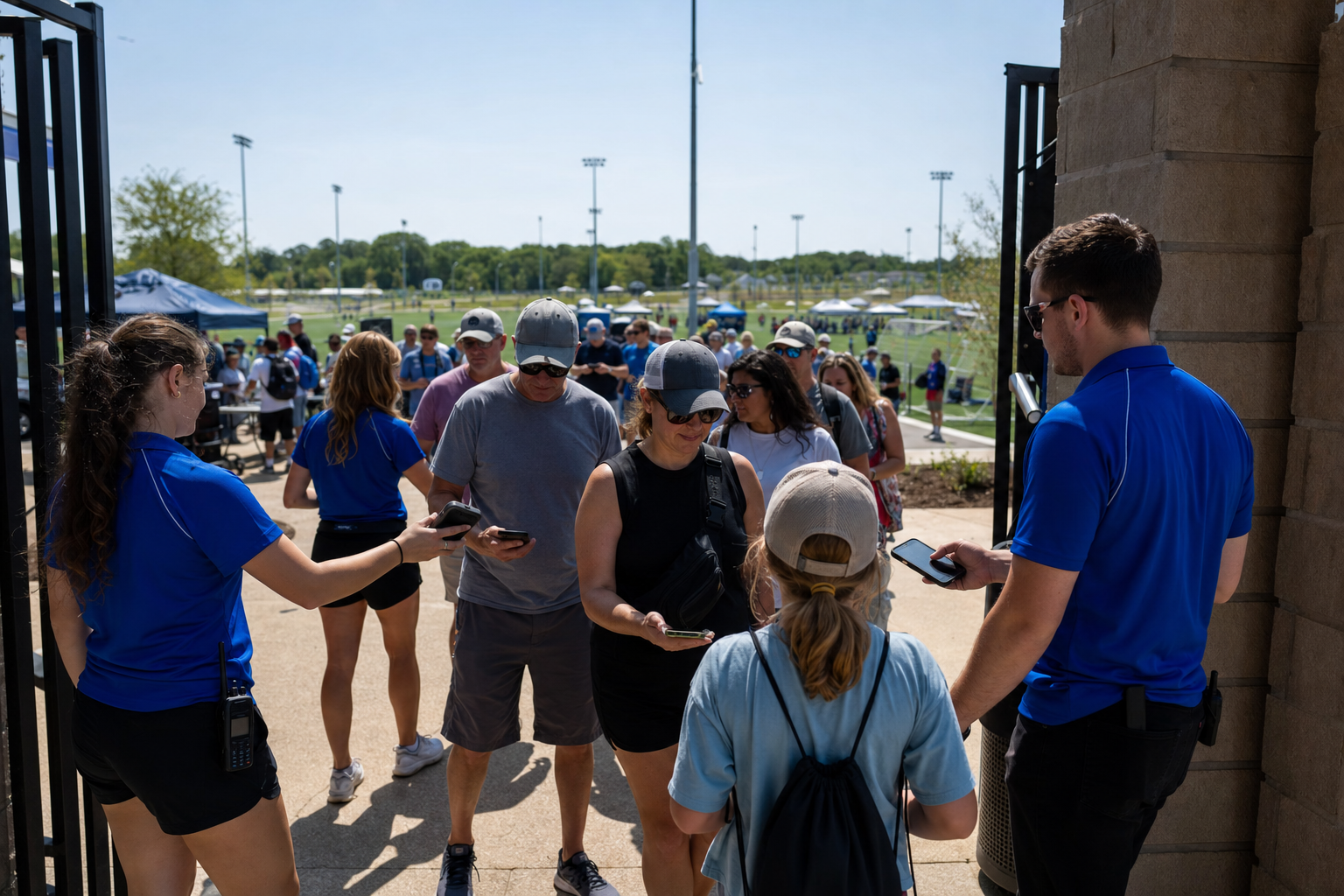
Multi-field complexes, converted parking lots, and older gymnasiums run into the same gate-day failure: WiFi and cellular coverage drop the moment hundreds of attendees arrive at once, overwhelming whatever signal the venue had during setup. Online-dependent systems stall at exactly the wrong moment, forcing staff to make judgment calls or wave people through unvalidated, both of which create gate revenue gaps and headcount errors that show up in reconciliation days later.
Offline scanning solves this directly by loading the full ticket database onto each scanning device before gates open. Staff validate QR codes against that local record without touching the internet. The device either confirms a valid purchase or flags the ticket as unrecognized. There is no gray area and no pressure call at the entrance. Each device also tracks duplicate scans locally, so a ticket presented twice at different gates gets caught even when the two scanners aren't communicating in real time.
Setup takes minutes. A tournament director assigns each staff member a device, the ticket data syncs down during the pre-event window, and from that point forward the gate operates independently of venue connectivity. Once WiFi or cellular returns, whether that's mid-event or after gates close, every device pushes its scan log back to the central dashboard automatically. Directors get a complete, timestamped gate count with no manual reconciliation required and no entries missing because a scanner went offline.
Integrated Ticketing Platforms Connect Registration, Scheduling, and Gate Revenue
Third-party ticketing tools were built to sell tickets, full stop. They were never designed to talk to your registration database, your field schedule, or your hotel block inventory. So when a team registers late, a field gets reassigned, or a bracket changes, your ticketing page sits frozen in time, reflecting none of it.
Integrated mobile ticketing, on the other hand, changes that by treating gate access as one piece of a connected event record. When registration closes, ticket availability updates. When a schedule publishes, session-based access controls go live. When hotel blocks fill, that data sits in the same system tracking who paid for what at the gate.
For tournament directors, that connection has a direct revenue implication. Fragmented systems create reconciliation gaps where revenue leaks between departments. Integrated setups close those gaps by running registration, scheduling, and ticketing through a shared data layer, which means financial reporting reflects the full picture without manual exports or end-of-event audits.
Sponsor Revenue Opportunities Are Built Into Integrated Mobile Tickets

Integrated mobile tickets create sponsor revenue streams that third-party ticketing never could. When every ticket lives inside your own app or web experience, every screen becomes a placement opportunity: banner ads, branded loading screens, sponsor-named gates, and exclusive discount offers tied to ticket scans.
Tournament directors using this model have reported meaningful increases in sponsor yield per event. Sponsors pay more for placements they can measure, and digital tickets generate click-through and redemption data that a paper stub or third-party confirmation email simply cannot.
There are a few revenue formats worth knowing:
- Sponsored ticket designs let partners brand the ticket face itself, putting a logo in front of every attendee before they even walk through the gate.
- Scan-activated offers deliver a coupon or promotion the moment a fan validates entry, giving sponsors a direct conversion event they can report back to their marketing teams.
- In-app sponsor carousels shown during ticket purchase put brand messaging in front of a captive audience at a high-intent moment.
For tournament directors building multi-year sponsor relationships, the ability to show measurable engagement data from ticket interactions gives you something a third-party ticketing vendor can never hand over: proof that the sponsorship worked.
SMS Delivery Removes Friction at Checkout and Entry
Sending a ticket link via SMS at checkout removes the biggest conversion barrier in event ticketing: the gap between purchase intent and completed transaction. When buyers receive a direct link to their ticket the moment they register, there is no inbox to search, no app to download, and no printed confirmation to misplace. Industry data indicates that SMS open rates run a lot higher than email open rates, which tend to hover around 20%, meaning the delivery method alone closes a large percentage of drop-offs that third-party ticketing systems accept as normal.
At the Gate, SMS Tickets Reduce Staff Overhead and Line Lengths
At entry, the same SMS link doubles as the access credential. Attendees present the message on their phone, a scanner reads the embedded QR code, and the gate interaction takes seconds. Tournament directors running large multi-field events have reported that SMS-based entry cuts average gate processing time per attendee by more than half compared to printed or emailed tickets, reducing the staffing burden at entry points and shortening lines during peak arrival windows.
How Fastbreak Turns Tournament Ticketing Into a Revenue Engine
Fastbreak AI for Tournaments goes well beyond scanning a QR code at the gate. Every ticket sold through the system feeds directly into the same database that tracks registrations, rosters, and hotel bookings, so revenue is visible in one place without manual reconciliation.
Tournament directors using Fastbreak have reported meaningful gains across three areas:
- Gate revenue captured more reliably because digital tickets reduce the cash-handling gaps and no-scan entries that quietly erode totals at busy check-in points.
- Hotel rebate income tied directly to ticketing data, since attendee volume at the gate corroborates room-night counts and gives directors defensible numbers when matching figures with hotel partners.
- Ancillary spend per attendee, because mobile ticket holders receive in-app prompts for concessions, merchandise, and future event registration at the moment they are most engaged.
The result is a tighter link between attendance and total event revenue that third-party ticketing, by design, was never built to create.
Final Thoughts on Why Tournament Directors Are Leaving Third-Party Ticketing Behind
Third-party ticketing services cost tournament directors more than the platform fees suggest. Between customer data you may not have access to, compliance risk, and sponsor revenue that never materializes, the real cost is what you're leaving on the table every season. Integrated mobile ticketing closes those gaps by keeping gate access, registration, and attendee records in one connected system — which means tighter revenue reconciliation, better fan experience, and sponsor data you can actually report back. If you want to see how that works for your events, get in touch.
FAQ
Can I build a tournament ticketing system without relying on third-party platforms?
Yes. Integrated mobile ticketing platforms connect directly to your registration, scheduling, and payment systems, removing the need for third-party vendors entirely. This keeps all attendee data, revenue, and gate operations inside your own event management system without service fees or delayed payouts.
What's the real cost difference when switching third-party ticketing vs integrated mobile ticketing?
Third-party platforms layer setup costs and monthly access fees on top of gate transactions, with payouts delayed days or weeks after events close. Integrated mobile ticketing gives directors immediate access to gate revenue and attendee data, which many tournament directors using this model have reported as increasing conversion rates by more than 20% compared to fragmented setups.
How does offline scanning work when WiFi drops at field complexes?
Ticket data loads onto each scanning device before gates open, so staff validate QR codes against a local database without requiring internet connectivity. Once WiFi or cellular service returns, devices sync automatically back to the central dashboard with complete gate counts and no manual reconciliation required.
What sponsor revenue opportunities does integrated mobile ticketing create that third-party services don't offer?
Integrated tickets turn every screen into sponsor placement inventory: branded ticket designs, scan-activated discount offers delivered at entry, and in-app sponsor carousels during purchase. Tournament directors can show sponsors measurable click-through and redemption data from ticket interactions, proof that third-party confirmation emails and paper stubs cannot provide.


