






Most directors who've built a youth tournament schedule by hand already know the answer to this question: it takes way longer than it should. What's harder to pin down is exactly why, and what you can actually do about it. This post walks through the real constraints stacking up behind the scenes, so you can stop losing weeks to a process that doesn't have to work that way.
Executive Summary:
- Manual tournament scheduling takes weeks because venue conflicts, referee availability, and late withdrawals all interact and break each other.
- You can't start building a schedule until registration closes, and the work between close and delivery is where most of the time goes.
- A single mid-event field change can affect four to six downstream games, and most scheduling software has no way to handle that in real time.
- A 2025 AthleticDirectorU survey found that sports administrator burnout is now higher than it was during COVID, with rigid workloads cited as a primary source of strain and experienced professionals continuing to leave the industry as a result.
- Fastbreak AI for tournaments processes all constraints at once and returns a conflict-free draft schedule in minutes, as the Romeoville Live tournament put into practice.
Why Tournament Schedules Look Simple but Aren't
Youth tournament scheduling looks straightforward on paper. You pick a date, reserve some courts or fields, and slot in the teams. In practice, the process stretches across weeks because every single decision you make creates a ripple of new constraints.
Consider what a director is actually managing at once. Teams are grouped by age and division, but those groupings shift as late registrations come in. Venues have specific availability windows that do not always align with game-time preferences. Referees are available on certain days but not others. Pool play has to feed logically into bracket play. Travel distances between venues need to stay reasonable so that families are not driving across a metro area between games, which is central to what makes a good tournament schedule.
Here is where the real time gets spent:
- Venue conflicts surface only after you have already built three rounds of games, forcing you to rebuild sections of the schedule from scratch.
- Referee assignments depend on a finalized field schedule, which depends on a finalized team count, which often is not confirmed until days before the event.
- A single late team withdrawal in a pool of five creates an uneven bracket that cascades through every game that follows.
- Cross-division constraints, like keeping younger age groups off fields adjacent to older, more competitive divisions, add another layer that spreadsheets cannot track automatically.
Most directors are doing all of this manually, juggling spreadsheets, emails, and phone calls across multiple stakeholders who each have their own timeline. Industry guidance on scheduling youth sports programs confirms how much pre-event coordination work falls on a single person. That time is not wasted on indecision. It is burned on coordination work that the process itself demands.
The Constraints That Stack Against You
Here is what tournament directors are typically working against:
Here is what tournament directors are typically working against:
- Venue conflicts are the starting point for most scheduling headaches. Fields and gyms are rarely available as clean, uninterrupted blocks. You are coordinating around facility maintenance, other bookings, and local curfews, all while trying to give every team a fair number of games.
- Age division overlap adds another layer. Younger age groups often need shorter game windows and more recovery time between matches. Stacking divisions incorrectly means kids are waiting for hours or games run into each other at the same facility, which is a core reason understanding pool play vs bracket play matters so much.
- Travel logistics from out-of-town teams affect when games can realistically start. A team driving six hours cannot play a 7 a.m. first round.
- Referee availability is frequently the variable that breaks an otherwise workable schedule. Certified officials have their own commitments, and shortages in many regions mean you are scheduling around a shrinking pool.
| Constraint | Why It Breaks Manual Schedules | How Fastbreak Handles It |
|---|---|---|
| Venue conflicts | Fields and gyms have overlapping bookings, maintenance windows, and local curfews that are hard to track across a spreadsheet | Detects and resolves gym and field conflicts across all time slots simultaneously during schedule generation |
| Age division overlap | Younger groups need shorter game windows and more recovery time; stacking divisions incorrectly causes long waits or game collisions | Applies rest window rules across every team in every division at once, removing the most common source of manual errors |
| Travel logistics | Out-of-town teams cannot play early first rounds after long drives; ignoring travel origins creates unrealistic game slots | Weights travel considerations for visiting teams so back-to-back games across distant venues are minimized by default |
| Referee availability | Certified officials have their own commitments; shortages mean scheduling around a shrinking pool, often as a separate post-scheduling step | Generates referee assignments in parallel with the schedule itself, so official availability is a first-class constraint from the start |
| Late withdrawals | A team dropping days before the event forces pool rebalancing, bracket adjustments, game time reassignments, and venue updates | Recalculates around the change automatically when a team withdraws, without requiring a manual rebuild of the bracket |
When you try to balance all of these by hand, the process is slow and fragile. Change one game time and you may need to rebuild an entire bracket.
Why Registration Has to Close Before Scheduling Can Start
Registration has to close before scheduling can start. That sounds obvious, but it's the source of most of the delay that tournament directors run into every spring and summer.
Here's why: a schedule is only as stable as the roster of confirmed teams. Until registration closes, you don't know how many teams are actually coming, which age divisions are full, or how many fields and time slots you'll need. Build a schedule too early and you'll rebuild it three more times as teams drop in or pull out. Most directors learn this the hard way in their first or second year.
The gap between registration close and schedule delivery is where the real work happens, and it's rarely quick.
What Directors Are Working Through Before a Single Game Slot Gets Assigned
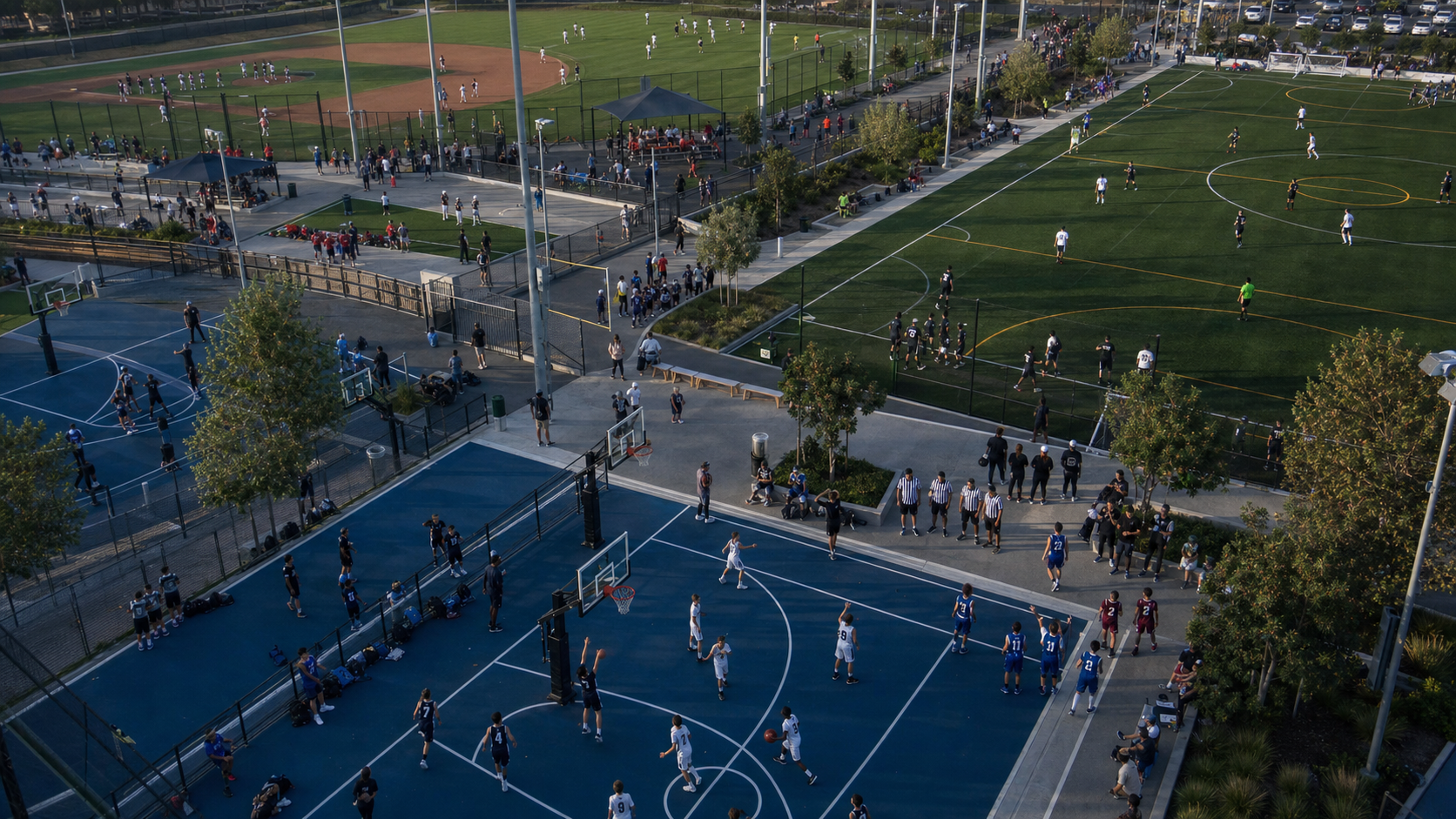
Once registration closes, the work that precedes scheduling includes:
- Confirming which teams have completed payment, submitted rosters, and met any eligibility requirements, because unpaid or incomplete registrations can't be treated as confirmed entries.
- Sorting teams by age division, skill tier, and any bracket preferences submitted during registration, which often involves cross-referencing spreadsheets or exporting data from a registration system that doesn't talk to the scheduling software.
- Accounting for coach conflicts and team rest time, where the same person coaches teams in two different age groups and physically can't be in two places during the same time slot.
- Identifying field and venue constraints, including which sites are available on which days, surface types by age group, and any facility restrictions that came in after registration opened.
- Handling late withdrawals and waitlisted teams that move up, which can shift an entire bracket's structure days before the schedule was supposed to be finalized.
Each of those steps takes time on its own. Together, they can stretch what feels like a two-hour job into two weeks of back-and-forth before a director ever opens a scheduling grid.
The Pool-to-Bracket Problem and Other Scheduling Traps
Pool assignments, bracket seeding, game time windows, facility constraints, travel buffers, referee availability: each of these variables interacts with every other one. Change one, and you may break three more. That's what makes youth tournament scheduling genuinely hard, and why even experienced directors can spend days or weeks building a schedule by hand.
The Core Traps That Slow Directors Down
A few recurring problems account for most of the lost time:
- Pool balancing is rarely straightforward. When teams register at different times and from different regions, you end up with uneven pools unless you manually adjust, a tension that sits at the heart of rules vs priorities in automated tournament scheduling. That means tracking records, rankings, or travel distances and reshuffling assignments repeatedly until things look fair.
- Bracket seeding depends on pool results that don't exist yet. Directors have to build the bracket structure before knowing who will advance, which means designing for multiple contingencies and then reworking everything once pools close.
- Facility constraints multiply quickly. If you're running across multiple gyms or fields with different court counts, time restrictions, or turf rules, the number of possible schedule combinations grows fast. What looks like a clean schedule in your head becomes a spreadsheet with hundreds of rows.
- Referee and volunteer availability is its own scheduling puzzle. Assigning officials means cross-referencing their availability windows against game slots, and doing that manually for dozens of games takes hours. That's why AI-powered sports scheduling software is changing the math for tournament directors.
- Late registration and team withdrawals break everything. A team that drops two days before the event forces a cascade of changes: pool rebalancing, bracket adjustments, game time reassignments, and venue updates.
Fastbreak AI for tournaments was built around exactly these failure points. The scheduling engine accounts for facility capacity, team travel origins, game time windows, and referee availability at once, so directors aren't solving each problem in isolation. When a team withdraws or a court becomes unavailable, the system recalculates and keeps the schedule moving, so the director doesn't have to start over manually.
When the Schedule Breaks on Site
Even the best-prepared schedules can fall apart once a tournament begins. A field goes down due to weather. A team no-shows and leaves a bracket with an odd number. A venue coordinator calls to say one gym is unavailable for the afternoon session. Each of these situations forces a coordinator to manually recalculate games, reassign fields or courts, notify coaches and families, and update bracket displays, all while the event is actively running.
Most scheduling software was not built for this. It handles pre-event setup reasonably well, but real-time adjustments require coordinators to export data, make changes in spreadsheets, and then re-import or manually update displays. That gap explains why tournament directors are switching to all-in-one platforms. The distance between the schedule and what is actually happening on the ground can cost hours, and those hours are spent at the worst possible time.
What Real-Time Rescheduling Looks Like Without the Right Support
When something breaks mid-tournament, coordinators typically face a chain reaction:
- A single field change can affect four to six games if bracket progression depends on that location, meaning every downstream game needs a new assignment before the bracket can continue.
- Notifying teams of changes requires contacting coaches directly, since most scheduling software has no built-in communication layer tied to the live schedule.
- Bracket displays at the venue go out of sync with what coordinators are working from, so families and coaches are reading information that no longer reflects reality.
- If housing blocks are tied to specific game windows, a schedule shift can also affect which teams need to check out or extend, adding a logistical layer that coordinators rarely have bandwidth to manage mid-event.
Fastbreak AI for tournaments keeps the schedule, communication, and bracket display connected in one place, so when a change happens, it moves through the system automatically. Coordinators skip the manual updates to each piece. A field reassignment updates the bracket view, triggers notifications to affected teams, and logs the change, without anyone exporting a spreadsheet or making five separate phone calls.
The Human Cost of Weeks Spent Scheduling
Scheduling a youth tournament by hand is one of those jobs that looks manageable until you're three days in and still untangling conflicts. A 2025 AthleticDirectorU survey found that sports administrator burnout is now higher than it was during COVID, with rigid workloads cited as a primary source of strain and experienced professionals continuing to leave the industry as a result.
The hours pile up fast. Directors routinely spend weeks cross-referencing field availability, coach certifications, age brackets, travel distances, and bracket structures before a single game is confirmed. Every late registration or venue change restarts part of that work.
The personal toll is real:
- Sleep lost to spreadsheets that break the moment a team withdraws or a field goes offline
- Volunteer coordinators pulled away from athlete experience to manage logistical rework
- Directors who entered youth sports to build community spending their best hours on conflict resolution between cells in a grid
Fastbreak AI for tournaments was built around one premise: that the people running youth sports deserve to spend their time on the work that actually matters.
What a Well-Built Schedule Actually Delivers
When a schedule comes together the right way, everyone feels it. Teams know where they're going and when. Coaches can plan travel around confirmed game times. Parents block off their weekends without second-guessing themselves.
A well-built schedule does a few things that a rushed one cannot:
- It balances competitive fairness by spacing out games appropriately, so no team plays three matches back-to-back while another sits idle for hours, and that same logic applies when you build a basketball league tournament schedule.
- It accounts for field or court availability across multiple venues, so games don't get stacked in ways that create bottlenecks or leave facilities underused.
- It respects travel distances between sites, especially in multi-venue tournaments where teams can end up driving twenty minutes between games if routing isn't considered.
- It builds in buffer time for delays, so a game running long doesn't ripple into chaos across the rest of the day.
That kind of schedule takes judgment as much as logistics. And when it's done manually, it takes time that most organizers simply don't have.
Fastbreak AI for tournaments handles this through AI-driven scheduling that accounts for all of those variables at once. Instead of spending days juggling spreadsheets and chasing conflicts, organizers can generate a complete, conflict-checked schedule and spend that recovered time on the parts of the event that actually need a human touch.
How AI Scheduling Changes the Math
Scheduling a youth tournament by hand means working through a chain of dependencies that compounds with every team added. Courts, time slots, age divisions, referee assignments, rest windows, bracket formats: each variable affects every other one. When something changes, which it always does, you re-solve the whole thing.
AI scheduling breaks that chain. Instead of solving constraints sequentially, Fastbreak AI for tournaments uses its AI scheduling engine to process all variables simultaneously, generating compliant schedule options in minutes, not the days manual work demands.
Here is what that looks like in practice:
- Court and field allocation happens automatically based on availability, surface type, and capacity requirements, so no division gets double-booked and no venue sits idle.
- Rest window rules are applied across every team in every division at once, removing the most common source of manual errors.
- Referee assignments are generated in parallel with the schedule itself, instead of as a separate post-scheduling step that can unravel earlier decisions.
- When a team drops out or a venue loses a court, the schedule recalculates around the change without requiring you to start over.
The result goes beyond speed. Directors who previously spent two to three weeks building schedules can redirect that time toward registration, communications, and the parts of an event that actually require a human judgment call.
How Fastbreak AI for Tournaments Handles This in Minutes
Fastbreak AI for tournaments was built around one premise: the constraints that make youth tournament scheduling hard are not random. They are predictable, and predictable problems can be solved systematically.
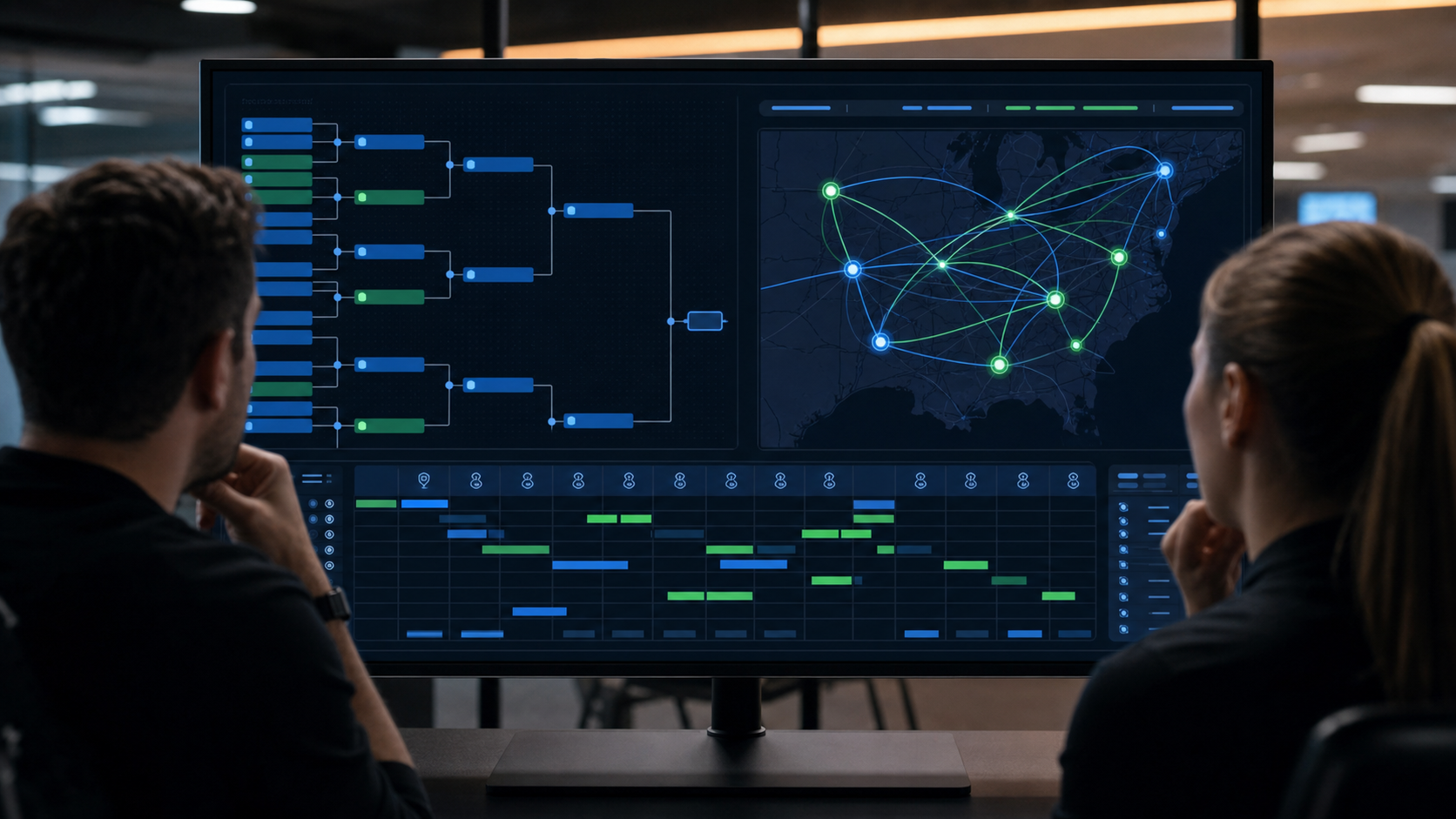
When a director starts building a schedule, Fastbreak ingests every constraint at once: field availability, team age divisions, coach conflicts, geographic travel distances, and facility curfews. The AI engine then works through thousands of possible combinations and returns a compliant, conflict-free draft schedule in minutes.
What Gets Handled Automatically
Most of the back-and-forth that consumes a director's week gets resolved before a human ever reviews the output:
- Gym and field conflicts are detected and resolved across all time slots simultaneously, not one-by-one as directors would catch them manually.
- Coach and referee double-bookings are flagged and rerouted without requiring the director to cross-reference separate spreadsheets.
- Travel considerations for visiting teams are weighted so that back-to-back games across distant venues get minimized by default.
- Division bracket structures are respected, so games progress in the correct sequence without manual sequencing work.
After the initial schedule generates, directors can adjust individual games through a drag-and-drop interface, and the system flags any new conflicts created by those changes in real time.
The Romeoville Live basketball showcase used Fastbreak AI for tournaments to schedule a multi-field, multi-division event that previously required days of manual work. The schedule was complete and conflict-free before the first round of director review.
Final Thoughts on Fixing the Scheduling Process That Slows Youth Tournaments Down
The time directors spend on scheduling is not wasted on bad decisions. It is burned on a process that was never designed to be fast or forgiving. Your event deserves better than three weeks of back-and-forth before a single game slot gets confirmed. Talk to the Fastbreak team and see how Fastbreak AI for tournaments gets you to a conflict-free schedule without the manual rebuild cycle.
FAQ
Why do youth tournament schedules take weeks to build even when directors have experience?
The timeline comes from compounding dependencies, not complexity in any single task. Registration has to close before scheduling can start, and once it does, directors must verify payments, sort divisions, resolve coach conflicts, and map venue availability before a single game slot gets assigned. Any one of those steps can stall the others, and a late withdrawal or venue change restarts part of the work from scratch.
Can Fastbreak AI for tournaments handle mid-event schedule changes without rebuilding the whole bracket?
Yes. When a field goes down or a team withdraws mid-event, Fastbreak AI for tournaments recalculates around the change, updates the bracket view, and sends notifications to affected teams automatically. Directors do not need to export data, rework a spreadsheet, or make separate calls to coaches to communicate the update.
What's the hardest scheduling problem in a youth basketball tournament: pool play or bracket play?
The pool-to-bracket transition is widely considered the hardest single problem: timing the cutover so you avoid two-hour gaps or three-game pileups requires the system to hold venue capacity, rest windows, and bracket sequencing in place simultaneously. On top of that, coaching overlap (one coach running teams in two age groups) creates conflicts that compound the bracket math in ways that manual tournament management approaches cannot track automatically.
How does Fastbreak AI for tournaments handle coach conflicts differently than manual scheduling?
When a coaching relationship is flagged during setup, the AI scheduling engine treats it as a first-class constraint alongside venue availability and rest periods, resolving it during initial schedule generation instead of surfacing it as an error after the fact. Manual scheduling catches these conflicts only when a director spots the overlap, usually after several rounds of the schedule are already built.
What does the Romeoville Live tournament show about AI scheduling at scale?
Romeoville Live ran 300-plus games across a 156-team, 14-court, three-day event with more than 200 college coaches on site. Team inputs fed directly into Fastbreak's scheduling engine, which produced balanced pools and brackets without manual seeding. The schedule was complete and conflict-free before the first round of director review, replacing a process that previously required days of manual work.


