


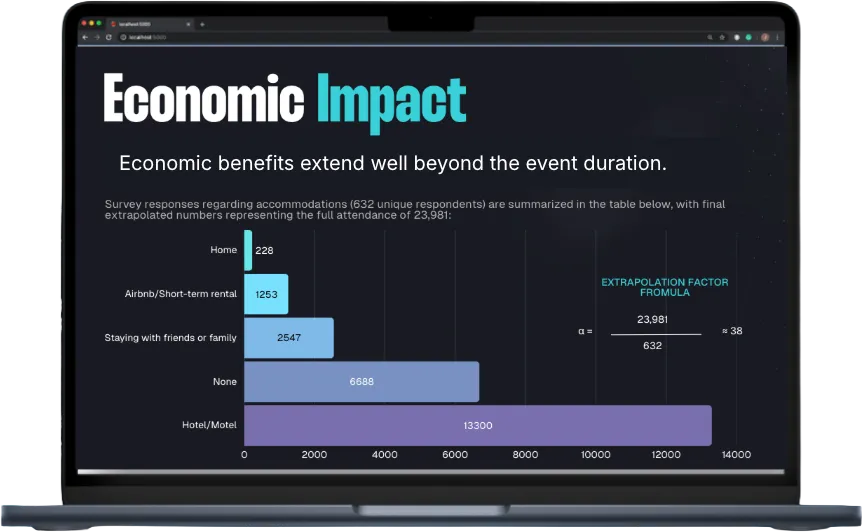





Building a tournament schedule for a basketball league is one of those problems that looks simple until you’re actually doing it. You have courts, teams, time windows, and a weekend that won’t stretch. Add coaching overlaps, multi-gym logistics, age-division splits, and the pool-to-bracket transition, and what started as a calendar exercise turns into a combinatorial puzzle with real consequences. Get it wrong and teams sit idle, courts go dark, coaches miss games, and families don’t come back next year.
This guide walks through how tournament scheduling actually works at scale: the formats, the variables, the revenue decisions baked into your structure, and the software that handles all of it in one place. Fastbreak builds season schedules for professional leagues like the NBA, NHL, MLB and MLS, and Fastbreak AI for Tournaments is built on that same scheduling technology for weekend basketball tournaments where the stakes for operators are just as real.
Executive Summary:
- Manual tournament scheduling breaks down fast when you’re managing 32+ teams across multiple courts: court conflicts, coach overlaps, and pool-to-bracket transitions create cascading errors that frustrate teams and hurt your reputation.
- A 16-team single-elimination bracket on 4 courts can run in one day with 45-60 minute rest windows, but double-elimination and pool play formats require two days and deliver 2-4 guaranteed games per team (which lets you charge higher registration fees).
- Your schedule structure controls revenue through game volume, prime time slot pricing, and venue utilization; tightly built schedules with minimal court downtime reduce facility costs while maximizing concession and sponsorship opportunities.
- AI scheduling builds brackets from your rules, updates scores in real time once the schedule is published, and flags double-bookings before game day so you stop patching schedules manually across disconnected tools.
- Fastbreak AI for Tournaments puts registration, scheduling and bracket management in one place, built on the same scheduling technology Fastbreak uses for the NBA, NHL, MLB and MLS.
Why Tournament Scheduling Is Different for a Basketball Tournament Operator
Basketball moves fast. A 90-minute game window, multiple courts running simultaneously, and dozens of divisions create scheduling variables that compound quickly. Add coaching overlaps, facility constraints, and rest requirements between games, and the math gets hard in a hurry. But, most tournament operators manage all of this manually. Based on Fastbreak’s analysis of event operators, the typical operator pieces together four to ten disconnected tools: one for registration, another for scheduling, something else for communications. Nothing talks to anything else. When a game moves, the cascade of updates falls on whoever runs the event.
The consequences go beyond logistics. When schedules conflict or run late, teams notice. Families notice. And when the experience falls short, teams choose a different event next year.
Fastbreak’s AI-powered sports scheduling software is built on the same scheduling technology Fastbreak uses for professional leagues like the NBA, NHL, MLB and MLS. The constraints look different at a weekend tournament, but the stakes for operators are just as real.
The Core Challenges of Tournament Scheduling at Scale
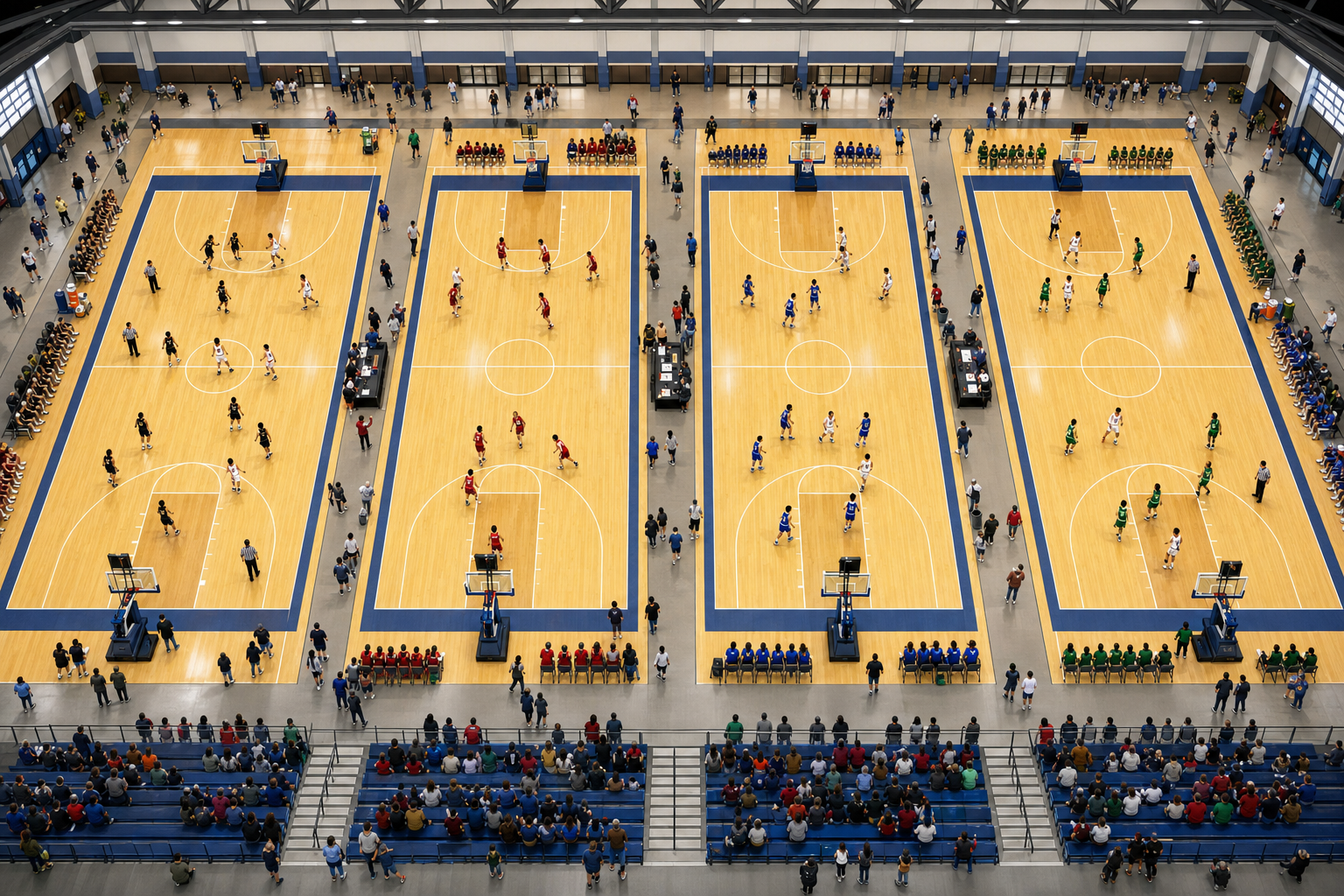
Scheduling a basketball tournament sounds straightforward until you're staring down 32 teams, four gyms, and a weekend window that shrinks faster than you expect. The logistics compound quickly, and small oversights early in the process tend to ripple into bigger problems on game day.
Five scheduling problems trip up organizers running 16-team single-site events all the way up to 200-team multi-venue tournaments:
- Balancing game frequency so teams get adequate rest between matchups without leaving courts idle for long stretches.
- Managing venue constraints like court availability, shared facility hours, and overlapping bookings from other events.
- Accounting for team travel time, especially in multi-site tournaments where the distance between venues adds meaningful gaps to the schedule.
- Building in buffer time for games that run long, referee transitions, and warmup rotations without throwing the entire bracket off track.
- Coordinating bracket progression so that later-round matchups can be confirmed and communicated to teams before they need to commit to being on-site.
In most cases, the difficulty scales with the number of teams and venues involved. A 16-team single-elimination draw at one gym is manageable with a spreadsheet. Once you move into pool play formats, consolation brackets, or multi-day schedules across multiple sites, the decision points multiply fast and the margin for error gets very thin.
How a Unified System Handles Tournament Scheduling for Basketball Events
Scheduling software built specifically for basketball tournaments does more than fill in a bracket. A unified system handles the full scheduling workflow in one place, so you’re not bouncing between spreadsheets, emails, and separate registration tools to piece together a workable schedule.
With a system like Fastbreak basketball tournament software, you can set your court availability, input team registrations, and let the software build the schedule from your rules, flagging any conflicts before you publish. Scores update in real time once the schedule is published.
Here are a few things a unified scheduling system handles that manual methods struggle with:
- Automatic conflict detection flags double-booked courts or back-to-back games before they become a problem on game day.
- Real-time score updates keep coaches, parents, and staff on the same page as results come in.
- Centralized team data connects registration details directly to the schedule, reducing data entry errors.
Housing and Logistics Considerations for Basketball Tournament Operators
Larger tournaments often require coordination well beyond the gym. When teams travel from out of town, organizers need to think about where players and families will stay, how they'll get around, and what the overall experience looks like off the court.
Hotel Blocks and Room Allocation
Many tournament operators work directly with local hotels to reserve room blocks in advance. Housing blocks are allocated based on projected team counts and average party sizes, then released back to the hotel if unused by a set cutoff date.
Getting this wrong in either direction leads to problems:
- Too few rooms frustrate families and damage your event's reputation with repeat attendees.
- Unreleased blocks can damage your relationship with hotel partners and make future negotiations harder.
- Late planning leaves you without the group rates you need. Group discount logistics for sporting events require advance coordination to secure favorable rates.
Travel and Ground Logistics
Consider proximity of hotels to game venues, shuttle availability, and parking capacity when managing multi-venue tournament logistics. Families assess events as financial investments, so friction in travel logistics has an impact on how teams feel about returning the following year. Clear communication about logistics before the event builds confidence and reduces day-of confusion.
A few ground-level details that operators frequently overlook:
- Drive time between venues. When coaches have teams in multiple age divisions, a 20-minute gap between a game ending at one facility and the next starting at another is not enough buffer. Build inter-venue travel time into your schedule as a hard constraint, not an afterthought.
- Shuttle logistics. If you offer shuttle service, publish pickup times and stops at least 48 hours before the first game. Coaches plan warmup windows around transit schedules, and a missed shuttle ripples into late arrivals and rushed warmups.
- Parking capacity and flow. Multi-court facilities can see hundreds of cars arriving within a 30-minute window at the start of each session. Coordinate with the venue on overflow lots and assign staff to direct traffic during peak arrival periods.
- Wayfinding and signage. First-time visitors to a multi-gym event often spend the first 10–15 minutes finding the right building. Posted signage at road intersections, parking lots, and facility entrances cuts down on late check-ins and front-desk bottlenecks.
- Pre-event communication timing. Send a logistics guide covering hotel addresses, venue maps, parking instructions, and shuttle schedules no later than 72 hours before tip-off. Teams that arrive prepared are less likely to blame the organizer for confusion that was avoidable.
Revenue Opportunities Embedded in Tournament Scheduling
Scheduling decisions carry more financial weight than most league organizers realize. The number of games per team, time slot distribution, and venue utilization rate all feed directly into your revenue model.
Here are a few ways your schedule structure creates or limits earning potential:
- Game volume drives registration fees. If your format allows for more guaranteed games per team, you can charge more at registration without pushback, since families assess tournament value based on the number of games they receive.
- Prime time slots can support premium pricing. Evening and weekend morning slots tend to attract larger crowds, which means higher concession revenue and better sponsorship visibility.
- Strong venue utilization reduces overhead costs. A tightly built schedule that minimizes gaps between games keeps facility rental costs low and court availability high.
- Double-elimination formats increase game count. Teams that lose early still continue playing, which extends attendance windows and increases per-event spending.
So, the schedule you build is more than a logistics document. It is a revenue framework in disguise, and treating it as one from the start puts your league in a much stronger financial position.
What Good Tournament Scheduling Looks Like
A well-built tournament schedule does more than fill time slots. It keeps games moving, prevents venue conflicts, and gives teams enough rest between matchups to compete fairly.
Here is what a strong schedule looks like in practice:
- A 16-team, single-elimination bracket with 4 courts can run all rounds in a single day when rest windows of 45 to 60 minutes are built between each team's games.
- Double-elimination formats for the same bracket size typically require a second day, but they dramatically reduce the number of teams eliminated on a bad game.
- Pool play followed by a bracket stage works well for weekend tournaments, letting teams play 3 guaranteed games before standings determine seeding.
The table below provides a high-level overview of various tournament formats, how they are scheduled, and when they are usually employed in tournaments.
The Scheduling Decisions That Matter Most
Rest time, court rotation, and bracket seeding all interact. A schedule that looks balanced on paper can fall apart when one court runs late and cascades across the day, particularly when coach conflicts and rest time requirements aren't properly managed. The most reliable schedules build buffer time into each session block and assign referees by court instead of by game to reduce coordination gaps, following best practices for youth tournament scheduling.
Case Study: How Romeoville Live Scheduled 300+ Games Across 14 Courts
Romeoville Live is an NCAA-certified scholastic basketball showcase run by Coach Marc Howard, who serves as both Assistant Operations Manager for the Village of Romeoville and the basketball coach for Romeoville High School. In 2025, the event drew 156 elite teams, 200+ college coaches, and over 300 games across 14 courts in a three-day window.
Scheduling that volume manually would have been unmanageable. Coach Howard used Fastbreak’s AI scheduling engine to handle the complexity. The engine built pools and brackets from the event’s rules and inputs, with game times spaced to create logical flows for college scouts who needed to watch multiple games across the day. Real-time updates in the app kept coaches, referees, and families aligned throughout the event.
Beyond scheduling, the event used Fastbreak for mobile ticketing, hotel room blocks for the 40% of teams traveling from outside the Chicago area, and on-site sponsor activation. The result was a nationally recognized recruiting event that has become a fixture on the summer circuit. Read the full Romeoville Live story.
Choosing Software for Tournament Scheduling as a Basketball Tournament Operator
Scheduling software takes a lot of the manual work out of building a tournament bracket. Instead of tracking conflicts, court availability, and team counts across spreadsheets, you get a single place to manage registration, bracket generation, and schedule publishing.
Here are a few things to look for when choosing scheduling software:
- Look for software that auto-generates brackets based on divisions, team count, and available courts so you're not rebuilding the schedule every time something changes, especially when minimizing team travel distance across multiple venues.
- Real-time updates matter because coaches and parents check schedules constantly, and any lag between a change and a published update creates confusion.
- Registration and scheduling should live in the same system so team data flows directly into your bracket without manual re-entry.
- Game conflict detection saves hours of back-and-forth by flagging when a team is double-booked or a court is over-assigned before the schedule goes live.
Fastbreak is built for exactly this kind of work. The software handles registration, scheduling, and bracket management together, so operators spend less time fixing errors and more time running a well-organized event.
FAQ
How to Build a Tournament Schedule for a Basketball League without scheduling software?
You can build a bracket manually using spreadsheets, but once you move beyond 16 teams or add multiple venues, the decision points multiply fast and conflict tracking becomes error-prone. Software auto-generates brackets, flags double-bookings, and updates scores in real time without manual coordination.
Basketball tournament scheduling software vs manual bracket building?
Software handles automatic conflict detection, real-time bracket updates, and centralized team data in one system, while manual methods require tracking courts, teams, and timing across spreadsheets with no safeguards against double-booking. For tournaments over 16 teams or using multiple venues, software saves hours of coordination and prevents scheduling errors that frustrate teams on game day.
What’s the best way to handle multi-venue basketball tournaments?
Account for travel time between sites when setting game windows, build buffer time into each session block, and assign referees by court instead of by game to reduce coordination gaps. A unified scheduling system flags venue conflicts before you publish, and you can drag and swap games or re-run the schedule when one location runs behind.
Can I increase tournament revenue through scheduling decisions?
Yes. Your schedule structure directly impacts earning potential through game volume (more guaranteed games per team supports higher registration fees), prime time slot pricing (evening and weekend morning games drive concession and sponsorship revenue), and venue utilization rates (tightly built schedules with minimal gaps reduce facility rental costs).
When should a basketball tournament use double-elimination format?
Double-elimination works well for weekend tournaments where you want teams to play at least two guaranteed games before elimination. Teams that lose early continue playing, which extends attendance windows, increases per-event spending, and gives families better value for their registration investment compared to single-elimination brackets.


