






You need to decide whether your next event runs pool play, bracket play, or some combination of both. That choice determines how many courts you're scheduling, how many games each team is guaranteed, and whether your bracket seeding reflects actual performance or just a random draw. Understanding pool play versus bracket play means understanding the tradeoffs between guaranteed participation and high-stakes elimination rounds. Here's how each format works, when to use which structure, and what the scheduling differences actually look like in practice.
Executive Summary:
- Pool play gives every team multiple guaranteed games for fair seeding, while bracket play delivers high-stakes elimination rounds that crown a champion.
- Hybrid formats run pool play on day one to seed teams fairly, then shift to bracket play for championship rounds with real consequences.
- Pool play demands more court hours and complex rotation scheduling across simultaneous games, while bracket play runs sequentially but delays cascade when matches run long.
- Fastbreak for tournaments automates pool-to-bracket transitions with AI scheduling that prevents double bookings and updates families instantly through the Fastbreak AI app.
What Is Pool Play?
Pool play, often called round-robin, is a format where teams are divided into smaller groups and play every other team in that group at least once. No single loss sends you home. Every team gets a full slate of games regardless of results. That guarantee matters more in youth sports than almost anywhere else. Kids travel hours to compete, and sending a team home after one bad game is a tough sell for the parents who paid registration fees and booked hotel rooms.
So, pool play solves for two things at once: fairness and participation. Every team logs meaningful minutes on the court or field, which supports player development and gives coaches a real read on where their roster stands. It's also the better format for accurate skill assessment. Playing multiple opponents across a pool gives tournament directors cleaner data for seeding later rounds, instead of relying on a single result that may not reflect ability.
What Is Bracket Play?
Bracket play is elimination-based. Win, and you advance. Lose, and you're done, or close to it.
Single and double elimination formats structure this differently: single elimination ends your run after one loss, while double elimination routes teams into a losers bracket for a second chance. Either way, the bracket narrows round by round until one team is left standing.
That format creates something pool play just can't: real stakes on every possession. When elimination is on the line, the energy in a gym changes. Parents get louder. Coaches get sharper. Players play like everything depends on it. That's what makes bracket play the right call when the goal is crowning a genuine champion. For tournament directors, it's also logistically tighter. Fewer guaranteed games per team means less court time to schedule, and the built-in attrition of elimination rounds keeps the event moving toward a clear endpoint.
Key Differences Between Pool Play and Bracket Play
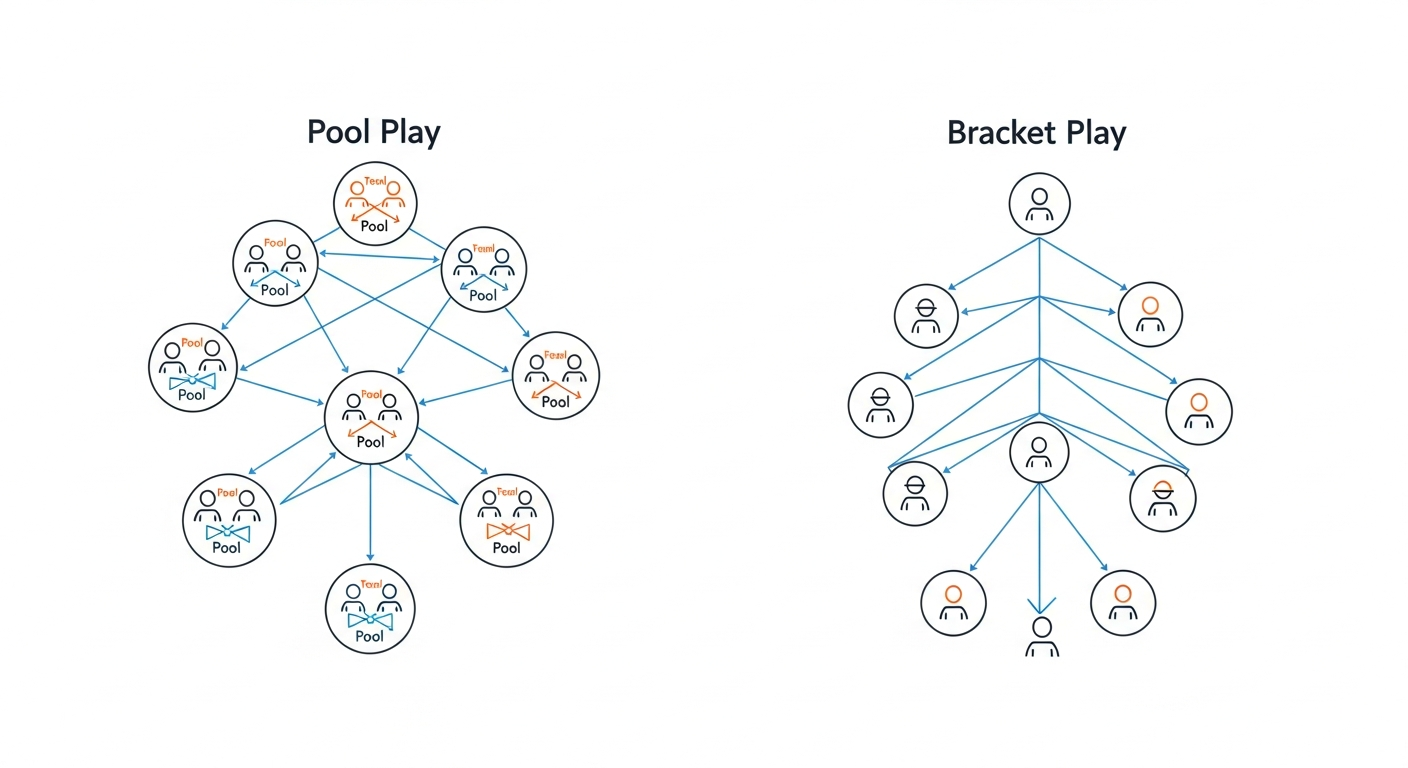
The choice between these two formats shapes every part of your event, from how many courts you need to how long families plan their weekend. Here's how they stack up across the dimensions that matter most to operators:
A few things worth calling out from that comparison:
- Guaranteed games in pool play directly affect registration value. Families assess multi-game minimums when deciding whether a tournament fee is worth it. A single-game elimination bracket can feel like poor value, even if the competition is strong.
- Facility utilization tells a different story. Pool play fills courts across multiple rounds, which is great for maximizing venue usage but demands tighter scheduling. Bracket play opens up natural gaps as teams get eliminated, which can leave courts idle if the draw is not managed well.
- From a competitive philosophy standpoint, pool play rewards consistency over a full slate of games. Bracket play rewards performance under pressure. They just answer different questions about what your event is trying to prove.
Common Bracket Play Formats for Youth Tournaments
There are three bracket structures you'll run into most often, and each one answers a different practical need:
- Single elimination: one loss ends your tournament. A 16-team field wraps in just 15 matches across 4 rounds. Fast, clean, and easy to schedule, but it leaves teams with no safety net.
- Double elimination: teams must lose twice before they're out. That roughly doubles the match count to around 30 games, but it gives every team a second life and reduces the sting of an early upset.
- Consolation brackets: a softer middle ground. Teams eliminated in early rounds drop into a consolation draw for additional games instead of heading straight to the parking lot.
So, which one fits your event? Single elimination works when court time is tight and the field is competitive enough that one loss is a fair verdict. Double elimination is worth the extra scheduling overhead when participant experience matters as much as crowning a winner. Consolation brackets serve events where families have traveled far and need more than one game to feel the trip was worth it.
Pool Play Structure and Seeding Methods
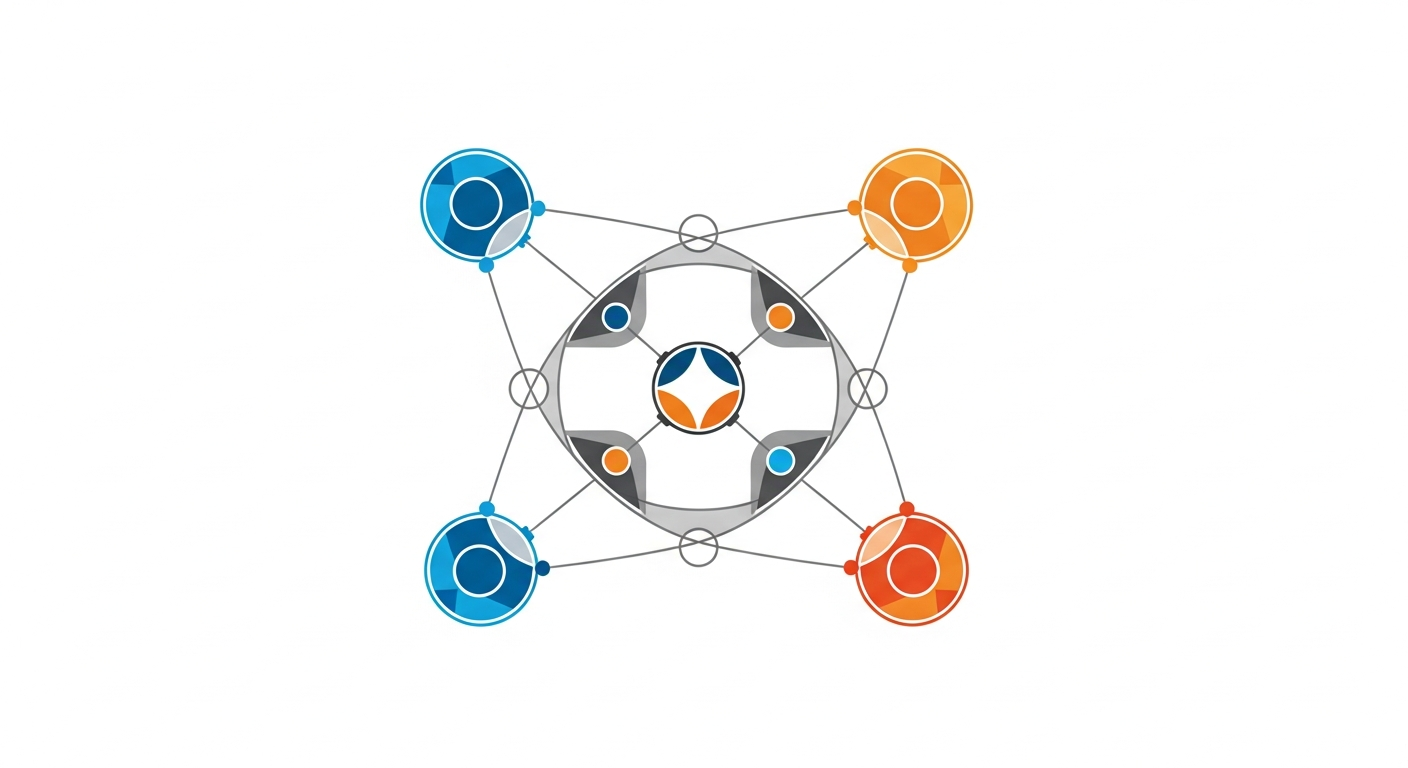
Most operators land on pools of 3 to 5 teams. Three-team pools move quickly but give you limited game data. Five-team pools generate richer standings but eat more court or field time. Four teams per pool is the sweet spot for most youth tournaments. But, seeding matters more than directors often expect. The goal is spreading competitive talent evenly across pools so bracket play doesn't end up lopsided. In most cases, a serpentine seed works well: seed 1 goes to Pool A, seed 2 to Pool B, seed 3 to Pool C, seed 4 back to Pool C, and so on.
When your team count doesn't divide evenly, you'll end up with uneven pool sizes. A common fix is creating one larger pool instead of one very small pool, since a 3-team pool can feel light for families who traveled far.
Tiebreaker protocols need to be published before the event starts. Here are some common tie-breaker protocols to follow:
- Head-to-head record between tied teams
- Point differential, with a per-game cap to prevent score inflation
- Points allowed
- Coin flip as a last resort
From there, pool standings drive advancement. The most common structure sends pool winners directly to the championship bracket, with second-place finishers seeding into a consolation or crossover bracket. That crossover round gives directors flexibility to right-size the field before elimination play begins.
Hybrid Format: Combining Pool Play and Bracket Play
The hybrid format is what most multi-day youth tournaments actually run. Pool play happens on day one, bracket play closes out day two. Each phase does what the other can't. Pool play handles qualification. Teams earn their bracket seed through results across multiple games, so by the time elimination begins, the matchups reflect actual performance instead of a random draw. That seeding process is what separates a well-run hybrid event from a chaotic one.
The transition between phases is one of the hardest single problems in tournament scheduling. When pool play ends, directors have a narrow window to collect all standings, resolve any tiebreakers, assign bracket seeds, and publish a complete day-two schedule before teams are already asking what court they're on. A three-way tie is where that window collapses fastest: three teams sharing the same record, a tiebreaker sequence that has to be applied in exact order, and a bracket seed that cannot be assigned until every step resolves correctly. Done manually under time pressure, this is where errors happen and where incorrect seeding ripples through every subsequent matchup. AI-driven scheduling handles the transition automatically, applying your pre-configured tiebreaker logic, resolving standings, and seeding the bracket without a manual rebuild step. That gap in execution speed between manual and automated methods is where the difference becomes most visible to families on the ground.
From there, pool standings drive bracket placement. There are a few common ways operators structure this:
- Pool winners seed directly into the championship bracket, where every game from that point is elimination.
- Second-place finishers typically enter a consolation or crossover round before elimination begins, giving them a path to the championship side without a free pass.
- Some operators run a third-place bracket to give mid-tier teams a meaningful Sunday without watering down the championship rounds.
The result: every team gets guaranteed games, every game counts toward something, and the final rounds carry real stakes.
When to Use Pool Play vs Bracket Play
The right format depends on your event's constraints. Three variables drive the decision: time, team count, and what families expect to get out of the weekend. Here's a quick decision framework:
- Single-day event with 8 or fewer teams: run a straight bracket. You don't have court time to spare, and a tight draw keeps the day moving.
- Single-day event with larger fields: short pool rounds of 2 to 3 games, then bracket play. Keeps teams engaged without overrunning your venue window.
- Multi-day developmental league or showcase event: pool play only. Equal games, cleaner skill assessment, and no parent frustration over a first-round exit. Younger age divisions belong here too, when accumulating reps matters more than producing a bracket champion, pool play is the right call.
- Multi-day championship tournament: hybrid. Pool play seeds the bracket, and bracket play closes it out.
Sport-specific norms matter too. Volleyball and basketball tolerate short pool formats because matches move fast. Soccer pool play consumes field hours quickly, so directors often tighten pool sizes or cap game lengths to stay on schedule. Participant expectations are the variable operators most often underestimate. If your event markets itself as a championship, families show up expecting real stakes. Match the format to what you promised.
Scheduling Complexity: Pool Play vs Bracket Play Challenges
Scheduling is the single biggest lever in tournament management. When it works, everything else runs on time: families know where to be, courts stay full, and the day flows. When it fails, every downstream function suffers: teams show up to the wrong court, rest windows collapse, parents flood the registration desk with questions, and the event's reputation takes the hit. Pool play and bracket play schedule very differently, and that gap hits tournament directors hard.
Pool play requires simultaneous game coordination across multiple courts, with rotation patterns that must account for rest windows, court availability, coaching overlaps, and which teams have already played. Coaching overlap (where the same coach runs multiple teams across different age divisions) is one of the most common conflict sources in youth basketball and one of the easiest things to miss in a manual schedule. Get one slot wrong, and you have a team playing back-to-back games while another sits idle for hours. Neither scenario goes unnoticed by parents.
Bracket play, on the other hand, is sequential by nature, which sounds simpler. But match timing depends on prior results, so delays cascade. One overtime game pushes every subsequent round, and courts go idle in the meantime.
Scheduling ranks among the key challenges tournament directors face. Double-booked fields, inadequate rest between games, and long idle stretches are all remembered long after the final whistle. Those friction points follow your event's reputation into next year's registration cycle.
How Fastbreak for tournaments Handles Both Pool Play and Bracket Play
Fastbreak for tournaments' AI scheduling engine handles pool play and bracket play without requiring you to manually rebuild your schedule between phases. On the pool play side, the engine optimizes rotations across all courts simultaneously, factoring in rest windows, venue availability, coaching overlaps, and team conflicts before generating a single game slot, reducing double bookings and back-to-back scheduling oversights before a single game slot is confirmed. Coaching overlap (one coach running multiple teams across age divisions) is treated as a first-class constraint, not an afterthought, so conflicts get flagged before the schedule publishes, not after a parent calls to complain. Once pool play wraps, standings feed directly into bracket generation automatically, so you're not rebuilding from scratch when day two starts.
Registration as the Foundation
Before any schedule can be built, teams have to register. That sounds obvious, but the gap between registration close and a published schedule is where most manual workflows break down. Directors face a compressed window: teams sign up, payment has to be confirmed, divisions have to be verified, and rosters have to be sorted before a single court slot can be assigned. When those steps are manual, the bottleneck isn't scheduling. It's the data entry that precedes it. Families now expect online registration with instant confirmation, and when that experience doesn't match what they get on consumer apps, it reflects on the event before it even starts.
Fastbreak connects registration directly to pool and bracket construction. Payment collection, division assignment, and eligibility verification happen in the same platform, not in a spreadsheet that someone has to export and re-enter. Payments are collected at the point of registration via credit card, debit card, or ACH, with configurable structures for full payment upfront or a deposit-plus-balance approach. Automated balance collection handles follow-up reminders and final charges without anyone chasing invoices. When registration closes, the data is already structured the way the scheduling engine needs it. What used to take days of manual preparation can be handled in minutes, so directors spend that time on the event itself, not on data cleanup.
Configurable workflows let you set your own pool play rules, tiebreaker sequences, and advancement logic before the event launches. From there, the system runs it. Conflict detection can flag issues before they become problems, reducing the risk of coaches arriving at the wrong gym.
Families get real-time schedule updates through the Fastbreak AI app, so last-minute changes reach them instantly without a flood of emails. Now, complete conflict-free schedules generate in minutes, and the Fastbreak AI app became their single source of truth for families, cutting the volume of inbound scheduling questions considerably.
Where most tournament software stops at scheduling features, Fastbreak is built as a revenue partner. Ticketing, housing rebates, and sponsorships stack on top of operations in the same platform, and directors who run all three can see event revenue potential in the range of $30k-$50k+ per event, without raising team fees or adding extra burden. That revenue comes from existing attendance, not from charging families more. Competitors sell you a scheduling product. Fastbreak connects the scheduling, the gate, and the hotel block so every part of the event generates income.
Final Thoughts on Tournament Format Selection
Both pool play and bracket play answer different questions about what your event is trying to prove, and neither one is inherently better. Pool formats reward consistency across multiple games while brackets test performance under pressure, so the right choice depends on your facility hours, team count, and participant expectations. The hybrid structure works well for championship weekends because it gives every team guaranteed games before elimination begins.
Before you lock in a format, run through these three questions:
- Are teams traveling more than two hours? If yes, pool play belongs in the event. Families who drive or fly that far need more than one game to feel the trip was worth it, and a single-loss exit in round one is a registration problem for next year.
- Does this event need a named champion? If yes (because a qualifier berth is on the line, a sponsor requires it, or a media partner is covering the final), bracket play must close the event. Pool play alone cannot answer that question.
- Do you have enough court or field hours for every team to play at least two games before elimination? If yes, a hybrid format is viable. If no, go straight bracket and set expectations clearly in your marketing before registration opens.
If scheduling complexity is keeping you from running the format you actually want, reach out and we'll walk you through how Fastbreak handles both phases. Your format sets the tone for how families remember the entire weekend, so choose based on what you promised when they registered.
FAQ
Pool play vs bracket play: which one should I use for a youth tournament?
Use pool play if families are traveling far and expect multiple games, or if player development matters more than crowning a champion. Use bracket play when you need to finish in a single day with limited court time, or when competitive stakes should be immediate. Most multi-day tournaments run a hybrid: pool play on day one for seeding, bracket play on day two for elimination rounds.
Can I run pool play and bracket play in the same tournament?
Yes. The hybrid format is what most multi-day youth tournaments actually run, where pool play handles qualification on day one and bracket play closes out elimination rounds on day two. Pool standings automatically seed the bracket so matchups reflect actual performance instead of a random draw, giving every team guaranteed games while keeping the final rounds competitive.
How do I handle pool play tiebreakers when teams have the same record?
Publish your tiebreaker sequence before the event starts. The most common order is head-to-head record between tied teams first, then point differential with a per-game cap to prevent score inflation, then points allowed, and finally a coin flip as a last resort. Make sure coaches know the rules before pool play begins.
What's the biggest scheduling difference between pool play and bracket play?
Pool play requires simultaneous game coordination across multiple courts with rotation patterns that account for rest windows and prior matchups. Get one slot wrong and you'll have teams playing back-to-back while others wait hours between games. Bracket play is sequential by nature, but delays cascade since match timing depends on prior results, leaving courts idle when games run long.


