







Running a basketball tournament is one of the most logistically demanding things a club director can take on. Between court availability, age division splits, referee coverage, and travel constraints, the number of moving parts can overwhelm even experienced organizers, and most of the tools people reach for first, spreadsheets, calendar apps, and email chains, were never built for it.
This guide walks through what makes tournament scheduling genuinely hard, how a unified system changes the equation, and what to look for when choosing the right approach for your club. Whether you're running a 12-team local invitational or a 60-team multi-venue weekend event, the decisions you make during the schedule build have a direct impact on how the tournament runs, how teams experience it, and how much revenue it generates.
Executive Summary:
- A basketball tournament compresses league-season complexity into one weekend across multiple gyms and divisions.
- Manual scheduling breaks down fast when managing court availability, rest windows, and referee assignments at scale.
- A unified system generates conflict-free brackets automatically and pushes schedule updates across all connected views.
- Revenue opportunities like sponsorship visibility and tiered pricing are built into well-structured tournament schedules.
- Fastbreak uses the same AI scheduling engine trusted by the NBA and NHL to build youth tournament schedules in minutes.
Why Building a Tournament Schedule Is Different for a Basketball Club
Scheduling a basketball tournament is a different challenge than organizing a league season. A league operates on a fixed calendar with standing rosters and predictable weekly rhythms. A tournament compresses everything into a tight window, often across a single weekend, where dozens of teams, multiple age divisions, and limited gym space all have to coexist without conflict; and for a club running its own event, the variables multiply further across age groups, referee assignments, and facilities spread across town.
For a basketball club running its own tournament, that complexity multiplies. You're coordinating across age groups with different game lengths, managing referee assignments against back-to-back time slots, and accounting for gym availability that may span several facilities across town with a basketball schedule maker.
There are also the logistical layers that don't show up in a simple bracket:
- Travel time between venues needs to be built into the schedule so teams aren't penalized for geography.
- Rest windows between games vary by age group, and ignoring them leads to complaints or safety concerns.
- Gym capacity limits how many courts run simultaneously, which directly caps how many teams you can accept.
So, before you build anything, it helps to understand exactly what you're managing.
The Core Challenges of Building a Tournament Schedule at Scale
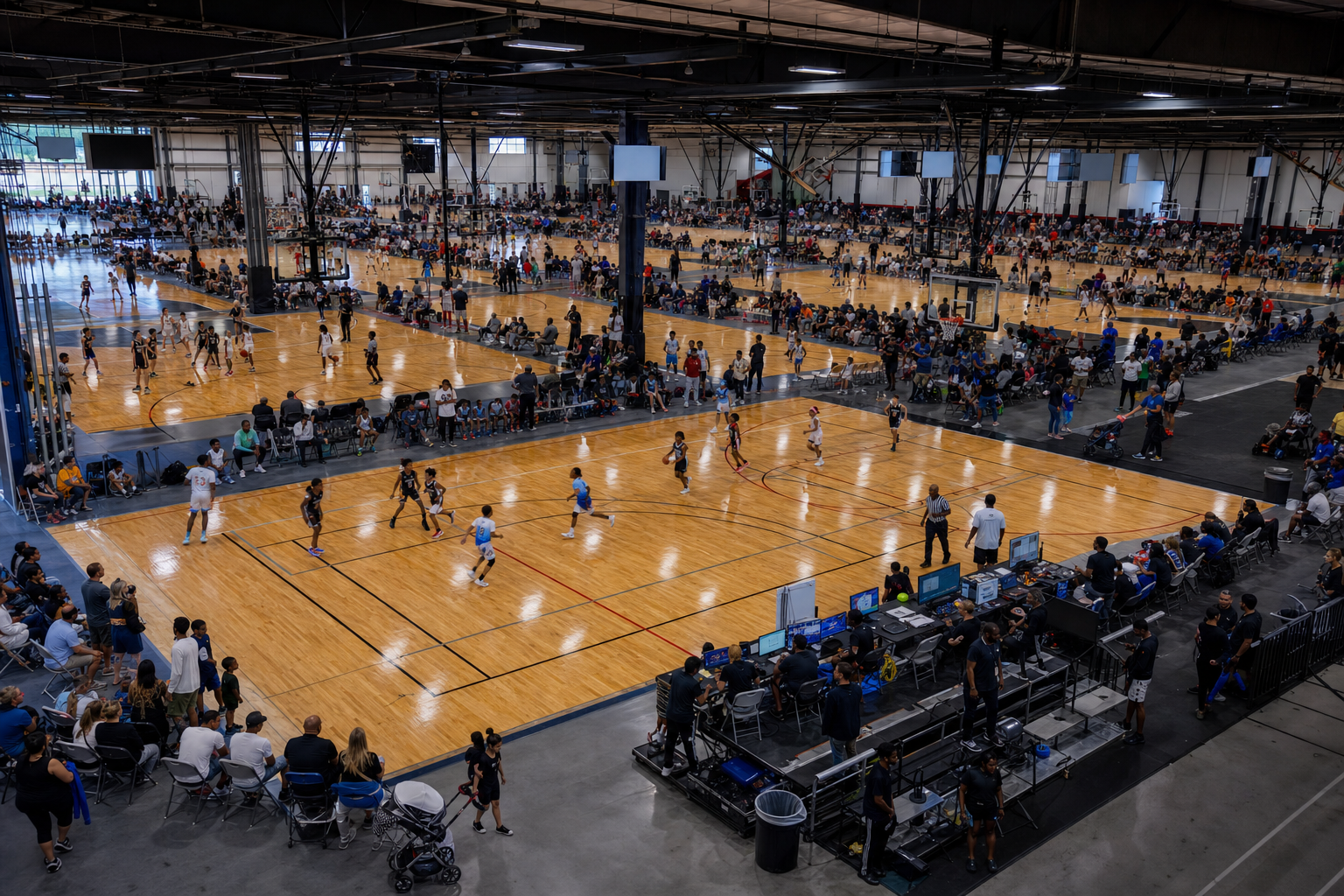
Scheduling a basketball tournament sounds straightforward until you're staring down 48 teams, three venues, and a weekend window that doesn't move. The complexity compounds fast. Most club directors underestimate how many variables are in play at once. A youth basketball tournament checklist can help organize these details:
- Court availability changes constantly, and a single venue conflict can ripple across an entire bracket, forcing you to manually reschedule multiple games without AI-powered sports scheduling software.
- Teams often have travel constraints, age group restrictions, or division requirements that limit when and where they can play.
- Referee assignments need to align with game times, and gaps in coverage create delays that frustrate everyone on site.
- Balancing rest time between games for youth athletes is more than a fairness issue; research supports it as a player safety concern backed by sports medicine literature.
So, even experienced organizers can find themselves buried in spreadsheets, chasing down conflicts the night before tip-off. A scheduling error that seems minor on paper, like two teams sharing a court slot, can create a cascade of problems that takes hours to untangle on game day.
The bigger your tournament grows, the harder manual scheduling gets. What works for 12 teams rarely scales to 60.
How a Unified System Handles Tournament Schedule Building for Basketball Events
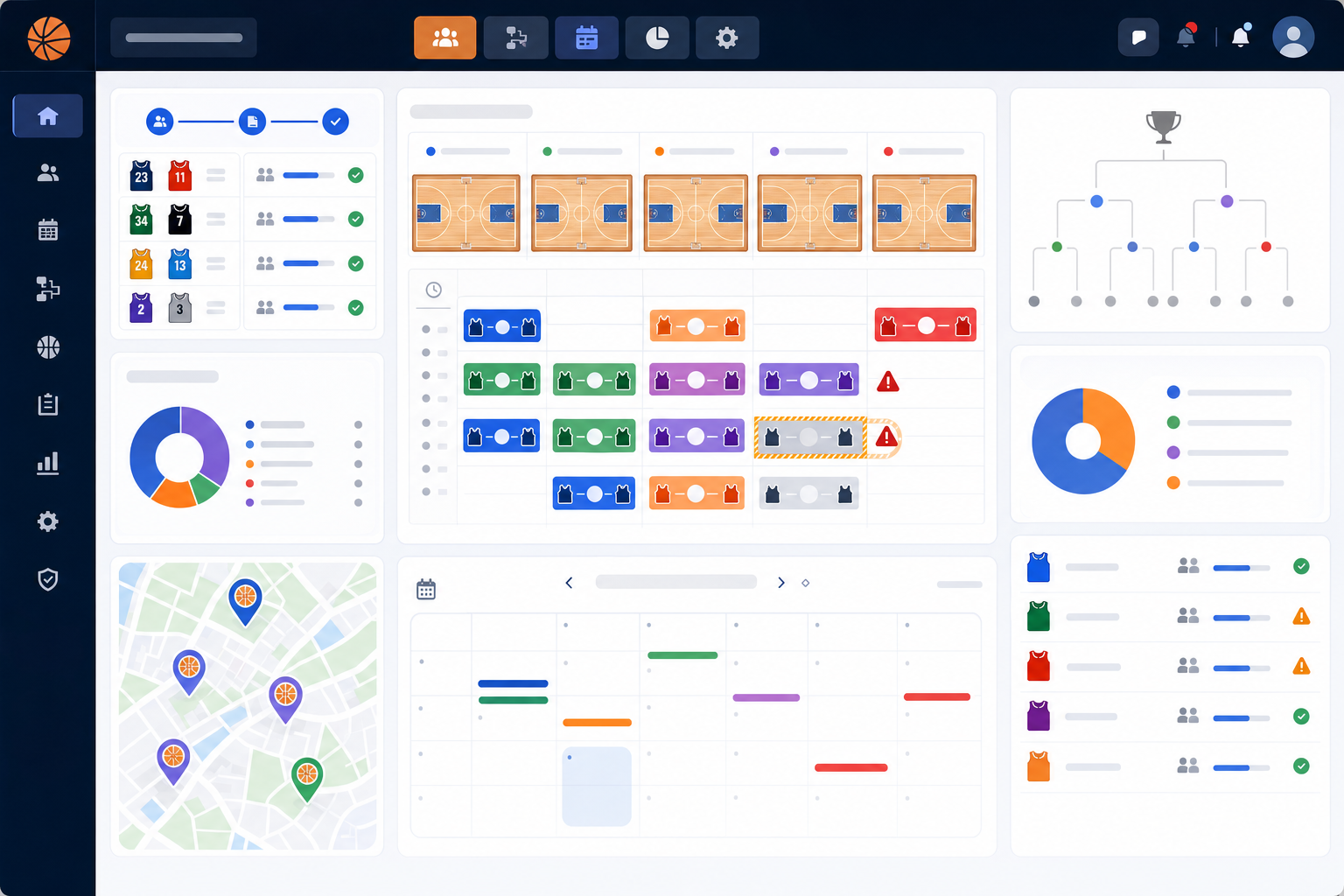
Scheduling a basketball tournament by hand means toggling between spreadsheets, emails, and venue calendars while hoping nothing falls through the cracks. A unified system pulls those pieces together so registration data, court availability, and bracket logic all live in one place: court assignments, game times, and team groupings are produced together, so you're not cross-referencing separate documents after the fact.
Here's what that kind of system handles in one workflow:
- Registration data flows directly into bracket and scheduling tools, so you're not re-entering team counts or division splits manually.
- Court blocks are assigned based on availability rules you define, reducing double-bookings and gaps.
- Schedule updates push across all connected views, so coaches and referees see the same information without a separate communication step.
- New divisions or a second venue can be added without rebuilding the schedule from scratch, keeping your admin workload in check as the event grows.
Housing and Logistics Considerations for Basketball Clubs
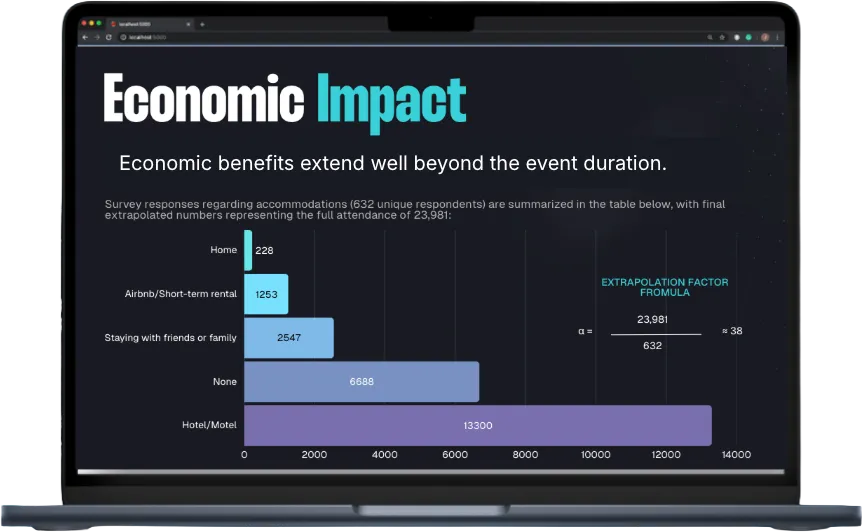
For multi-day tournaments, housing and logistics can make or break the experience for visiting teams and families. Hotel blocks should be sourced and confirmed before registration opens, not after teams have already committed. Without a block in place, visiting teams book wherever they find availability, and your room night projections become impossible to track or negotiate against. A stay-to-save requirement, paired with a competitive rate, gives teams a reason to book through your block and protects the room commitments you've made to the hotel. Plan for a range of price points and room configurations to cover families traveling from different distances, and build your attrition clauses around a conservative estimate of how many teams will actually show up. Getting these details locked early strengthens your position in negotiations and keeps the logistics from piling up in the weeks before tip-off.
Coordinating Hotel Blocks and Room Commitments
Many tournaments use stay-to-play requirements, where teams must book within an approved hotel block to participate, managed through tournament scheduling software. This protects the room commitments you've made to hotels and keeps your room block from going unfilled. When setting up hotel blocks, keep these factors in mind:
- Reserve a range of room types to accommodate families of different sizes and budgets.
- Negotiate attrition clauses carefully so you aren't penalized if teams register late or cancel.
- Share hotel block links and deadlines clearly in your registration confirmation emails.
Transportation and Venue Access
Logistics between venues also need attention. If your tournament spans multiple facilities, consider:
- Providing a map or directions document covering all gym locations.
- Staggering start times to reduce parking congestion at busy facilities.
- Communicating any local parking fees or shuttle options to teams in advance.
Revenue Opportunities Embedded in Building a Tournament Schedule
A well-built tournament schedule does more than organize game times. Named brackets, assigned courts, and championship time slots are all assets that sponsors will pay to attach their name to, and most clubs never treat them that way.
Sponsorship visibility is one of the clearest opportunities. When you publish a structured schedule, you have named time slots, venue assignments, and brackets that sponsors can attach to. A title sponsor for a Saturday championship bracket or a presenting sponsor for a specific court carries real value for local businesses looking to reach youth sports families.
Registration tiers are another lever. Scheduling multiple divisions across age groups lets you price each division independently based on demand, travel distance, and field access.
Consider these revenue-generating elements to weave into your schedule build:
- Early registration discounts tied to schedule release dates create urgency and improve cash flow before the event when using basketball tournament software.
- VIP or reserved seating sections attached to specific courts or time slots can be sold as premium add-ons.
- Vendor booth placement mapped to high-traffic schedule windows commands better rates from food and merchandise sellers.
So, the schedule itself becomes a revenue document when treated with that intent from the start.
What Good Tournament Schedule Building Looks Like: Romeoville Live
Romeoville Live started as a grassroots idea from Coach Marc Howard, Assistant Operations Manager for the Village of Romeoville and the high school's basketball coach. When the NCAA expanded certification to include scholastic showcases, Coach Howard saw an opening to create a path for athletes outside the AAU circuit to get in front of college recruiters. Within three years, that idea grew into a 156-team, 14-court, three-day event with over 300 games and more than 200 college coaches on site.
Running 300 games across 14 courts without conflict is not a spreadsheet problem, it is an optimization problem. Here is how the schedule came together using Fastbreak's AI scheduling software for multi-venue tournaments:
- Team inputs (school size, geography, and competitive level ) fed directly into the scheduling engine, which generated balanced pools and brackets without manual seeding work.
- Game times were spaced to avoid court conflicts and create logical scouting flows for college coaches moving between courts.
- Real-time schedule updates pushed to the app, so coaches, referees, and families always had accurate information without a separate communication step.
- Nearly 40 percent of teams traveled from outside the Chicago area, and pre-arranged hotel blocks through Fastbreak Travel meant visiting teams had housing sorted before they arrived.
The results backed up the process. Over 200 college coaches attended, and scholarship offers came in within days of the event. Coach Howard described the experience directly: "Once we set the brackets, Fastbreak took over. We had games running every hour on the hour with no glitches. Coaches, refs, and spectators all told us how smooth it was. That's the difference great tech makes: it lets us focus on delivering a great experience."
Why the Process Order Matters
Romeoville Live ran the sequence correctly from the start: venues and courts were confirmed first, then divisions were set, then games were assigned, and referee coverage followed. Most scheduling problems come from inverting that order, assigning games before locking court availability forces a rebuild when conflicts surface. Getting the sequence right kept 300 games on track across a full weekend without the last-minute scramble that buries organizers the night before tip-off.
Choosing a System for Tournament Schedule Building as a Basketball Club
Spreadsheets and whiteboards have long been the default for tournament scheduling, but they break down fast when you're managing multiple age groups, gyms, and overlapping time slots. Before committing to a system, it's worth understanding what each approach actually costs you in time and accuracy. Here are the main options basketball club directors tend to work with:
- Spreadsheets give you flexibility but require manual updates every time something changes, and a single error can cascade across an entire bracket.
- General scheduling software handles basic calendar logic but rarely accounts for sport-specific constraints like gym turnaround times or referee assignments.
- Dedicated tournament management software is built around the realities of running multi-court, multi-division events and handles conflict detection automatically.
What to Look For in a Scheduling System
When choosing a system, the format of your tournament should guide the decision. Round-robin formats require tracking cumulative records across all teams. Single and double-elimination brackets demand accurate seeding logic. Each structure has different data requirements, and your system needs to handle them without manual workarounds.
A few features worth keeping in mind:
- Real-time conflict detection across courts and time slots through all-in-one tournament platforms
- Flexible bracket generation for different tournament formats
- Simple ways to communicate schedule updates to coaches and families
FAQ
What's the best way to build a tournament schedule for a basketball club?
Use a tournament management system that automates conflict detection and bracket generation instead of manual spreadsheets.
How long does it take to build a basketball tournament schedule manually vs with software?
Manual scheduling for a 48-team tournament across multiple venues can take several days of spreadsheet work, with additional hours spent resolving conflicts before tip-off. Tournament management software generates conflict-free brackets and court assignments in minutes once you input your parameters, then pushes updates across all connected views automatically when changes occur.
Can I generate revenue from my tournament schedule beyond registration fees?
Yes. A structured tournament schedule creates sponsorship opportunities tied to named brackets, time slots, and specific courts that local businesses will pay to attach their name to. You can also implement tiered registration pricing by division, sell premium seating for championship rounds, and command better rates from vendors by mapping booth placement to high-traffic schedule windows.
Should I set up hotel blocks before or after I finalize my tournament schedule?
Set up hotel blocks after you confirm your tournament format and expected team count, but before you open registration. This gives you accurate room night projections to negotiate attrition clauses with hotels, and lets you include hotel block links and deadlines in registration confirmation emails so teams book early and you protect your room commitments.
Basketball tournament schedule Fastbreak vs spreadsheets?
Fastbreak generates balanced brackets, assigns courts based on availability rules, and detects conflicts automatically across divisions in one workflow. Spreadsheets give you flexibility but require manual updates every time something changes, and a single error can force you to rebuild large portions of your schedule the night before games start.


