






Long gone are the days when duct-taping a registration form to a scheduling spreadsheet to a group chat was a workable plan. Your league has grown, the volume of moving parts has grown with it, and the manual overhead compounds every single week. That's why we're seeing league directors switching from disconnected tools to an all-in-one platform at a pace that's hard to ignore in 2026.
Executive Summary:
- Directors can spend 10 to 15 hours per week on admin work that exists only because their systems don't connect.
- Disconnected registration, scheduling, and communications create data errors, payment gaps, and family frustration every season.
- When systems don't share data, revenue from travel rebates and sponsorships goes uncaptured with no way to report it.
- Look for software where registration feeds scheduling, scheduling feeds communications, and reporting pulls from one source.
- Fastbreak AI connects registration, scheduling, travel, and communications in one platform, used by events running 1,000+ teams.
The Fragmented Stack League Directors Are Actually Running
Most league directors aren't running one system. They're running five or six, and none of them talk to each other.
A typical stack looks something like this:
- A spreadsheet for rosters
- A separate registration tool
- A group chat app for coach communications
- A personal email account for parent updates
- A scheduling app that exports PDFs
- A payment processor that doesn't connect to any of it
Each one made sense when it was added. Together, they create a pile of manual work that compounds every week of the season. And that friction shows up in predictable places:
- Roster updates made in one place have to be re-entered somewhere else, and someone always misses a step. That's how you get coaches showing up with the wrong lineup or parents receiving outdated information.
- Scheduling changes trigger a chain of manual notifications across three different channels, and there's no way to confirm who actually saw what.
- Payment records live separately from registration data, so sorting out who has paid and who is cleared to play takes real time every week.
- When a parent has a question, the answer might live in a spreadsheet, a chat thread, or an inbox that only one person can access.
The real cost here goes deeper than frustration. Directors can spend 10 to 15 hours per week on administrative tasks that exist only because their systems don't connect. That's time pulled away from coaching development, recruiting, sponsor relationships, and everything else that actually grows a league.
Why the Stack Keeps Growing
The disconnected stack usually builds gradually. A director finds a free registration form, adds a scheduling app when the league expands, starts a group chat to handle last-minute updates. Each addition solves an immediate problem. None of them were designed to work together, and over time the workarounds become the workflow.
By the time a director realizes the stack is the problem, they're already dependent on all of it.
The Administrative Tax of Disconnected Tools

Every hour a league director spends copy-pasting rosters between a registration system and a scheduling spreadsheet is an hour they aren't spending on the things that actually grow their league. That math adds up fast.
Directors can spend 10 to 15 hours per week re-entering data across disconnected systems, chasing payment confirmations across multiple inboxes, and manually updating standings after every game. When registration lives in one place, scheduling in another, and communications in a third, the gaps between those systems create constant administrative drag.
There are a few patterns that show up repeatedly for directors running leagues on a patchwork of separate tools:
- Data entered in one system rarely flows automatically to another, so the same information gets re-entered multiple times across the week, creating opportunities for errors and version conflicts.
- Payment tracking spreads across email threads, spreadsheets, and third-party processors, making it difficult to know at a glance what's collected, what's outstanding, and who owes what. Directors switching from manual to automated registration find this problem largely disappears.
- Schedule changes require manual updates in multiple places, and coaches, players, and parents often receive conflicting information depending on which channel they happened to check.
- When something breaks, there's no single place to go. Directors end up troubleshooting across multiple support queues for tools that were never designed to work together.
Administrative overload is a leading reason club directors leave their roles early, a pattern that shows up consistently in conversations with directors managing growing leagues. The friction here goes beyond inconvenience. It's a retention problem, and it compounds over time as leagues grow and the volume of moving parts increases.
Why Scheduling Sits at the Center of Every League Operation
Scheduling is the backbone of every league operation. Before a single game is played, coaches are notified, officials are assigned, facilities are booked, and teams are registered. Each of those steps depends on the one before it, which means a problem at any point in the chain creates a ripple that league directors spend hours trying to fix.
Most directors manage this process across a handful of disconnected tools: a spreadsheet for the schedule, a separate registration system, email chains for official assignments, and a group chat for last-minute changes. Even the best sports scheduling software can't fix gaps created by disconnected systems. When one of those breaks down, there's no central record, no automatic update, and no way to know who has the right information.
Scheduling Bottleneck Is a Leadership Problem
The challenge goes beyond inconvenience. When scheduling lives in disconnected tools, directors lose visibility across the entire operation:
- A field closure triggers a cascade of manual updates across every affected game, and someone has to track down each coach, official, and facility contact individually to communicate the change.
- Roster changes made in one system don't carry over to the schedule, so conflicts go undetected until game day.
- Officials assigned through a separate workflow may never see updated game times, leading to no-shows that fall back on the director to resolve.
The result is that directors spend a disproportionate amount of their week reacting to coordination failures instead of running the league. That's the core problem an all-in-one approach solves: when scheduling is connected to registration, communications, and assignments in one place, a change in one area updates everything else automatically.
How Registration Gaps Block Downstream Operations
Registration gaps create a ripple effect that directors often don't see coming until they're buried in it. When registration data lives in one place and scheduling, communication, and payments live somewhere else, the first bottleneck blocks everything that follows.
A player registers, but their roster slot doesn't carry over automatically. A coach gets assigned to a bracket that hasn't been updated since the last data export. This is why tournament registration software that connects to every downstream function matters. A payment gets confirmed in one system while another still shows the spot as open. Directors can spend 10 to 15 hours per week chasing down these discrepancies across disconnected systems.
Where the Gaps Show Up
The downstream impact of registration fragmentation tends to surface in three predictable areas:
- Scheduling accuracy suffers when roster data has to be manually transferred into a separate scheduling system. Even small delays or transcription errors can produce bracket conflicts that require hours of manual correction.
- Communication breaks down because contact lists pulled from registration don't automatically sync with the messaging system. Directors end up sending updates to outdated lists or re-entering parent and coach contacts by hand before every event.
- Payment reconciliation stalls when registration confirmations and financial records sit in separate databases. Staff spend time cross-referencing records that should already match.
None of this is a people problem. It's a systems problem. When the software that captures registrations can't talk to the software that runs the rest of the event, every downstream step carries the same manual overhead. That overhead compounds quickly as events grow in size and complexity.
An all-in-one platform solves this by keeping registration data connected to every function that depends on it from the moment a team signs up.
Communication Breakdowns and the Family Experience

When families register for a tournament, they expect clear, timely communication. What they often get instead is a scattered mix of emails from one system, schedule updates from another, and last-minute announcements buried in a group chat no one checks.
League directors managing communications across three or four disconnected tools face a version of this problem every season. Registration confirmations go out from one system. Schedule changes come from a separate one. Venue or weather updates get pushed through a third channel. By the time a family pieces together what they need to know, they've already missed something or reached out to ask a question you've already answered twice.
That friction has a cost. Families who feel out of the loop are less likely to register again next season, and less likely to recommend the event to others.
What Unified Communications Actually Fixes
When registration, scheduling, and messaging all run through the same software, the information families need flows automatically from the same source of record. A schedule change triggers an update. A venue shift sends a notification. There's no manual copy-paste, no risk of sending the wrong bracket to the wrong group, and no inbox full of "wait, which gym are we at?" messages.
Directors end up fielding fewer support requests on event day. Families get confidence that the information they're seeing is current and correct. Both outcomes come from the same structural fix: getting rid of the gaps between your systems, which is why tournament directors are switching away from disconnected tools.
Revenue Streams That Tool Fragmentation Leaves Behind
When registration, scheduling, and communications run through separate tools, revenue opportunities fall through the gaps between them.
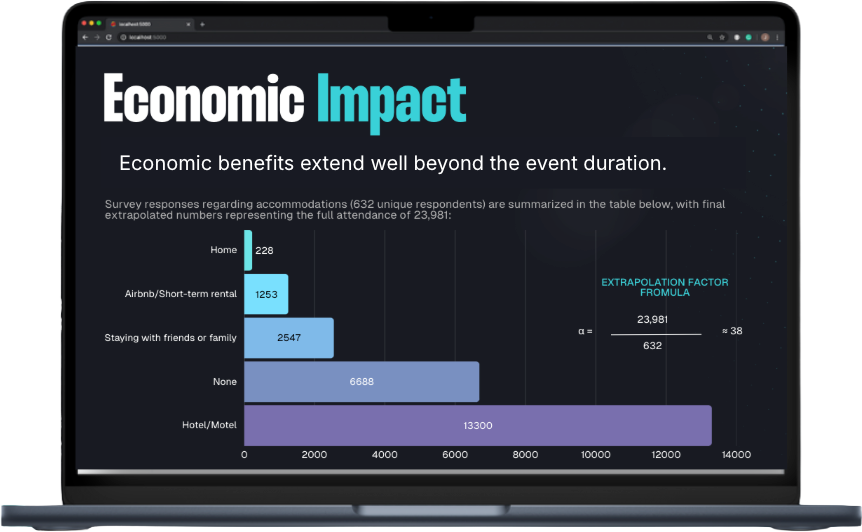
Travel rebates are one of the clearest examples. When housing isn't connected to registration, directors have no reliable way to track room-night commitments or enforce stay-to-play requirements. A 200-team event where each team books two room nights represents hundreds of rebate nights per season that go untracked and uncaptured. That means rebate revenue goes uncaptured, and the data needed to report economic impact to CVBs just doesn't exist.
Sponsorship activation has the same problem. Without a way to connect sponsor placements to attendance data and registration records, there's no story to tell a brand partner after the event. No reach numbers, no engagement proof, no case for renewal. Research on measuring sports sponsorship ROI confirms that brands need concrete engagement data to support renewal decisions, and fragmented systems simply can't produce it.
Fastbreak brings registration, travel, communications, and sponsor management into one connected system, the kind of multi-venue league management software that directors need. Directors can see which teams have booked housing, which sponsors are getting exposure, and what the attendance numbers look like, all from the same place. That visibility is what turns a well-run tournament into a repeatable revenue operation.
What an All-in-One League Operations System Actually Covers
When league directors picture an all-in-one operations system, they often think about registration and scheduling, and stop there. But those two functions are just the starting point.
A well-built system pulls together every part of how a league runs, so your staff stops bouncing between tabs and starts working from a single source of truth. Here is what that actually looks like in practice.
The Core Capabilities
- Registration and payment processing that captures waivers, collects fees, and organizes roster data without requiring manual re-entry anywhere downstream.
- Scheduling that accounts for field availability, team travel constraints, and competitive balance, beyond simply who plays who.
- Team and coach management that keeps contact records, credentials, and communications tied to the right people across every season.
- Standings, scores, and bracket tracking that update in real time so directors are not fielding calls about results that are already posted.
- Participant communications sent from the same system that holds your roster data, so messages reach the right people without cross-referencing a separate contact list.
What Gets Added When the System Matures
Beyond the core, stronger operations systems also bring in capabilities that used to require separate vendor relationships entirely.
- Website and event directory tools that give your league a public-facing presence without requiring a separate content management system.
- Reporting and analytics that let you see registration trends, payment status, and participation data without building spreadsheets by hand.
- Mobile access for coaches and participants through a connected app, so the information directors manage on the back end reaches the people who need it on the front end.
The real value of having all of this in one place goes beyond cutting down on subscriptions. It is about data integrity. When registration feeds scheduling, and scheduling feeds communications, and communications feed reporting, you stop losing information in the handoffs between systems that were never designed to talk to each other.
What to Look for When Choosing League Operations Software
When you're ready to move from scattered spreadsheets and disconnected apps to a unified system, knowing what to look for saves you from making a costly switch twice. A review of leading sports league management software shows the strongest platforms share consistent strengths. The table below outlines what those platforms consistently include and where weaker options fall short.
Registration and Scheduling in One Place
The foundation of any league operations software is how well it handles the two tasks that consume most of your week. Registration should collect payments, waivers, and roster data without requiring you to re-enter anything elsewhere. Scheduling should pull directly from that registration data so you're not rebuilding team lists from scratch. If those two functions don't talk to each other, you'll spend hours cross-checking information that should already be connected.
Communication That Reaches the Right People
A good system lets you send targeted messages to specific groups: coaches, parents, team managers, or your whole league. If you're blasting the same email to everyone because segmentation isn't available, you're creating noise and missing the people who actually need the information. Look for a system where communication is built into the same place you manage rosters and schedules, not a separate app you have to log into separately.
Reporting You Can Actually Use
Directors who rely on disconnected tools often find themselves building reports manually in spreadsheets. The software you choose should generate attendance, registration, and financial summaries without extra work on your part. Bonus points if it produces data you can share with city partners, sponsors, or grant reviewers in a format they can read.
Scalability Without a New Learning Curve
Some software works fine for a 10-team rec league but falls apart at 80 teams. Ask vendors directly: how does the system perform at your current size, and at twice that size? The answer tells you whether you're buying something that grows with you or something you'll outgrow in two seasons.
Support When You Need It
League directors wear a lot of hats, and most don't have a dedicated IT person on call. The software you choose should come with responsive support that understands sports operations, not the kind of generic help that treats every industry the same. During registration windows and tournament weekends, a slow support response can cost you real participation and revenue.
Managing the Transition Without Disrupting a Season
The biggest fear most league directors have about switching software mid-operation is disrupting something that's already running. That concern is real, and it deserves a straight answer.
The good news: you don't have to flip everything at once. Fastbreak is built so you can start with the capabilities you need most, get comfortable, and expand from there. If registration is your biggest headache right now, start there. Add scheduling, communications, and reporting as your team gets up to speed.
Most directors find the learning curve shorter than expected because everything lives in one place. No more toggling between tabs or re-entering data across separate systems. Your staff learns one workflow, not five.
How Fastbreak Supports League Directors Running at Scale

Fastbreak was built for the realities of running leagues at scale, where a single weekend might mean managing hundreds of teams, dozens of venues, and thousands of families all at once.
The platform brings registration, scheduling, communications, and reporting into one connected system. When a roster update happens in registration, it flows through to the schedule automatically. When a venue change occurs, notifications go out to the right people without you having to track down contact lists across three different apps.
What That Looks Like in Practice
For directors running large-scale operations, a few capabilities stand out:
- Scheduling that accounts for field availability, team travel distances, and competitive balance without requiring hours of manual input from your staff.
- Registration that connects directly to payment processing, waiver collection, and team rostering so nothing falls through the cracks between sign-up and game day.
- Communications that let you reach coaches, parents, and players by role, so the right message goes to the right people every time.
- Reporting that gives you a real picture of registration trends, revenue, and participation without having to pull data from separate sources and stitch it together yourself.
The Attitude of Gratitude tournament runs over 1,000 teams across multiple venues using Fastbreak, and their staff manages that volume without the kind of administrative overload that comes from juggling disconnected software. That scale would be nearly impossible to manage well when your data lives in five different places.
If you are running a league that has grown past what a patchwork of separate apps can handle, Fastbreak gives your staff the platform to operate with confidence.
Final Thoughts on How League Directors Can Reclaim Time Lost to Disconnected Software
The administrative weight of running a league on disconnected tools is real, and it grows every season as your operation gets bigger. Consolidating into one connected system won't solve every challenge, but it removes the category of problem that eats 10 to 15 hours a week for no good reason. Your time is better spent on the things that make your league worth running. Talk to the Fastbreak team today.
FAQ
What's the real cost of running a league on disconnected tools?
Directors managing separate registration, scheduling, and communications systems can spend 10 to 15 hours per week on data re-entry, manual reconciliation, and fielding parent questions that a connected system would resolve automatically. That administrative drag compounds as your league grows, and it's a leading reason experienced directors leave their roles early.
All-in-one platform vs. separate tools for league operations: which is better?
For leagues managing more than a handful of teams, an all-in-one platform wins on data integrity alone: registration feeds scheduling, scheduling feeds communications, and nothing gets lost in the handoffs between systems that were never designed to work together. Separate tools each solve one problem but create new ones the moment any information needs to move between them.
How do I know when my league has outgrown its current software stack?
If your staff is re-entering the same roster data in multiple places, schedule changes require manual notifications across three or more channels, or payment records don't match registration records without cross-referencing, your stack has outgrown what it can reliably handle. Those gaps only widen as team volume increases.
Can I switch to an all-in-one platform mid-season without disrupting operations?
Yes. Fastbreak is built so you can start with the capability you need most, get comfortable, and expand from there. Most directors find the learning curve shorter than expected because registration, scheduling, and communications all live in one place, so your staff learns one workflow instead of five.
What revenue does fragmented software cause league directors to miss?
Travel rebates and sponsorship activation are the two clearest gaps. Without housing connected to registration, there's no reliable way to track room-night commitments or build the attendance data a sponsor needs to see before renewing. A connected platform turns those functions into repeatable revenue lines instead of missed opportunities.


