







We sat down with Alec Kinsky, a sports tech veteran and tournament operator, who built one of grassroots basketball's most trusted media platforms from the ground up and has spent his career at the intersection of the game and the technology serving it. In this edition, he shares what over a decade inside the grassroots basketball world has taught him about what athletes and families actually need, how trust gets built in a space where everyone is competing for access, and where the real opportunities in youth sports are still waiting to be seized. From the evolution of highlights technology to the recruiting shifts reshaping how young players get discovered, it's a candid conversation from someone who has watched this world grow and knows exactly where it's headed next.
1. Briefly share your background.
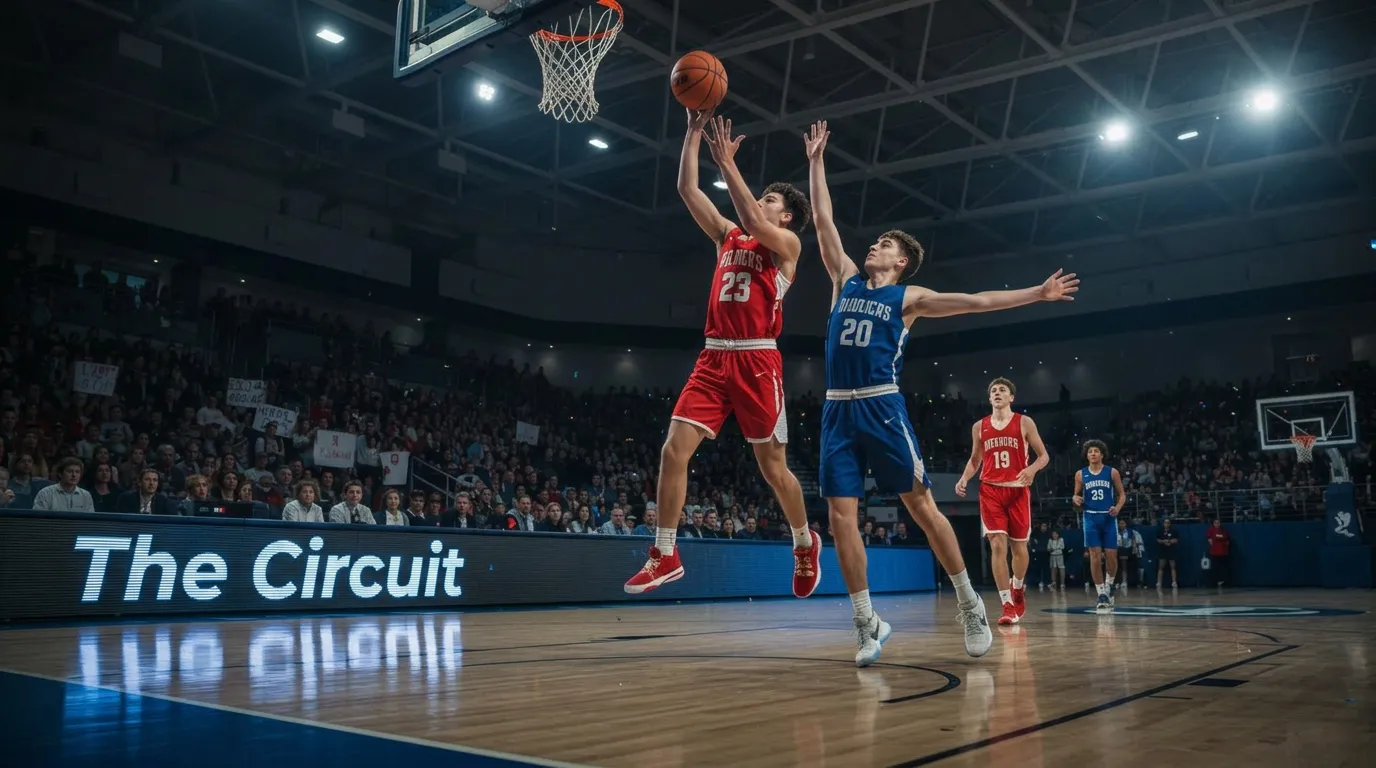
I've spent my entire career in sports tech. One day I was asked to launch a basketball site, and it took on a life of its own. What started as a Nike EYBL media platform eventually grew into what is known today as The Circuit. Within a year of launching, we became Nike's official media partner. We tracked scores, stats, standings, and awards. That eventually led me to where I am now at Athlete.AI, a highlights app. I believe it is desperately needed across every youth sport where parents pull out their phones and film their kids.
2. What did building The Circuit teach you about what athletes and families actually need from sports technology?
What parents and families are really looking for is ease and accessibility. People don’t want to ask questions about technology. They gravitate toward what they’re comfortable with. That’s why some platforms have such a grip on this space. They were first, and people are used to them. In order to find success, you have to make a lot of people comfortable. That’s not always easy.
But there’s something deeper going on in grassroots basketball specifically. It’s a very interconnected, very guarded world. There’s no real structure, so everyone moves carefully. A young recruit can have a whole ecosystem around him, family, friends, handlers, agents, agent’s helpers, and everyone touching that kid makes things complicated. The athletes who tend to make it are the ones who keep a small circle.
Technology in this space has to account for that guardedness. It’s not just about building something functional, it’s about building something that people in a very skeptical, trust-driven community will actually adopt. That’s the real challenge.
3. If you could applaud one thing and fix one thing about how amateur basketball is run, what would you pick?
The positive: there are a lot of good people in this space. A lot of former pros who are genuinely giving back. At the highest level, community involvement is real. About half of the sponsored programs have an NBA player behind them in some form, and you see those guys trying to do more. That’s encouraging.
The fix? Safety. Grassroots basketball is the Wild West. There are no background checks required for coaches and no age verification at events. I have a five-year-old daughter. I wouldn't put her in any sport where I don't know anything about who's coaching her. The only way to fix it is for every operator to agree at once to implement this so it is the standard.
4. Most youth sports conversations revolve around elite travel programs and big-budget events. But cost and access are real barriers for a lot of families. What's the single most underestimated opportunity in amateur sports right now — and what do families need to understand about the recruiting process to actually take advantage of it?
For families trying to understand recruiting, here’s the most important thing most parents don’t know: the older your kid is, the better. That sounds counterintuitive, but college men’s basketball coaches right now are not watching 14-year-olds. They’re not even prioritizing 17-year-olds unless that kid is a top-50 player in the country. They want grad transfers, JuCo players, kids with years of development behind them. There’s been a 56% drop in coaches attending certain live periods this year because they’re just not in the market for high schoolers at scale.
If you feel like a school believes in them right now, take the offer. Go there, perform, and transfer up. The families that hold out waiting for a better offer often end up with nothing and treat the school that did believe in them poorly.
5. You have real relationships with current and future NBA players, college coaches, and media. How do you build trust in a world where everyone is competing for access and attention?
Trust builds the moment the other person realizes you trust them. A lot of these guys are guarded. My rule is simple: I won't say anything to a coach or a scout that I wouldn't say directly to the player's face. If I tell a coach a kid has slow footwork and poor team defense, I have to be comfortable telling that kid the same thing in person. People see right through you the moment your private assessment doesn't match your public one. Real trust is earned by being consistent and by being honest even when it's uncomfortable.
6. You've watched youth sports technology evolve for over a decade. Where has the industry made real progress, where has it fallen short, and what gaps are still waiting to be filled?
The biggest progress has been in organizational management. The tools that help programs communicate, manage rosters, run registration, and coordinate across large groups of people. That technology has come a long way, and it’s made a real difference for clubs and leagues trying to manage a lot of moving parts. What used to require endless email chains and spreadsheets can now run through a single platform.
Where the industry has fallen short is video, specifically highlights. The dominant model is still the broadcast angle: a wide, fixed camera trying to track the whole field or court. It’s grainy, the angle is wrong, and nobody is actually watching it. Only about 15% of parents at any given event are filming. But close to 100% want to watch highlights of their kid afterward. That 85% gap is the opportunity. Live streaming has improved, but options are still limited. And on the data side, there’s a real opportunity to bring more transparency to how athletes are tracked and ranked across circuits. Right now that information is fragmented and inconsistent depending on who’s covering what.
7. Recruiting profiles, highlight reels, social media, scouting services — there are more platforms than ever telling a young athlete's story. But who's looking out for the athlete in all of that, and what happens when the story being told doesn't match reality?
Honestly? The only one looking out for the athlete is the athlete themselves. The most important thing a family can do is get into a program whose director will answer those questions honestly. Half the reason you join a grassroots program should be the intel that comes with it. Ask your director point-blank: how am I going to get recruited? If they don't have a good answer, you're in the wrong program. Everything else, the recruiting services, the highlight reels, the scouting reports, comes second to that. And your information is only as good as where it's coming from.
8. Brands fund the leagues, control the access, and influence which programs get visibility. How much does that shape what gets covered and what gets ignored in grassroots basketball?
One hundred percent. It is essentially the entire filter. Programs treat a shoe brand sponsorship like a golden ticket; they think once they're a Nike or Adidas team, the platform and visibility follow automatically. And in a lot of ways, they're right. The brand controls who plays where, who gets seen, and increasingly who gets paid.
9. What's your favorite sports moment, on or off the field?
As a fan, it was the 2003 NCAA Championship when Syracuse beat Kansas. I grew up in Minneapolis, where our teams don't win anything, so that whole tournament run was my real introduction to sports heartbreak and joy. The wild part is I'm now good friends with Gerry McNamara, who was their star player and is now a Syracuse coach. Funny how that works.
A year later it was watching the Timberwolves come back from 25 down in Game 7 against Denver, surrounded by a bar full of people losing their minds. I've been a season ticket holder for 16 years. That one meant something.
But the most memorable moment? Starting on the mound on opening day my senior year against the number one team in the state. I was a situational relief lefty. I'd never thrown more than three innings in a high school game. I got through five and two-thirds innings before I gave up a grand slam to a guy who went on to play 18 years in the NHL. It was a 17-pitch at-bat, and on the 17th pitch he hit a fastball about a million feet. It landed on the windshield of a moving car on the street beyond the outfield wall. I wasn't even upset. I just stood there thinking: this is humbling. That moment still plays in my head like it was yesterday.
About Top of the 9th
Top of the 9th is a Fastbreak AI original series featuring the athletes, organizers, and operators who make youth and amateur sports exceptional.
The Game Behind the Game
Alec has spent his career building something real inside one of sports' most unstructured and competitive landscapes, and he knows better than anyone that the grassroots basketball game runs on relationships between brands, operators, and the programs in between. The same dynamics he described in this conversation, brands looking for visibility, operators looking for partners, and events that need the infrastructure to bring it all together, are exactly what Fastbreak AI was built to solve. Alec is a Fastbreak AI customer, using our platform to run his tournaments, and his story is a reminder that the people doing the most important work in youth sports deserve technology that actually works for them.


