





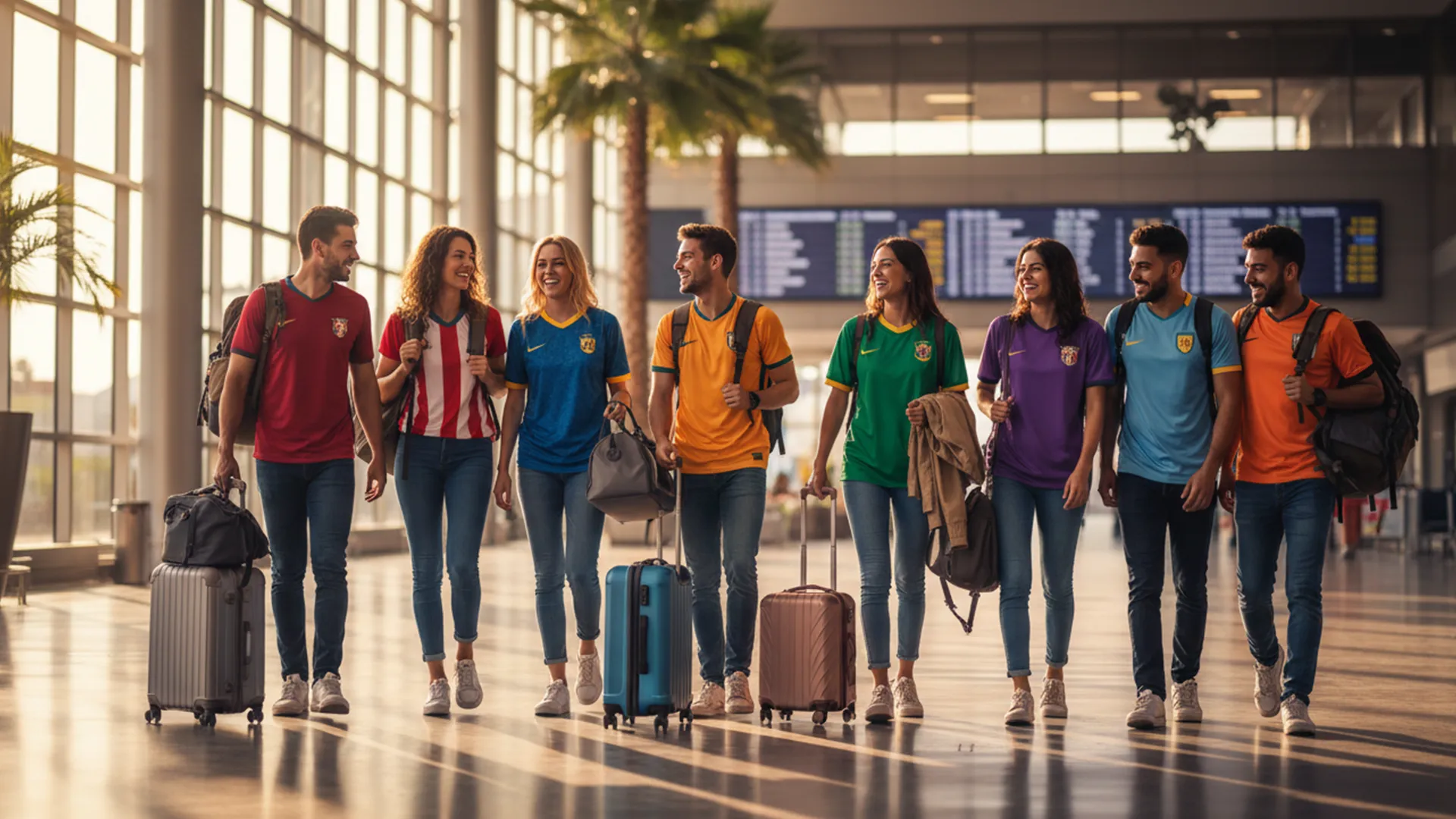

Every weekend, across thousands of cities and towns, something remarkable is happening. Hotels are filling up. Restaurants are packed. Local businesses are humming. And the common thread isn't a concert, a convention, or a holiday weekend. It's youth soccer. Adult pickleball. Amateur basketball. Travel sports.
Millennials — the generation that grew up playing organized sports, wearing their teams' gear, and idolizing athletes — have entered their prime earning years. And they're spending those earnings on something that blends two of their deepest identities: being a sports parent and being a traveler.
The result is one of the most powerful shifts in modern travel behavior. And for destinations and tourism commissions paying attention, it's an enormous opportunity.
The Numbers Don't Lie
The scale of what's happening is hard to ignore. According to Hilton's 2026 Trends Report, which polled over 14,000 travelers across 14 countries, about 67% of Millennials have planned a trip around events tied to their interests, including sports, wellness, and concerts. That's not a niche behavior. That's a majority of an entire generation organizing their travel lives around experiences rather than destinations.
In the U.S., the trend goes even deeper. A Priceline survey on 2025 travel trends found that American Millennials are 80% more likely to plan a vacation around tennis and 87% more likely to do so for pickleball compared to other generations. These aren't passive spectators flying in to watch. These are active participants — parents, coaches, athletes — who are packing their cars, booking hotel blocks, and spending real money in your city because a youth sports tournament or adult recreation league brought them there.
And the market reflects it. The sports tourism industry is already valued at $707.29 billion, according to Fortune Business Insights, and is projected to nearly triple by 2032. That's not a trend. That's a transformation.
Why Millennials Are Leading This Shift
To understand why Millennials are driving sports tourism, you have to understand who they are at this stage of life.
Millennials are now between 29 and 44 years old. Many are deep in the youth sports years. The era of weekend tournaments, travel teams, and multi-day events in cities they've never visited. They're not just spectators in this economy. They're the ones paying the registration fees, booking the hotel rooms, filling the minivans, and deciding where to eat dinner after the semifinal.
But this generation also brings a distinct travel philosophy. Millennials don't just want to go somewhere, they want to do something. Research consistently shows they prioritize experiences over possessions, and they gravitate toward travel that has a built-in reason for being, something that makes the trip feel meaningful rather than arbitrary. Sports tourism delivers exactly that. The tournament is the anchor. The destination is the reward.
There's also the identity piece. For millennial parents deeply invested in their children's athletic journeys, attending a tournament isn't just logistics. It's participation in something that matters. They're proud of it. They share it. They plan around it months in advance. That level of emotional investment translates into economic commitment and repeat travel.
What Sports Tourists Actually Do With Their Time (and Money)
Here's what most people outside the sports tourism world underestimate: sports tourists are not spending their entire trip at the venue.
A family that travels four hours for a soccer tournament doesn't stay in a bubble. They explore. They eat out. They visit local attractions. They shop. They get coffee in the morning and find a good spot for dinner at night. If the city is good to them, they talk about it. They come back. They tell other families on their team.
The economic footprint of a single youth sports event extends well beyond the venue. Hotel occupancy, restaurant revenue, retail spending, entertainment, it all ripples out from the moment those families cross into your city's limits. And because tournaments often run across multiple days, the dwell time and per-family spend adds up fast.
For destinations that understand this, the calculus is simple: attracting sports events is one of the most efficient ways to drive tourism spending. For those that don't yet have the data to prove it, building that evidence base is the next competitive frontier.
The Measurement Gap and Why It Matters
Here's the challenge. Many destinations know intuitively that sports tourism is valuable. Hotel operators see the rooms fill up. Restaurant owners notice the Friday night rush that coincides with tournament weekends. But intuition doesn't win budget battles. It doesn't convince city councils to fund new facilities. And it doesn't give destination marketing organizations the ammunition they need to recruit more events.
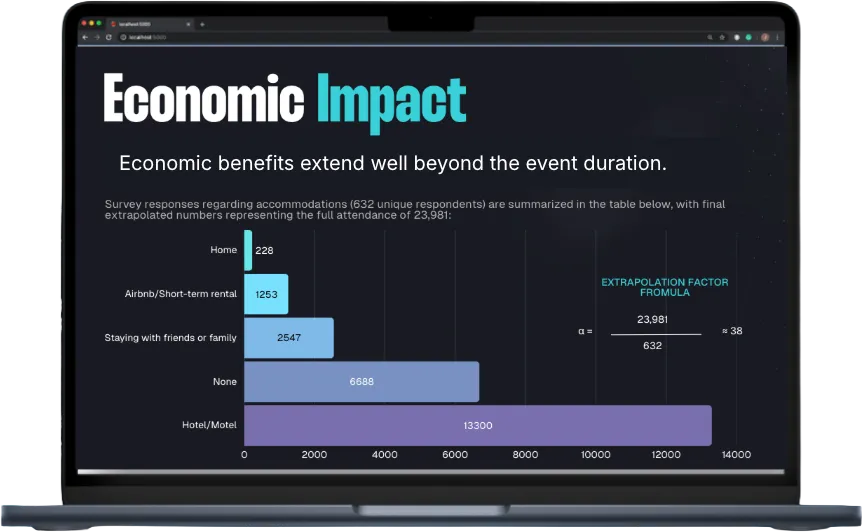
The destinations winning the sports tourism race right now aren't just hosting events. They're measuring them. They're capturing verified, first-party visitor data, like where families traveled from, how many nights they stayed, how much they spent, what brought them back. They're turning that data into defensible economic impact reports that tell a clear story: this tournament brought X families from Y markets and generated Z in local economic activity. Fastbreak Brand Ambassadors help create a better experience, without the cost of an additional internal staff, allowing Sports Commissions to get more done with less.
That evidence changes the conversation from "sports events are probably good for us" to "here's exactly what they're worth, and here's our plan to attract more of them." It gives organizers a reason to bring their events back. It gives sponsors a reason to invest. And it gives tourism boards the credibility to compete for the events that every other destination is chasing.
This is exactly what Fastbreak Pulse was built for. Pulse puts Fastbreak ambassadors on the ground at events to capture real visitor behavior, real spending patterns, and real attendee sentiment, all without adding operational burden to the destination. The result is a credible, data-backed economic impact story that holds up to scrutiny and can be shared with every stakeholder who needs to see it.
Turning Data into a Competitive Advantage
Measurement alone isn't enough. The destinations pulling ahead are using visitor intelligence to make smarter decisions about which events to recruit, which markets to target, and where their budgets go furthest.
Knowing that a regional soccer tournament drew 60% of its families from markets more than 200 miles away, and that those families stayed an average of 2.4 nights and spent significantly more per day than typical leisure travelers, changes how a tourism commission allocates its recruitment budget. It shifts the conversation from "sports events are nice to have" to "these specific events in these specific sports generate the highest return on our investment."
Fastbreak Pulse delivers exactly that kind of geographic visitor intelligence. Cities and sports commissions learn where attendees are traveling from, which markets are most likely to return, and how spending flows across the local economy. That data shapes event recruitment strategy, targeted outreach, and regional marketing investment, so commission budgets go further and every dollar spent on event incentives is backed by evidence.
The sports tourism commissions that build this intelligence layer now will have a years-long head start on the ones that wait.
What Comes Next?
The sports tourism boom is not a moment. It's a decade-long wave and we're in the early stages of it.
As Millennials continue to age into the youth sports years, and as their children move into more competitive, travel-heavy programs, the demand for tournament travel will only increase. The rise of sports like pickleball and adult recreational leagues is also expanding the market beyond the youth demographic, drawing Millennial participants who are traveling to compete themselves.
The destinations that build the infrastructure — the data systems, the event relationships, the ability to prove and communicate their value to organizers — to meet this generation where it is will earn an outsized share of a market heading toward $2 trillion by the end of the decade.
The Millennials are already on their way. The only question is which cities will be ready when they arrive.
Fastbreak Pulse helps Destination Marketing Organizations (DMOs), Convention and Visitor Bureaus (CVBs), and sports commissions measure the real economic impact of amateur sports events with verified, first-party data captured on the ground at every event. To connect with our team for more information, visit https://www.fastbreak.ai/pulse/contact.


