


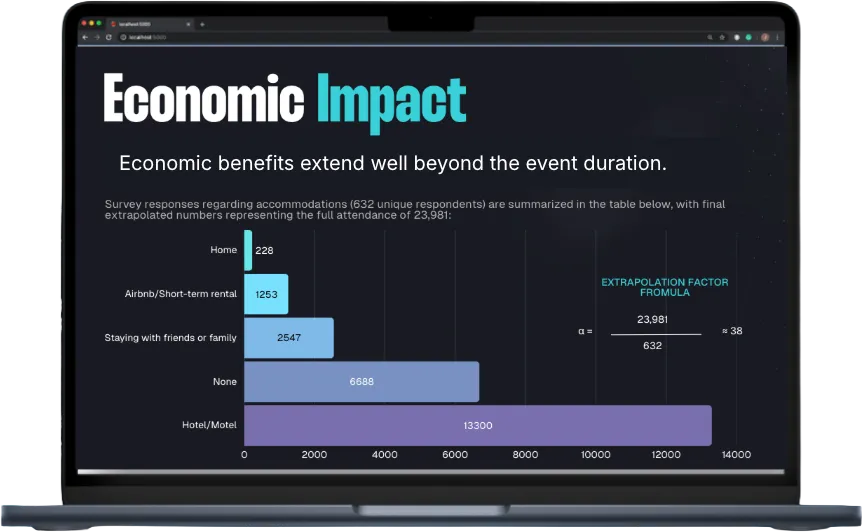





Registration friction costs you more than abandoned sign-ups. When coaches quit halfway through a multi-page form, when payment requires mailing a check, or when unclear status updates force them to hedge by registering with a backup event, you're losing the compounding value of retention before the season even starts. The operators pulling ahead aren't simply digitizing paperwork with their event registration software for youth sports; they're eliminating every point where uncertainty makes teams second-guess their commitment, and that clarity gap alone supports premium pricing when competitors try to undercut you on entry fees.
Executive summary:
- Youth sports registration drives retention because families now spend $1,016 per child annually and assess events as financial investments.
- Manual registration systems cost you 15+ hours per event in status calls and cause teams to drop off before they finish signing up.
- Operators who automate housing compliance and payment tracking see 23% higher year-over-year team retention rates.
- Ancillary revenue from hotels, ticketing, and media adds $30,000+ per large event without raising entry fees for families.
- Fastbreak AI for tournaments uses NBA-level scheduling math to manage registration, housing, and communication in one system reaching 10M+ athletes.
Why Youth Sports Registration Has Become a Retention Battleground
Teams can choose which tournament to attend. That's because many tournaments take place around the same time: on long weekends, over holidays, and during school breaks. Of course, the decision to attend a specific tournament can depend on many factors, including cost, location, and competition. But one factor plays a subtle yet important role in that decision-making: registration.
With many tournaments offering competing benefits such as discounted hotel nights and on-site merchandise vendors, team decisions come down to the intangibles. How easy is it to get registered? How responsive are the organizers? And while coaches often decide which tournament to attend, families have tremendous influence. The entire experience, from registration to the finals, must be frictionless and enjoyable. Because when you lose a team to a competitor, you're not losing just the entry fee. You're losing hotel rebates, ticket revenue, photo sales, and sponsor value. Retention compounds in both directions. Teams that return bring referrals. Teams that leave tell other coaches why.
The Hidden Cost of Manual Registration Systems
Most operators don't track how many teams start registration but never finish, especially when they are using a manual registration system. These systems create three types of abandonment:
- Forms requiring multiple steps across different documents make teams quit halfway. Sports tournament management that works should never feel like an obstacle course.
- Payment friction kills conversions when teams mail checks or call to process cards.
- Unclear status updates leave coaches wondering if they're registered, so they hedge by signing up elsewhere.
The back-office cost is worse. You spend hours cross-referencing spreadsheets to confirm who paid, who submitted waivers, and which teams are locked in. When your entire pre-event experience is transactional chaos, teams view you as interchangeable. They'll pick whoever has the easiest checkout next time.
A Key Hallmark of Successful Tournament Operators
The first experience a team has with your tournament is the registration process. So if it's unfriendly, or cumbersome, or difficult, that process may deter a team from choosing your tournament over a competitor. That's why successful tournament operators automate transactional work, reducing teams' tolerance for friction. For example, automated confirmations and payment tracking cut email volume in half, while integrated housing and schedule visibility during registration let teams commit with confidence. The return? Potentially over 20% higher year-over-year retention when pre-event workflows run without manual intervention. Operators who eliminate registration confusion stop losing 15 hours per event to status calls and instead spend that time recruiting teams or improving competition quality.
Mobile-First Registration: Why It Matters More Than Ever

Mobile accounts for 63% of web traffic, but most registration systems still assume a desktop workflow. Multi-page forms that require horizontal scrolling, PDF waivers that force downloads, and payment fields that reject autofill lead to immediate abandonment when accessed from a phone. And that's the issue. Many coaches register teams between practices, from the gym parking lot, and during lunch breaks. If your registration form doesn't load cleanly on a phone, you've lost them to the next event in their search results.
But the mobile registration experience isn't simply about filling out the form. It's also about what happens afterwards. Keep in mind that SMS confirmations achieve 98% open rates, compared to email. When a coach submits payment and receives an instant text confirmation, they mentally check the box. Desktop-only systems delay that confirmation, leaving doubt. If registration requires a laptop, you're asking coaches to remember later. Later means never.
The Data Advantage: How Top Tournament Operators Use Registration Intelligence To Drive Repeat Registration
Just as successful tournament operators optimize their registration process to reduce friction, they use data to understand the health of their tournament registrations throughout the year. Below are a few examples, or best practices, of how those successful operators use data to optimize registration:
- Watching registration velocity against prior years to catch declining interest early. When a club that typically registers in February waits until May, that's price sensitivity or a competing event pulling them away.
- Predicting commitment based on payment timing. Teams paying in full upfront return at twice the rate of those requesting payment plans. Late payers are still shopping. Successful operators flag these accounts for outreach before they disappear.
- Knowing that email engagement separates invested teams from checked-out ones. Teams opening schedule emails and clicking housing links are mentally committed. Teams ignoring pre-event communications won't return. Focus retention efforts on the 20% showing warning signs, not the 80% who are already decided.
The Relationship Between Registration Friction And The Revenue Stack: Beyond Entry Fees
As we mentioned, every team that lost at registration is more than just the entry fee. Each team contributes to the various revenue streams that all tournament operators bank on: hotel rebates, merchandise purchases, and more. Entry fees, actually, only cover expenses. Ancillary revenue becomes profit. The operators gaining market share control housing, ticketing, and media inside the same system that handles registration.
Youth sports drove 73.5 million room nights in 2023. But if you have a registration process with a lot of friction that creates a bad first experience? It can jeopardize revenue. Let's take a look at ways you can improve the experience, so that teams come back year after year.
Best Practices To Build Event Loyalty for Repeat Team Registrations
Of course, having a great tournament is the first step. Every team touchpoint, from check-in to locker rooms to facilities, has an impact on how teams feel about your event. And while you can't control all those touchpoints, you need to make sure that the touchpoints you can control, such as accommodation bookings, payment flexibility, and communication, work together to provide the best experience for participating teams and families.
The Housing Integration Advantage
Accommodations are a major revenue source for event operators. But for many operators, it's a very manual process. Many email spreadsheets to hotels and manually chase rooming lists. By the time you catch a team that skipped your stay-to-play block, though, they've already checked in across town. Bi-directional integration between registration and housing solves this:
- Teams see their compliance status in real time
- Hotel bookings update your registration dashboard automatically
- You know instantly who's met the requirement and who hasn't
The experience gap matters more than the rebate. Teams in your housing system get automated pre-arrival emails with venue directions, parking details, and check-in times. When you control housing, you control information flow. That clarity creates a perceived quality difference that can sway a team to your event over a competitor's.
Want Teams To Come Back For Future Events? Then Stay In Contact
The instant that a coach completes the checkout process and registers a team for your tournament isn't the end of the process. It's really the beginning. A steady stream of communication will keep your tournament top of mind, extending the positive experience of your registration process through the day of the event and beyond. Here are a few examples of how you can do that:
- Send a thank-you email with early-bird pricing for next year within 48 hours of an event ending. Engagement jumps 34%. Wait three months to announce your next event, and half those teams have already committed elsewhere.
- Off-season touchpoints matter more than event-week blasts. Teams that receive at least one communication per quarter between events re-register at rates 40% higher than teams that hear from you only when registration opens.
- Personalization separates noise from value. Messages referencing a team's prior division placement, coach by name, or specific age group create recognition. When coaches see you remember their roster details, they assume you'll remember them on game day too.
How Fastbreak AI Turns Registration into a Competitive Advantage
We built Fastbreak AI for tournaments because most operators treat disconnected systems as unavoidable. Registration, scheduling, housing, and ticketing run through one system where data flows automatically. When a team registers, housing blocks are allocated and the consumer app updates without manual exports or syncing.
The CRM shows every team's full history across your events: registration dates, payment records, division placements, and housing compliance. When a club that registered early for three straight years suddenly waits until late April, you see it and can act before they commit elsewhere.
Our scheduling engine uses the same math that schedules the NBA season, calculating thousands of variables to optimize facility usage and rest periods. That improvement in your processes lets you accept more teams per venue without scheduling chaos, which means more revenue without adding fields.
Final Thoughts on Why Registration Determines Market Share
Operators treating registration as paperwork instead of infrastructure are losing teams to competitors who automate the experience from first click to final payment. Tournament registration software that connects housing, payments, and communication stops the leakage that can cost you $30,000 per event in rebates, gate fees, and photo sales. Teams don't leave because they dislike your competition; they leave because signing up somewhere else requires less friction. When you control the full registration experience, you control whether coaches remember you as the easy choice or the headache they'll avoid next season.
FAQ
What registration data predicts which teams won't return?
Teams that pay in installments return at half the rate of teams paying upfront, and coaches who ignore pre-event communications (schedule emails, housing links) show they're still shopping competitors. Track registration velocity against prior years: when a club that typically registers in February waits until May, they're reacting to price pressure or a competing event.
Why does mobile registration matter more than desktop optimization?
Coaches register between practices from parking lots and during lunch breaks, and 63% of web traffic now comes from mobile devices. Multi-page forms requiring horizontal scrolling, PDF waivers that force downloads, or payment fields that reject autofill cause immediate abandonment because coaches won't remember to finish registration later on a laptop.
How does housing integration stop teams from booking outside your block?
Bi-directional systems show teams their compliance status in real time and update your dashboard automatically when they book. You can instantly see who met the requirement and who didn't, eliminating the manual work of chasing rooming lists. Teams in your housing system receive automated pre-arrival emails with venue directions and parking details, creating a quality gap that supports your entry fee when competitors undercut your price.


