


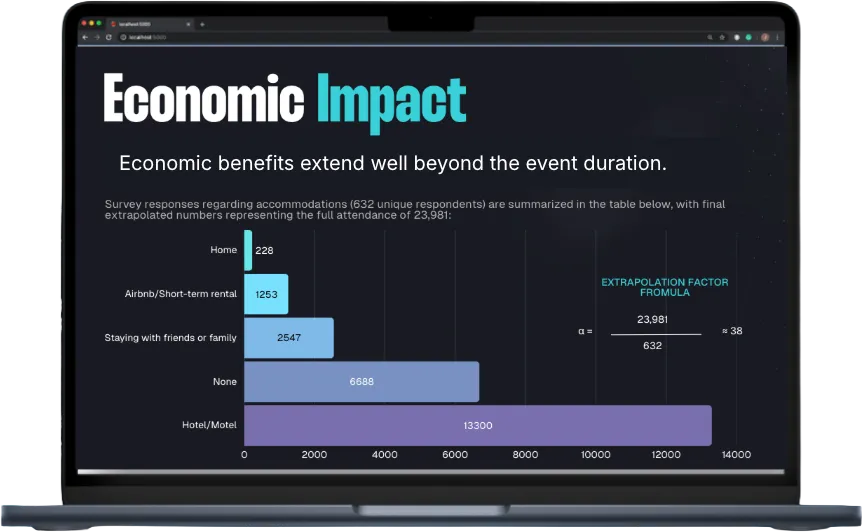





It's Saturday morning. You pull up the rooming report and pickup is sitting at half what it should be. One of your coaches paid for his own room out of pocket because he couldn't get into the block. Three families who were supposed to be in your official hotels booked through a third-party site instead and showed up at check-in without a block confirmation. Nobody can tell you why the numbers don't match. That's the problem stay-to-play was designed to prevent. And it's exactly what happens when housing lives in a separate system from everything else your event runs on.
Executive Summary:
- Families book outside hotel blocks when housing is announced late, rates look higher, or stay-to-play requirements go unexplained at registration.
- Missing rooms cost you rebates, push you toward attrition penalties, and leave you with no data to negotiate better contracts next year.
- Hotel contracts for youth sports events typically require 80% to 90% block fill rates, so off-block bookings create real financial exposure fast.
- Reframing stay-to-play as stay-to-save, showing families the direct savings at registration, can produce stronger block pickup and fewer compliance disputes.
- Integrated with Fastbreak AI for tournaments, Fastbreak Travel connects housing and registration in one place so coordinators track room pickups in real time without chasing anyone down.
The Rooming Report Nobody Wants to Open
After the weekend wraps, you have to sort out the housing report. Room blocks get partially filled, a few families booked outside the block entirely, and the rooming list the hotel sends back rarely matches what was originally set up. You spend hours cross-referencing spreadsheets, chasing down confirmations, and trying to figure out who actually stayed where.
That reconciliation problem is more common than most organizers admit. When housing is managed through a patchwork of email chains, third-party booking links, and manual tracking, errors stack up fast. A family who booked through the wrong link still shows up expecting a room. A block that was supposed to hold 40 rooms closes out at 31 because nobody caught the attrition deadline. The hotel wants documentation, and the hidden costs of group booking surface fast. The director wants answers. Nobody has a clean record.
Fastbreak Travel keeps housing data in one place so that reconciliation after the event is straightforward, not a scavenger hunt. Room pickups, block status, and booking confirmations are tracked in real time, so when the tournament ends, the report is already mostly written.
What a Clean Housing Report Actually Requires
Most reconciliation headaches come down to three gaps:
- Families booked outside the designated block, which means their stays may not count toward attrition minimums and the organizer loses credit for those room nights.
- Block sizes were set based on estimated attendance instead of actual registration data, so the numbers were wrong from the start.
- There is no single record of who booked what, leaving coordinators to piece together confirmation emails after the fact.
Fastbreak Travel connects housing inventory directly to registration, so block sizes are grounded in real team counts and the booking record stays current throughout the process.
Why Families Book Outside the Block
Families opt out of the official hotel block for reasons that feel completely rational to them in the moment. They find a cheaper rate on a booking site, they prefer a hotel closer to a relative's house, or they simply book before the room block is even announced. The result is a fragmented rooming list that quietly erodes the revenue model the tournament depends on.
The core issue is a timing and information gap. Room blocks are often communicated late, buried in a registration confirmation email, or announced without enough context for families to understand what parents want from hotel booking policies or why booking through the official block matters. When families see a lower rate on a third-party site, they take it. No one told them the block rate often includes perks, or that their booking directly supports the event they just paid to attend.
The Three Most Common Reasons Families Go Off-Block
There are a few patterns that repeat across nearly every tournament that struggles with block compliance:
- The block is announced too late in the registration flow, giving families enough time to search on their own and commit to a different property before they ever see the official option.
- The rate looks higher than what's visible on consumer booking sites, even when the block rate actually includes amenities or flexible cancellation terms that make it the better deal.
- There's no clear explanation of stay-to-play policies for parents at the point of booking, leaving families confused about whether they're even obligated to use the block.
Each of these is a communication problem, and each one is solvable with the right process in place before registration opens.
Stay-to-Play Enforcement: Why the Policy Breaks Down in Practice
Stay-to-play requirements sound straightforward on paper: book your hotel through the approved block, or your team can't compete. But between the policy and actual compliance, there's a lot of room for things to go sideways.
Part of what makes it break down is that nobody actually wants to enforce it. If you chase a family over their hotel choice, you become the person policing where people sleep. That family already paid registration fees, booked travel, and showed up ready to play. You would rather absorb the compliance gap than have that conversation. So the requirement exists on paper, gets mentioned in a registration email, and then quietly goes unmonitored. The chaos that follows is not a data problem. It is what happens when a rule has no one willing to back it up.
The most common breakdown happens at the point of verification.
You set up hotel blocks through a housing provider or through stay-to-play hotel management software, distribute a link to families, and then hope everyone follows through.
There's no live view into who has booked, who hasn't, and whether the room block is filling at a pace that satisfies the hotel contract. By the time the tournament weekend arrives, some teams have booked outside the block, others haven't booked at all, and you're left chasing compliance manually.
There are a few ways these issues repeat across tournaments of every size:
- Families book outside the block because the approved hotels are sold out, the booking link was buried in an email they ignored, or they found a cheaper rate on a third-party site and figured no one would check.
- Coaches pass along incomplete information to their rosters, so some players on the same team end up in the block while others don't, making compliance tracking by team nearly impossible.
- You have no way to cross-reference registration data against housing data in real time, so enforcement only happens after the fact, when it's too late to do much about it.
Fastbreak Travel connects registration and housing in one place, so you can see booking status alongside roster data without running separate reports. When a family registers, the housing requirement is part of the same flow, not a separate step they might skip. That connection is where stay-to-play enforcement actually holds together.
Where Stay-to-Play Has Gone Wrong
Stay-to-play requirements were designed with good intentions. Hotels and convention bureaus pushed for them because unsecured room blocks meant financial exposure, and tournament organizers needed a way to guarantee heads in beds. For a while, the system worked well enough.
Then it started breaking down. The problems tend to cluster around some recognized failures:
- Families book outside the approved block to save money, leaving organizers short on their room commitments and on the hook for attrition fees that can run into thousands of dollars.
- Housing vendors charge booking fees that families resent, which poisons the perception of the entire event before a single game is played.
- Room blocks get allocated without any visibility into what teams have actually booked, so organizers are flying blind until attrition penalties hit.
- Disputes between families and housing vendors go unresolved, and the tournament director ends up in the middle of a conflict they have no tools to manage.
These are not edge cases. They represent a pattern that has repeated itself across youth sports events for years, and it has eroded trust on every side. Families see stay-to-play as a tax. Organizers see it as a liability. Hotels see it as a headache.
The Revenue Cost of Every Room Booked Outside the Block
But, when a family books outside your hotel block, you lose more than just a room night. You lose the rebate attached to it, the compliance credit that counts toward your contracted minimum, and the goodwill buffer that keeps your host hotel from charging attrition fees when the block comes up short.
Attrition clauses in hotel contracts are standard for youth sports events. Most require tournament organizers to fill between 80% and 90% of their contracted room block or pay a penalty on the shortfall, which is one of the core reasons evolving from stay-to-play to stay-to-save has become a strategic priority. When teams book independently, those rooms don't count, even if the same families end up in the same hotel down the street.
The financial exposure adds up faster than most organizers expect.
Where the Losses Actually Come From
Revenue walks out the door in a few key places:
| Revenue Loss Type | How It Happens | Impact on the Organizer |
|---|---|---|
| Rebate loss on untracked rooms | Families book the same hotel through a third-party site instead of the official block | Zero rebate collected on those room nights, even though your tournament drove the visit |
| Attrition penalties on shortfalls | Off-block bookings don't count toward your contracted minimum (typically 80 to 90% fill rate) | Penalty fees on every room night below the threshold, including rooms you never collected a rebate on to begin with |
| No data for contract negotiations | No verified housing compliance record to show the hotel when renewing or growing the event | Weaker negotiating position for next year's block size, rates, and rebate terms |
- Rebate loss on every untracked room: Hotels pay room night rebates to tournament organizers only on rooms booked through the official block. A family who finds the same property on a third-party booking site generates zero rebate for your event, even though your tournament drove their visit.
- Attrition penalties on shortfalls: If your contracted block requires 200 room nights and you only verify 160 because 40 families booked outside the system, you may owe the hotel a penalty on those 40 rooms, rooms you never collected a rebate on in the first place.
- No data, no position for next year: If you can't document actual housing compliance, you have no negotiating position with hotels when it's time to renew contracts or grow the event. You're asking for a bigger block with nothing to show, a gap that software integrating hotel bookings with tournament registration is designed to close.
Keeping housing inside a single, trackable system means every room night counts toward your block, your rebate, and your compliance record. That's how Fastbreak Travel protects the revenue your event already earned.
The Stay-to-Save Reframe
Families already know the room block exists. What they want to know is whether skipping it is worth the risk.
Stay-to-save, on the other hand, flips the framing: instead of threatening a consequence for booking outside the block, it shows families a concrete financial benefit for booking inside it. Families who book through the official block pay lower registration fees than families who book outside it, which makes the block the obviously smart budget decision on its own. That pricing structure is a key part of how turning travel into a competitive advantage.
That can be a much easier sell for tournament directors, and a better experience for families.
Fastbreak Travel surfaces those savings at the point of registration, so families see the benefit before they ever start searching on their own. No separate email. No PDF with instructions. The offer is right there when they are already paying attention. For directors, this can mean fewer support questions, fewer complaints about housing policies, and stronger block pickup rates overall.
How Fastbreak Travel Fixes the Whole Chain
Fastbreak Travel is built around one premise: the booking process should work for the coordinator, not against them. Integrated with Fastbreak for tournaments, Fastbreak Travel connects housing directly to the event so coordinators manage both in one place.
When you set up housing for a tournament through Fastbreak Travel, the system connects directly to the hotel inventory, pre-negotiates room blocks, and gives teams a dedicated booking link. Families book on their own, rooms are tracked in real time, and you can see exactly where the group stands without chasing anyone down.
Integrated with Fastbreak for tournaments, Fastbreak Travel keeps housing tied to the event itself. Room blocks are allocated based on team registrations, so when a new team confirms, the housing side updates automatically. There is no separate spreadsheet to maintain and no manual reconciliation at the end.
What This Looks Like in Practice
Here is what you get when housing runs through Fastbreak Travel:
- Real-time room block tracking so you always know how many rooms are filled, how many remain, and where families are in the booking process, without sending follow-up emails.
- Dedicated booking links per team that go directly to families, removing you as a go-between for every individual reservation.
- Automatic room block updates tied to team registration, so the housing inventory reflects the actual event headcount as it changes.
- A revenue stream from every room night booked, returned to the organizing body as additional income instead of flowing to a third-party agency, a key differentiator when comparing sports travel management platforms for tournament organizers.
- Stay-to-save pricing shown alongside live public rates on the same screen, so families compare block and open-market pricing before they commit. Fastbreak aggregates room-night demand across hundreds of events, which produces rates the open market cannot match at the same properties, removing the incentive to book outside the block before families ever start searching on their own.
The Rising Stars Cup used Fastbreak Travel alongside Fastbreak for tournaments to run hotel housing without a separate management layer. The tournament secured 500+ room nights across hotel brands near the playing fields, with real-time visibility into room usage and bookings that removed last-minute scrambles from the equation. Coordinators handled registration and housing from the same place, and families got clear booking links with flexible payment options instead of waiting on coordinator assistance for each step.
Final Thoughts on Why Team Hotel Bookings Fall Apart at Weekend Tournaments
The revenue your tournament loses to off-block bookings is quiet and cumulative. No single family feels like the problem, but 40 rooms booked outside the block can flip a clean attrition close-out into a penalty you weren't budgeting for. When housing is tied directly to registration, your block fills based on real team counts and every room night works for your event. Talk to the Fastbreak team to see how Fastbreak Travel handles this in practice.
FAQ
Why do families book outside the hotel block at youth sports tournaments?
Families typically go off-block for three reasons: the room block is announced too late in registration, the rate looks higher than what they find on consumer booking sites, and stay-to-play requirements aren't explained at the point of booking. Each of these is a communication and timing problem that can be solved before registration opens, not after families have already committed to a different property.
How does Fastbreak Travel handle stay-to-play compliance without chasing families down?
Fastbreak Travel connects housing directly to the registration flow, so the booking requirement is part of the same process families complete when they sign up, not a separate step buried in a follow-up email. Directors get real-time visibility into block status and room pickups without running separate reports or sending manual follow-ups. This registration-to-housing integration is where compliance actually holds together, instead of breaking down at the point of verification.
What is Stay-to-Save and how is it different from a standard stay-to-play requirement?
Stay-to-Save is Fastbreak's name for an incentive-based model where families who book inside the official hotel block receive a direct benefit (lower registration fees or savings) instead of facing a penalty for booking outside it. The distinction moves the conversation from compliance enforcement to a straightforward budget decision for families, which produces stronger block pickup rates and fewer disputes for directors to manage.
How do I fix hotel reconciliation problems after a youth sports tournament?
Most post-event reconciliation problems trace back to three gaps: families who booked outside the block, block sizes set on estimates instead of real registration data, and no single record of who booked what. Keeping housing tied to registration from the start, with real-time block tracking throughout the event, means the report is largely complete before the tournament ends, not rebuilt from confirmation emails after the fact.


