






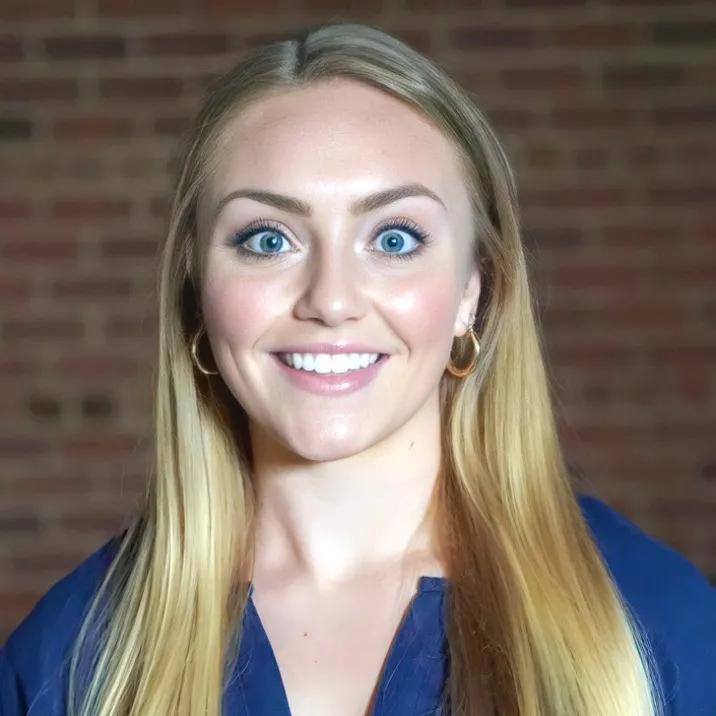
Tyler Webb has spent the last decade building sports audiences online. He started in high school running fan pages, co-founded a sports marketing agency, and in 2022 began posting daily about the business of sports. He now reaches over 600,000 followers across TikTok, Instagram, YouTube, X, and LinkedIn, and cofounded a sports marketing agency that does organic content for brands.
He covers the economics, the deals, and the stories behind how sports actually work. He has a clear point of view on where sports media is heading and what brands are still getting wrong.
1. Briefly share your background.
I’ve been creating content online for over 10 years. I started when I was a sophomore in high school, around 2014 or 2015, running what I’d call highlight or theme pages, sports pages where I was reposting football highlights, meme videos, stuff that already existed on the internet, curated for a specific audience.
When I was supposed to graduate in 2020, COVID hit and the marketing job I had lined up disappeared. That pushed me into freelance social media management. I could draw on everything I’d built in high school and college, and it turned into a solid freelance career right out of school. From there, I co-founded a sports marketing agency that does organic social content for brands. We now have seven full-time employees.
In 2022, I started creating content about sports business: the economics, the business decisions, and the human side of how sports actually work. The first video I posted got maybe 2,000 views, which was way more than my normal stuff. Then I made one about the Savannah Bananas right when they launched their traveling show, and it got a quarter million views. That was the signal. For the last three and a half years, I’ve been posting a video a day covering the business of sports.
2. You went from running a fan page to co-founding an agency to now building a personal brand that covers the business of sports. Those are three very different modes. How did each one change the way you think about audience-building?
When I was running fan pages, the name of the game was just reach. Get as many followers as possible, cast as wide a net as you can. I wasn’t thinking about what that audience was actually worth or how engaged they were. Monetization, if I thought about it at all, meant selling generic brand deals post by post.
As I started creating content for brands and eventually for myself, I began to see the value in going deeper with a more focused audience rather than just trying to reach everybody. The law of large numbers still applies. If you reach a million people and 1% are relevant, that’s real. But a passionate, specific audience is how you build something that lasts. Those people keep coming back. That matters more now because everyone is fighting an algorithm that’s constantly surfacing new creators.
TikTok changed the whole structure. Six years ago, most people consumed content through opt-in feeds. You followed someone, you got their content. Now it’s almost completely algorithmic. I have just as good a shot at reaching people as SportsCenter. It leveled the playing field. But the flip side is that my 600,000 followers are worth less than they were six years ago, because I’m constantly competing for those same people’s attention against new creators who have nothing to lose.
So the question has shifted from how many people can I reach to how deep can I go, and how engaged can I keep the community I already have.
3. You built a 150,000-follower sports page in high school before "sports media" was a career path most people could even name. What did you figure out back then about what makes sports content go viral that you think most brands still haven't figured out?
Interested people make interesting content. If you're genuinely curious about something, that comes through. If you're just recycling what everyone else is already saying, that comes through too.
The page I ran in high school was called I Live for Football. Our internal mantra was basically high school football players for high school football players. We posted what we, as 14-, 15-, and 16-year-olds, actually cared about. Johnny Manziel highlights set to rap music we were into. A countdown to the first Friday of high school football season every year. ESPN wasn’t doing that. There still isn’t a centralized high school football season, and the fact that we were building a home for it from our own perspective was novel.
I don’t want to pretend that was strategic. It was just the only perspective I had as a kid. But that ethos has carried through. Now more than ever, you have to have a genuine point of view. “We make sports content for Gen Z” is no longer a differentiator. What cuts through is a specific, human, recognizable take.
I can go to a Vikings game, and what strikes me is how easy it is to get there on public transit. I made a video about it. That’s my POV. People feel a genuine interest in it. That’s what makes it work. In order to be an interesting person, you have to be an interested person. Most brands haven’t figured that out because they’re optimizing for safety rather than for real.
4. You've built audiences on five different platforms simultaneously. How do you decide what to say where, and what does a platform like TikTok demand from sports content that X or LinkedIn simply doesn't?
The word I always come back to is context. On TikTok, you have to assume every piece of content you make is for someone who has never seen you before. You have to jam all of your context into the first five seconds, or they’re gone.
The framework I’ve settled on: introduce, confirm, subvert. Introduce the topic. Confirm means give them a reason to care, answer “why does this matter to me.” Then subvert: introduce something they didn’t expect, or something that won’t pay off until the end. That’s what keeps people watching. Those principles apply across TikTok, Instagram, YouTube Shorts, and even the short-form feeds on Twitter and LinkedIn now.
On LinkedIn, context is already baked in. They can see your headline, where you work and what you do. It’s a business platform by default. Less front-loading is required. Instagram carousels in the following feed carry more context than Reels, which are often served to cold audiences. It’s always the same question: how are they seeing it, and what do they already know about you when they do?
I’ll also push back on the short-attention-span thing. If you set it up well enough in the beginning, open a compelling loop and give them a real problem to follow, people will stay. I have two-and-a-half-minute videos with millions of views. It’s not a length problem. It’s a payoff problem.
5. Sports media is splintering fast — leagues launching their own channels, athletes going direct, media companies losing ground. From where you sit, who is winning the attention war in sports right now, and why?
The people winning are those with access to content no one else has. There’s almost no original content left online. Most big sports media accounts are just clipping and reformatting things that already exist somewhere else. There’s a running joke that if your video does well enough, Barstool will be in your DMs asking to repost it.
The people pulling ahead are the ones closest to the original source. Athletes, because they no longer need a radio show or a broadcast partner to tell their story. They can just have a podcast. No middleman. And brands like Overtime, which built their following by curating highlights, then launched their own sports leagues. They now own the full vertical stack. They’re the source. They don’t have to wait for the NBA to play.
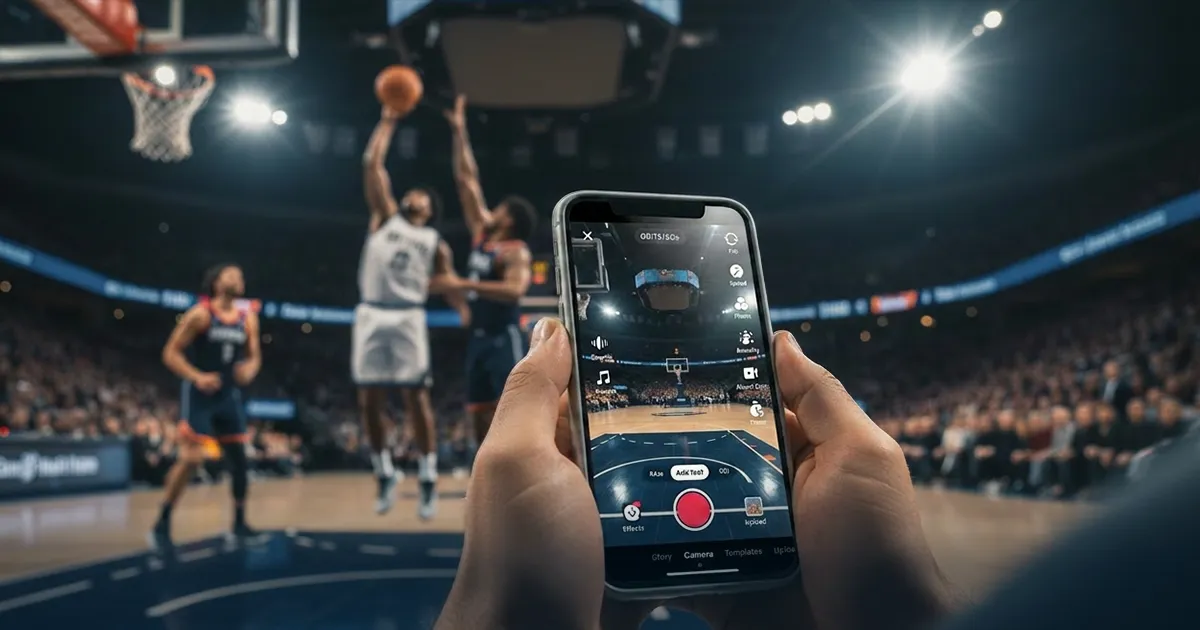
I think about this in my own work. I made a video about the strap at the bottom of hockey jerseys, designed so players can’t have their jerseys pulled over their heads in a fight. I went to an actual game to get iPhone footage of the strap because nobody else had it. That specificity is what makes it work. The people sitting at the downstream end, just reposting things, are going to struggle.
6. Gen Alpha and Gen Z are the most talked-about audiences in sports marketing, but they're also the hardest to reach through traditional channels. What are brands consistently getting wrong when they try to connect with that generation?
One thing brands miss: younger consumers don’t think about following individual creators the way people assume. They think about platforms. They watch TikTok. They don’t watch Tyler Webb. I post seven times a week, and a highly engaged person might see me once or twice in that stretch, and they might not even follow me. They just trust the algorithm will surface me again. That is fundamentally different from what brands are planning for.
It’s also worth noting that creators are increasingly perceived the same way as brands. The end point of a lot of creators' careers is working with large brands in ways that put you in the same category as the brands already struggling to reach this audience. We become moving billboards.
The game now is showing up organically and consistently across the platforms these audiences already use, knowing only one in ten things you post will really land, but when it does, it reaches people who weren’t already following you. That’s not a message brands want to hear when they’re posting twice a week and calling it a social strategy.
That’s also why in-person activation is more underrated than people think. One hundred people at an event is a number most brands would dismiss on social. But 100 people in the same place at the same time, in a specific context, knowing exactly why they’re there. That’s a meaningful number. The pendulum is swinging back.
7. You've had a front-row seat to how sports media has changed over the last few years. What's the story nobody is talking about loudly enough right now?
The reverse incentive structure kicks in as creators and brands get bigger. The thing that got you here is your willingness to take risks. But as soon as you have something to protect, employees, revenue, a lifestyle built around what you’ve built, you start optimizing to protect it instead of doing the thing that got you there.
There are endless new creators coming up who have nothing to lose. They’re going to take the risks that the established players are now too cautious to take. And the content that consistently performs is the content with real stakes.
The brands that are starting to crack the code are the ones willing to bring in real creators and give them actual latitude. ESPN's signing of Katie Feeney was a signal. The value isn’t in a polished post from the College Game Day account. It’s in having Katie Feeney talk to students at tailgates without a script. You don’t know exactly what you’re going to get. But the ceiling is so much higher.
The story nobody is telling loudly enough is that the brands and creators who play it safe are handing the field to those just getting started.
8. You've watched youth and amateur sports grow into a serious media and marketing opportunity. What does that space still need — from a content, technology, or brand activation standpoint — to reach its full potential?
The thing large pro leagues have figured out is how to sell as a collective. Thirty-two teams all on the same page, commanding billions because they’re negotiating together. That shared infrastructure is where the value is.
Youth and amateur sports still operate with an individualistic mindset. Every organizer is out there trying to get the best deal for themselves. The places where real value has been extracted are the operators who figured out how to aggregate. Roll up youth sports properties, sell sponsorships or streaming rights across all of them. The value is in the collective, not the individual event.
There’s also a media gap nobody has filled. If I told you to go find high school baseball coverage right now, there’s no place to go. I got my start talking about high school football on social media because nobody was doing it. Around the Minnesota high school state hockey tournament, you can see the early signs. What are clearly 14 and 15-year-olds going to every game, posting scores and highlights, reaching a lot of people. Whether that turns into a sustainable business is a separate question. But the space is wide open.
The real value in youth sports, for content, for brands, for technology, only gets extracted in the collective. Not in individual events, trying to go it alone.
9. What's your favorite sports moment, on or off the field?
I have two.
The one I was part of: last year I played in the Pro-Am at the Arnold Palmer Invitational. I grew up on a golf course. My first job was washing and fueling golf carts in exchange for a membership, waking up at 5 or 6 in the morning to finish before the rush so I could get in 18 holes. My dad taught me the game. It’s where we spent a lot of time together.
I got to bring him down to caddy for me. He wore the bib with our last name on it. We played Bay Hill alongside Akshay Bhatia, who is also a lefty. The fact that this career gave me that, gave us that, is something that’s going to be hard to top.
The one I witnessed: Aaron Rodgers throwing the last-second Hail Mary to Richard Rodgers. Prime-time game, probably 10 or 11 at night. I was 14 or 15, definitely past my bedtime, but my dad let me stay up. Rodgers throws it, it gets caught, and everyone else in the house was asleep. We couldn’t make a sound. Just silently losing it together in the living room, pointing at the screen. That was my lock screen for about a year.
The Game Behind the Game
Tyler’s path from fan pages in high school to a daily sports business channel with 250,000 followers is the kind of career that starts at a youth event, in a community that cares about getting it right. The attention war he describes, and the collective infrastructure that youth sports still needs to win it, is exactly the space Fastbreak AI is built for. From the tournament directors and club administrators who run the events to the brands and families who show up every weekend, we build the technology that keeps the game running and makes it worth showing up.
About Top of the 9th
Top of the 9th is a Fastbreak AI original series featuring the athletes, organizers, and operators who make youth and amateur sports exceptional.


