





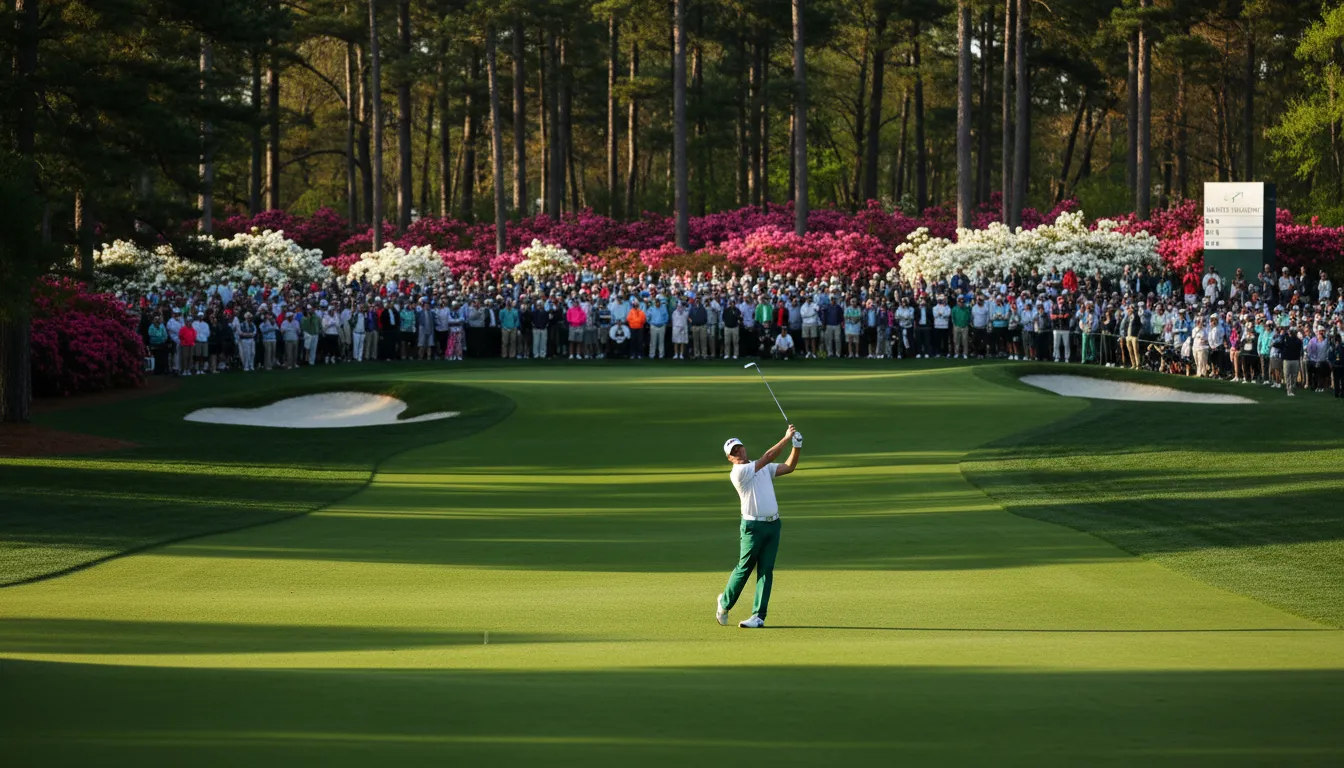


Every April, the world turns its eyes to the emerald slopes of Augusta National. We watch for the pimento cheese sandwiches, the blooming azaleas, and the legendary Sunday charge. But if you think golf is still just an exclusive "gentleman’s game", it isn’t anymore. The numbers show it: the fairway is opening up, and kids everywhere are making golf part of their own multi-sport story.
By the Numbers: The Youth Golf Boom
Youth golf is booming. Since 2019, participation has increased by 39%. The State of Play 2025 report puts it plainly: more kids are picking up clubs, and the biggest surge is happening right as they hit their stride in sports, with participation growing 64% among ages 13-17 between 2019 and 2024.
A More Inclusive Leaderboard
Perhaps the most exciting part of this growth isn't just how many kids are playing, but who is playing. The Tiger Effect of the early 2000s laid the groundwork, but today’s wave is breaking barriers and rewriting the leaderboard.
- Gender Parity: Today, 35% of junior golfers are female. In 2000, that number was just 15%.
- Diverse Perspectives: 29% of junior golfers are non-white, a massive jump from the 6% seen two decades ago.
This change didn’t happen by accident. It’s the payoff from years of outreach and a new sense of style that finally matches the sport’s tradition.
From Solo Focus to the Multi-Sport Mix
Golf is no longer a one-sport story. Research from Project Play 2025 and the PGA of America shows that golf is now a key part of kids' multi-sport mix. The pros set the example: 90% of PGA Tour players played other sports through high school. This trend carries into the college pipeline, where 88% of collegiate athletes played multiple sports as children, and many of the 7.2% of high school golfers who successfully transition to the NCAA are recruited specifically for their versatile athletic backgrounds. For kids ages 6–12, it’s normal to play three or four sports. Even as they get older, most young golfers keep at least two sports in the rotation, not just golf all year long.
Why Golfers Are Playing Other Sports
Why are kids moving away from golf-only childhoods? The answer is simple: it’s better for their health and their game.
- Injury Prevention: Golf-only athletes are 1.5 times more likely to suffer overuse injuries than those playing multiple sports.
- Athletic IQ: Coaches know that the quick moves from baseball or the field vision from soccer show up in a better golf swing and more confidence under pressure.
- Burnout: Kids who only play golf are much more likely to quit by age 15 than those who treat golf as a social or second sport.
And then there's the calendar. Multi-sport families are traveling more weekends than ever, splitting time between tournaments, travel teams, and tee times across different sports. That raises the stakes for operators who want to make the logistics easy. The events that make it simplest for busy families to show up, find affordable accommodations, and get back on the road are the ones that earn repeat registrations.
What’s Driving the Momentum?
While the pandemic earned golf the title of the "Official Sport of Social Distancing," the momentum hasn't slowed down as the world reopened. Golf is seeing a new wave of casual participants with a fresh sense of style.
The "Gamification" of the Range
Before most kids play 18-holes, they are getting their first taste of golf off the course. Places like Topgolf, Drive Shack, and indoor simulators have removed the traditional barriers of dress codes and quiet whispers. The first Topgolf opened 20 years ago, and it changed everything. Gamified ranges mean kids can chase their first birdie with a burger in hand and neon lights all around. Tech like Trackman and GCQuad turns practice into a video game, giving instant feedback that speaks to Gen Z and Alpha players.
The Rebrand
Breakout leagues like the TGL and WTGL are shaking up golf’s old “shush culture.” Instead of quiet crowds, you get high-energy, festival vibes with live DJs, courtside seats, and team formats that make golf feel more like an F1 race or a music festival. The look has changed too: hoodies, joggers, and sneakers are in, stuffy uniforms are out. Through music and lifestyle partnerships, these leagues are tearing down country-club walls and making golf part of pop culture.
The Move Towards Greater Accessibility
Golf’s move from exclusive to accessible is real. New programs are breaking down the two biggest barriers: green fees and gear. Youth on Course lets kids play for $5 or less, making the fairway open to everyone. The cost of equipment? That’s dropping too. First Tee chapters run club exchanges, and big retailers offer trade-in deals so kids can always have the right fit. For beginners, PGA Jr. League and local clinics often provide free loaner clubs, so you don’t even need your own set to take your first swing. When combined with scholarships and discounted junior passes, golf is now a real option for every kid, not just a luxury.
The Drive, Chip and Putt Effect
As the pros prepare for The Masters, 80 junior golfers are living their dream at Augusta National in the Drive, Chip and Putt National Finals. This free competition, built by the Masters, USGA, and PGA of America, gives every kid a real path from the local park to Augusta. By focusing on three simple skills rather than a full round, the game feels welcoming for beginners and keeps the Master's dream alive for the top juniors.
Navigating the Multi-Sport Calendar
As more kids play golf alongside other sports, the logistics of getting families to events have gotten more complicated. A youth golf tournament draws families from across a region, sometimes across the country. Where they stay matters as much as when they tee off.
The best tournament operators know this. They treat hotel blocks not as a travel formality but as a service to the families who drive registrations. When players arrive rested, settled, and close to the course, it shows up in the experience. When they spend two hours on hold with a hotel because the block sold out, it shows up in the reviews.
Fastbreak Travel gives golf tournament operators a better way to manage group accommodations. Room blocks are sourced, negotiated, and managed from contract through checkout in one place. Families get a simple, direct booking link with exclusive rates. Operators get real rebate revenue from every room night booked, without raising team fees or adding work to their plate.
The multi-sport kid is the future of youth golf. The operators who make it easier for those families to show up will be the ones they keep coming back to.
The Next Round
As the leaders walk Augusta’s fairways this week, we’re watching the spark that will shape golf’s future. The kids tuning in now are more than fans. They are the growth, the new faces, and the next wave of champions.
The azaleas are blooming, the crowd is buzzing, and the next generation is officially stepping up to the tee.
FAQs
How much has youth golf participation grown in recent years?
Youth golf participation has increased 39% since 2019, according to the State of Play 2025 report. The growth is even sharper among teens, with participation rising 64% among ages 13 to 17 between 2019 and 2024.
Is junior golf becoming more diverse?
Yes. Today, 35% of junior golfers are female, up from just 15% in 2000, and 29% of junior golfers are non-white, up from 6% two decades ago. This shift builds on the groundwork laid by the Tiger Effect of the early 2000s.
Why are young golfers playing multiple sports instead of specializing early?
Playing multiple sports supports both health and performance. Golf-only athletes are 1.5 times more likely to suffer overuse injuries than multi-sport athletes, and kids who play only golf are much more likely to quit by age 15. Skills from other sports, like field vision from soccer, also translate into a stronger golf swing, and 90% of PGA Tour players played other sports through high school.
What is making golf more accessible to kids today?
Programs like Youth on Course let kids play for $5 or less, while First Tee chapters and retailer trade-in deals lower equipment costs. PGA Jr. League and local clinics often provide free loaner clubs for beginners, and gamified experiences like Topgolf and indoor simulators have removed the traditional barriers of dress codes and formality that once kept golf feeling exclusive.
What should tournament operators consider as more families travel for youth golf events?
As multi-sport families juggle more travel weekends, hotel logistics have become a key part of the tournament experience. Operators who treat hotel blocks as a service rather than an afterthought, ensuring families can book affordable, nearby rooms easily, tend to see stronger reviews and more repeat registrations.


