








What Tournament Directors and Parents Need to Know About Nutrition, Hydration, and Recovery
There's a moment every tournament director knows well: it's noon on Saturday, the heat is climbing, and a 10-year-old is sitting on the sideline looking pale while her parents offer her a bag of chips and a soda. Or it's Sunday morning, and a team of 16-year-olds is dragging through warm-ups after a late Friday night and two early Saturday games.
These moments aren't about a lack of effort. They're about a knowledge gap, and that gap has real consequences. Research published in the British Journal of Sports Medicine found that even mild dehydration of just 2% body weight loss can reduce athletic performance by up to 10% and impair concentration, coordination, and decision-making. For a young athlete mid-tournament, that's the difference between a confident finish and a sloppy one.
The good news: the science is clear, the solutions are practical, and both tournament operators and parents have real leverage to make a difference.
Here's what you need to know, broken down by age, role, and situation.
Why Youth Athletes Are Different from Adult Athletes
Before diving into specifics, it's worth understanding why youth athletes can't simply follow adult nutrition and hydration guidelines.
There are several key physiological differences:
Kids generate more heat relative to body size. Children have a higher surface area-to-body mass ratio than adults, which means they absorb more heat from the environment. According to the American Academy of Pediatrics (AAP), children also produce more metabolic heat per kilogram of body weight during exercise, making them more vulnerable to heat illness in warm tournament conditions.
Their thirst mechanism is less reliable. Kids are less likely to voluntarily drink enough. Multiple studies, including a landmark study in Medicine & Science in Sports & Exercise, have shown that children can be significantly dehydrated before they feel thirsty, making adult cues like "drink when you're thirsty" genuinely dangerous advice for young athletes.
They're still growing. The nutritional demands of puberty and growth are layered on top of the demands of sport. During peak growth periods, a teenager's daily calorie needs can run 500 to 1,000 calories higher than what most parents expect, and that's before factoring in sport.
Their recovery windows are shorter and more sensitive. Glycogen stores, the body’s primary fuel for explosive, short-burst activity like soccer, basketball, and volleyball, are replenished fastest in the 30-to-45-minute window after exercise. Miss that window, and performance in the next session suffers significantly.
Ages 5–9: The Foundation Years
For the youngest athletes, the focus is simple: consistent small meals, constant access to water, and keeping sport fun enough that they want to come back.
Nutrition: Young children have small stomachs and high metabolic rates, which means they need to eat frequently, every 2–3 hours, rather than in large meals. At tournaments, parents should plan for a light snack (100–200 calories) before play and a carbohydrate-focused recovery snack within 30 minutes of finishing. Good options: banana with peanut butter, a small cheese stick with crackers, or a half-peanut butter sandwich.
Hydration: The AAP recommends that children ages 6–9 drink approximately 5–7 ounces of water every 20 minutes during moderate exercise. At a tournament, that means a water break every game, half or quarter, not just when kids ask for it.
Recovery: Sleep is the primary recovery tool at this age. The National Sleep Foundation recommends 9–12 hours for children ages 6–12. At multi-day tournaments, parents often let young children stay up late after Saturday games, then push them into early Sunday matches. That trade-off shows up on the field.
For tournament operators: Water stations accessible to small players matter. Fountains at adult height mean young kids skip drinking. Low coolers, cups, and accessible water near the sidelines increase actual consumption.
Ages 10–13: The Transition Years
This is the age where competitive intensity ramps up, but the body is still pre-pubescent for most kids. The gap between physical demands and nutritional awareness widens here.
Nutrition: Energy needs increase as training loads increase. Carbohydrates remain the primary fuel source for the kind of high-intensity, stop-start activity common in youth sports. A review in Nutrients confirmed that carbohydrate availability is the most important nutritional factor for repeated sprint performance.
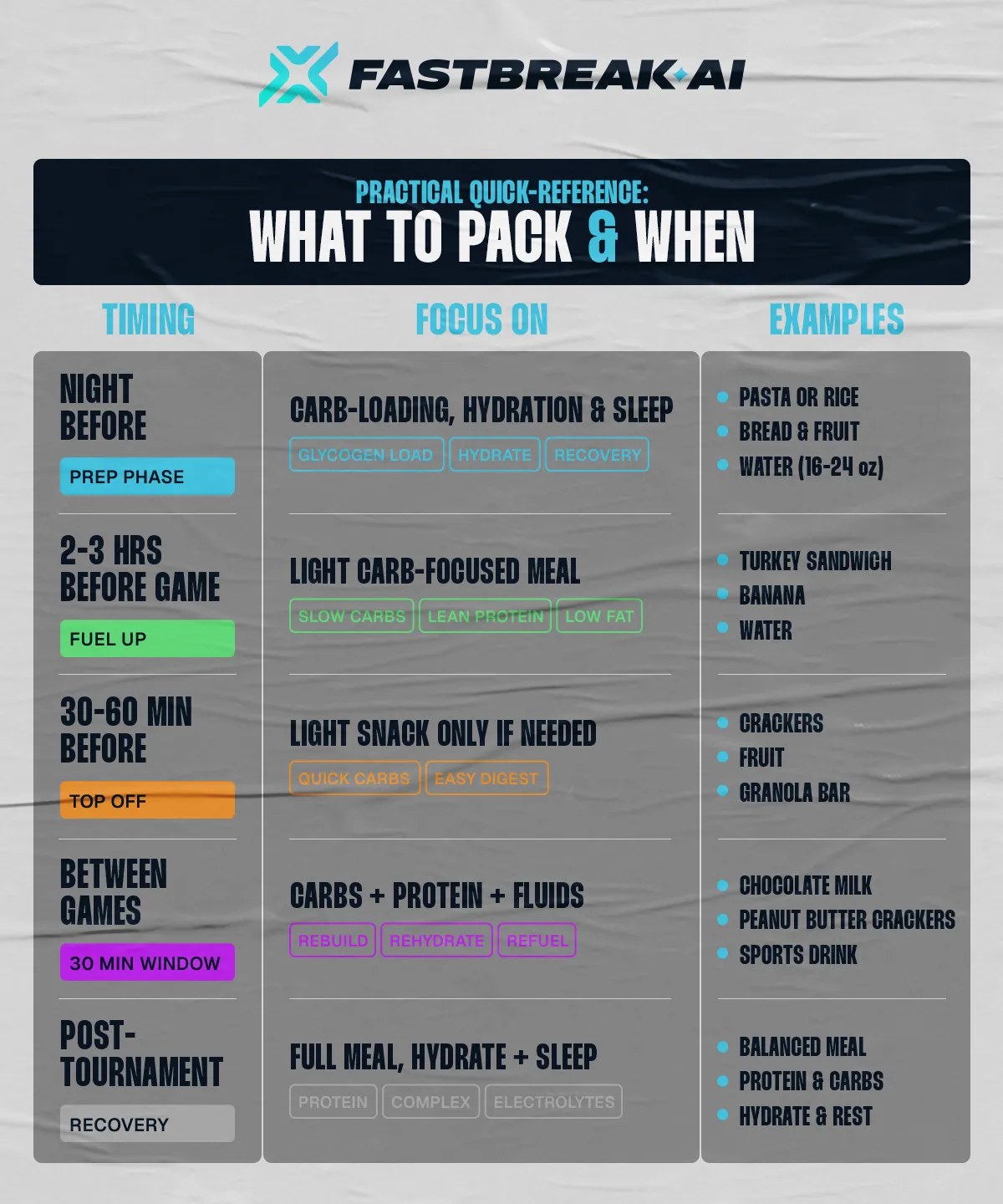
Pre-tournament meals should emphasize easily digestible carbohydrates: rice, pasta, bread and fruit. Fats and high-fiber foods should be limited before competition because they slow gastric emptying and can cause cramping. A practical pre-game meal eaten 2–3 hours before play: a turkey sandwich on white bread, a banana, and water.
Between games at a busy tournament, the 30-minute recovery window matters more here than it did at younger ages. A carbohydrate-protein combination helps replenish glycogen and initiate muscle repair. Chocolate milk is one of the most-studied and effective options. Research has found that chocolate milk was equally effective as commercial recovery drinks for glycogen resynthesis in youth athletes.
Hydration: Fluid needs increase with body size. The general guidance for this age range is 6–8 ounces every 20 minutes during exercise. For longer or hotter tournaments, sodium becomes relevant. If kids are sweating heavily for hours, plain water alone can dilute electrolytes and lead to dangerously low sodium levels. A light sports drink (not an energy drink) diluted 50/50 with water, or salty snacks like pretzels alongside water, can help maintain electrolyte balance.
For tournament operators: Food vendor selection matters significantly at this level. Tournaments that offer only fried food, nachos, and soda are working against the athletes they host. Even modest additions like a fruit stand, trail mix, peanut butter crackers, or a smoothie option make a meaningful difference to families trying to fuel their kids properly across a 10-hour tournament day.
Ages 14–17: The High-Performance Window
Teenagers in this age group are physiologically capable of adult-level performance and adult-level physiological stress. Puberty has dramatically increased both their potential and their vulnerability. Girls and boys also begin to diverge significantly in their nutritional needs.
Nutrition: Total calorie needs can be substantial. A 15-year-old male athlete playing multiple games in a day may need 3,000–4,000 calories to maintain performance and support growth. A 15-year-old female may need 2,500–3,200 calories. Underfueling at this stage is a documented risk: research published in the Journal of Athletic Training found that adolescent athletes, particularly female athletes, are highly vulnerable to Relative Energy Deficiency in Sport (RED-S), a condition where chronic underfueling suppresses hormones, weakens bones, disrupts menstrual cycles, and impairs performance and recovery.
RED-S is not a niche concern. Coaches and parents who see persistent fatigue, repeated soft-tissue injuries, or declining performance in teenage athletes should consider whether energy intake is adequate before assuming the athlete simply needs to "push harder."
Protein needs also increase sharply at this stage. The American College of Sports Medicine (ACSM) recommends 1.2–1.7 grams of protein per kilogram of body weight per day for competitive adolescent athletes. For a 140-pound (64 kg) teenager, that's 77–109 grams of protein daily, significantly more than the average American teenager consumes without intentional planning. Quality sources: eggs, Greek yogurt, chicken, legumes, and dairy.
Hydration: Sweat rates at this age can approach adult levels, particularly in male athletes after the testosterone surge of puberty. The ACSM recommends that teenage athletes drink enough to replace most (not all) sweat losses and to consume 7–10 ounces every 10–20 minutes during intense activity. Electrolyte replacement becomes particularly important in hot weather or when athletes play multiple sessions in a day.
Caffeinated drinks, including energy drinks, are common in this age group and deserve specific attention. They can raise heart rate and blood pressure, impair sleep, and mask the warning signs of heat illness. Tournament operators can play a role here by making water and appropriate sports drinks the accessible default and limiting or not featuring energy drinks at concession stands.
Recovery: Teenage athletes who play demanding back-to-back schedules (three games Saturday, two Sunday) need active recovery support that many youth programs don't provide. Key elements include the 30-minute post-exercise nutrition window (carbohydrates and protein), rehydration before the next session, and 8–10 hours of sleep. A brief cool-down of 5–10 minutes of light movement after intense competition also meaningfully reduces next-day soreness by supporting the clearance of metabolic waste products from muscles.
For tournament operators: Scheduling matters for recovery. Tournaments that schedule 6:00 PM final games on Saturday and 8:00 AM games on Sunday are asking teenage athletes to perform on inadequate rest. Where format allows, building a minimum 12-hour gap between the last game of one day and the first of the next is a meaningful structural improvement that operators can make unilaterally.
Practical Quick-Reference: What to Pack and When
What Tournament Operators Can Do Right Now
Tournament directors have more power than they often realize to shape whether athletes arrive at each game fueled and ready. A few practical actions:
- Schedule water breaks explicitly. Don't assume coaches or refs will do it. Build water breaks into the game format, communicate them in your pre-event materials, and put them in the app so parents and coaches know they're expected.
- Place water access low and close. A cooler at sideline height, accessible to 8-year-olds, is used constantly. A fountain 200 feet away doesn't.
- Improve vendor options deliberately. You don’t need to eliminate the concession classics, but adding a fruit option, a protein option, and bottled water at a visible and affordable price point costs little and signals that your tournament cares about athletes.
One of the most practical ways to do this without adding cost is to bring in brand sponsors who want access to your audience. Sports nutrition brands, hydration products, and recovery companies will often provide free samples, staffed activation tables, and products for families in exchange for on-site presence. Families get better options at no cost to the operator, and brands get direct access to the exact audience they are trying to reach. That's a real win for everyone at the event. - Educate in your pre-event communications. A simple one-page guide to tournament nutrition and hydration sent to families before the event creates a more prepared athlete population. Your tournament runs more smoothly when athletes perform well.
- Build sensible recovery time into multi-day schedules. This is the structural change with the highest impact and the lowest cost.
Some Tips for Educating Parents
Everything above applies, of course, but the most important thing a parent can do is resist the two most common tournament nutrition mistakes: over-restricting and under-planning.
Over-restricting (limiting food to maintain weight, avoid bloating, or enforce discipline) is far more damaging to performance and long-term health in young athletes than any tournament result is worth. If your child is active and growing, they almost certainly need more food than you think.
Under-planning (arriving at an 8-hour tournament with no food and hoping for the best at the concession stand) means your athlete is fueling a demanding day on nachos and a Gatorade. Pack a cooler. It's one of the highest-leverage things you can do.
The athletes who show up to the final game of a Sunday tournament still running hard almost always have something in common: someone made sure they ate and drank all weekend consistently. That's not rocket science. It's preparation, and it's one of the most direct ways you can support the kid you showed up to cheer for.
Brands: Your Audience Is Already on the Sidelines
If you sell products that help athletes perform, recover, or refuel, youth sports tournaments are where your audience is every weekend of the year.
Think about what this blog post describes: tens of thousands of families showing up to all-day events, actively thinking about hydration, nutrition, recovery, and gear for their kids. They are not passively scrolling. They are present, engaged, and making purchase decisions in real time. A parent who just watched her 12-year-old cramp up in the second half is not hard to reach with a message about electrolyte replenishment. A dad lugging a cooler across a parking lot at 7 AM is already thinking about what his kid should be eating.
The challenge has always been scale. Sponsoring one tournament gets your brand in front of one event's worth of families. Reaching youth sports audiences at scale used to mean negotiating with hundreds of individual operators across dozens of sports and regions, which isn't a marketing strategy; it's a logistics problem.
Fastbreak Connect solves that. One relationship, one contract, one coordinated campaign running across thousands of youth sports events nationwide. Fastbreak handles every activation on the ground, so your team doesn't have to be at every venue. In-event surveys provide first-party audience data and measurable impact metrics after every event in the program.
If your brand belongs in the hands of young athletes and the families who support them, this is where the conversation starts. Learn more at fastbreak.ai.
Fastbreak AI powers the people who make youth sports happen, from the directors who build the schedules to the families who show up every weekend.
FAQs
How much does dehydration affect a young athlete's performance?
Research published in the British Journal of Sports Medicine found that even mild dehydration of just 2% body weight loss can reduce athletic performance by up to 10% and impair concentration, coordination, and decision-making.
Why can't youth athletes rely on thirst to know when to drink water?
Studies have shown that children can be significantly dehydrated before they feel thirsty, which means waiting for thirst as a cue is unreliable and can leave young athletes dehydrated during tournament play.
How much protein do teenage athletes need per day?
The American College of Sports Medicine recommends 1.2 to 1.7 grams of protein per kilogram of body weight per day for competitive adolescent athletes, which works out to roughly 77 to 109 grams daily for a 140-pound teenager.
What is the recovery window for youth athletes after a game?
Glycogen stores are replenished most effectively within a 30-to-45-minute window after exercise, and a carbohydrate-protein combination like chocolate milk during that window helps replenish glycogen and initiate muscle repair.
What can tournament operators do to support athlete nutrition and hydration?
Operators can schedule explicit water breaks, place water access at a low, accessible height, improve vendor options with fruit and protein choices, build sensible recovery time into multi-day schedules, and educate families through pre-event communications.


