






The NCAA approved jersey patches. For programs, brands, and the NIL era, nothing will quite be the same.
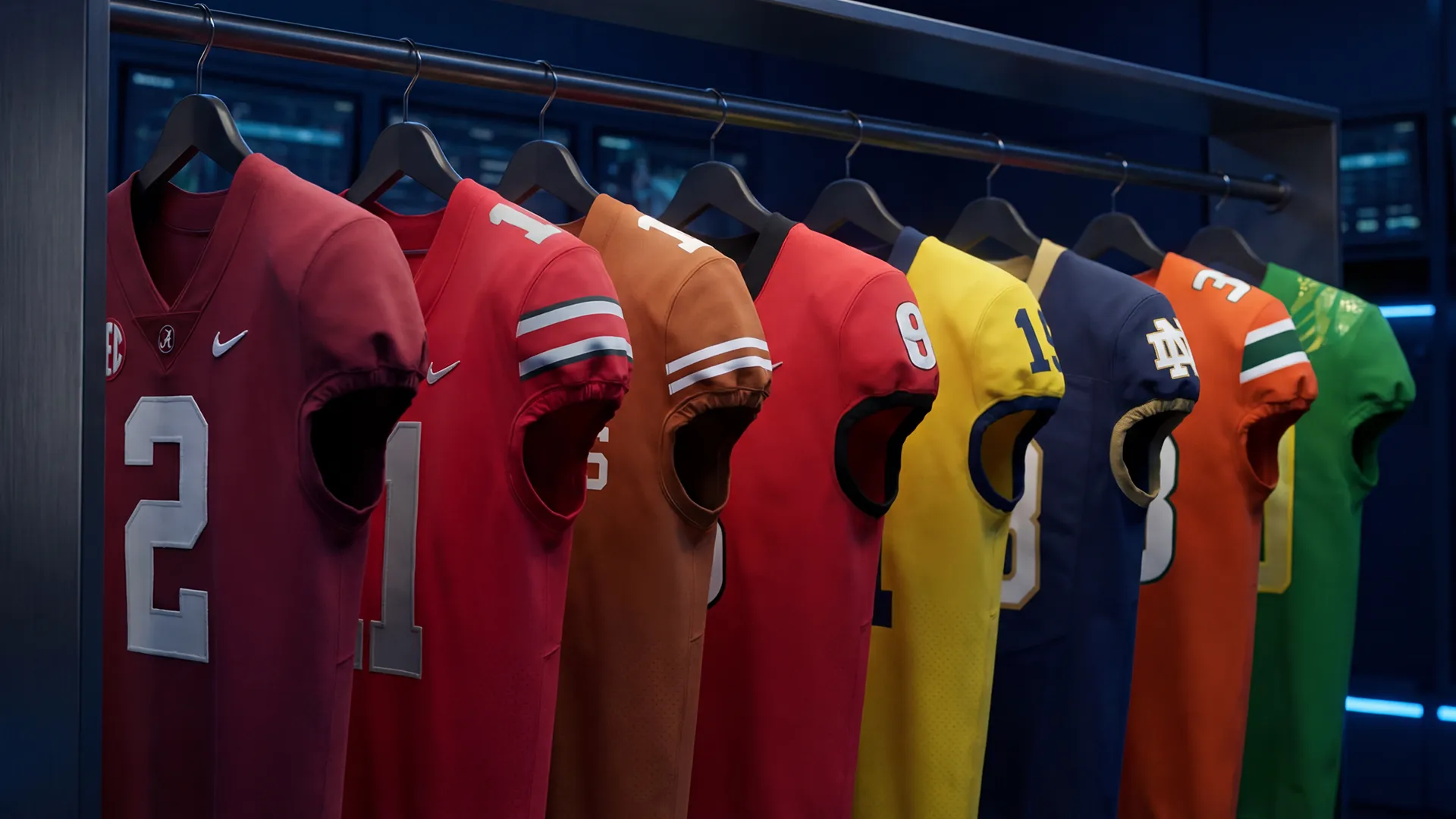
There's a small square of real estate on every college jersey that just became very valuable. The NCAA has approved uniform jersey patches for college sports, opening a direct line between brand sponsors and the uniforms worn by some of the most-watched athletes in the country.
It sounds simple. A logo on a jersey. But in the context of college athletics, where revenue gaps between programs are widening, NIL is reshaping how athletes get paid, and brands are hungry for authentic access to younger audiences, this is anything but a minor uniform tweak. It's a structural shift in how college sports generate money.
And for brands paying attention, it's one more signal in a much bigger story: sports is one of the most powerful brand-building environments that exists today. Across every level, pro, college, amateur, and youth, sports gathers audiences that are present, passionate, and nearly impossible to reach anywhere else.
For brands and programs trying to navigate this shift, the challenge isn’t just spotting the opportunity, it’s having the operational infrastructure to act on it. That’s the space Fastbreak AI works in, connecting scheduling, operations, fan engagement, and brand activation across every level of sports, from youth tournaments to pro leagues.
How It Worked in the Pros
Jersey patches aren't new to sports. The NBA led the way in 2017, becoming the first major American professional league to allow corporate sponsor patches on game-day uniforms. At the time, the league estimated the patches would generate over $100 million annually across all 30 teams. Early adopters proved the point fast. The Golden State Warriors landed a deal with Rakuten, reportedly worth $20 million over three years. The Cleveland Cavaliers signed with Goodyear. The Sacramento Kings partnered with Blue Diamond Growers. Teams in smaller markets found that jersey patches gave them a sponsorship category that didn't exist before, one with massive visibility and almost no competition at launch.
The NBA's success opened the door. Major League Soccer has used jersey sponsorships for years, borrowing from European football's long-standing model where front-of-shirt sponsors are standard. The NHL followed with helmet decals. Even MLB introduced helmet patches in recent seasons, a league notoriously cautious about adding corporate branding to its uniforms.
The formula proved consistent across every league: premium placement on a premium product, worn by recognizable athletes, in front of large audiences. Brands paid for it. Leagues and teams cashed in. Fans mostly adjusted.
Now college sports get their turn. And the dynamics here are different, and in some ways, more interesting.
Why College Sports Is a Different Conversation
Professional sports jersey patches generate revenue that flows to team owners and, through collective bargaining, to players via salary structures and revenue sharing. College sports don't work that way, or at least, they didn't until recently.
The NIL era changed the equation. Since 2021, college athletes have been able to profit from their name, image, and likeness. Brands can pay athletes directly for endorsements, appearances, and content. What started as a wave of individual deals has evolved into a sophisticated ecosystem of NIL collectives, multi-athlete brand agreements, and roster-level sponsorships.
Jersey patches plug directly into this ecosystem. Here's why that matters:
Programs get a new, significant revenue source. Athletic departments, especially those outside the Power Four conferences, operate under real financial pressure. Coaching salaries, facility upgrades, Title IX compliance, and scholarship costs don't get cheaper. A jersey patch deal with a regional bank, a healthcare system, or a consumer brand can generate meaningful revenue without requiring a new stadium or a media rights renegotiation. For mid-major programs, this could be genuinely transformative.
Brands get something they've never had before. College athletes have massive, loyal followings, often more locally rooted and personally engaged than pro athlete fanbases. A brand that sponsors a top-25 football program's jersey isn't just buying logo placement. They're buying into a community. Every game broadcast, every social media post, every SportsCenter highlight carries that logo into living rooms and feeds. For brands trying to reach Gen Z and Gen Alpha, audiences that are increasingly resistant to traditional digital advertising, this kind of authentic, earned placement is rare.
Athletes sit at the center of the value exchange. Unlike pro leagues, where players negotiate collectively for a share of jersey-patch revenue, college athletes operate in a decentralized NIL market. The question of whether and how athletes participate in jersey patch revenue, beyond their standard scholarship and NIL deals, will become a defining tension of the next chapter of college sports governance. Some programs will handle it well. Others will face uncomfortable conversations.
The Brand Opportunity Is Real and Time-Sensitive
Early movers in the NBA jersey patch market locked up deals before prices reflected true market value. The same dynamic is almost certainly true in college sports right now.
Consider the audience: College football games regularly draw 80,000-plus fans in the stadium and millions more on television. College basketball's March Madness is one of the most-watched sporting events in the American calendar. Programs like Alabama, Michigan, Texas, and Ohio State have national fanbases that rival many professional franchises in size and passion.
For brands looking to reach sports audiences at scale, particularly younger fans who grew up watching these programs, jersey patches offer something that digital advertising increasingly struggles to deliver: presence in a moment when people actually pay attention. Capturing that attention is one thing; converting it into measurable activation is another. Programs like Fastbreak Connect activate fans and participants directly in a sports setting.
Youth and amateur sports are watching closely, too. If patch sponsorships normalize at the college level, the downstream effect on high school athletics, club sports, and tournament events is a reasonable next question. The infrastructure for activating brands at sports events of every size is being built right now, and jersey patches at the college level accelerate demand across the entire sports sponsorship market.
Sports Sponsorship Is Not Just One Category
One of the common mistakes brands make is treating sports sponsorship as a single channel defined by professional leagues and stadium signage. The reality is that sports sponsorship is a spectrum, and the most undervalued parts of that spectrum are the ones closest to everyday life.
Pro sports offer scale and prestige. College sports offer passionate, community-rooted audiences with strong local identity. Amateur and youth sports offer something different: access to families in motion, engaged in real experiences, with limited commercial noise competing for their attention.
At the youth level, parents are not passive spectators. They've planned their weekends around these events. They've made hotel reservations, arranged meals, and carved out days from work schedules. They are present in a way that no digital channel can replicate. The athletes themselves, from eight-year-olds learning the game to competitive high school players earning college attention, are forming brand impressions that last.
For brands that want to reach the next generation where they actually are, the path runs through the gym floor and the tournament complex, not just the broadcast window. College jersey patches are a signal that sports sponsorship continues to expand. But the smartest brand investments are being made at every level of the game, not just at the top.
What Programs Need to Get Right
The upside is real. So are the risks of getting this wrong.
Valuation is hard. Not all jersey real estate is created equal. A patch on a College Football Playoff contender's uniform is worth orders of magnitude more than a patch on a mid-major basketball team's jersey. Programs that don't understand their own audience data, such as viewership, demographics, regional reach, and engagement metrics, will leave money on the table or price themselves out of deals.
Fit matters. College athletics run on authentic connection. A brand that feels out of place, or worse, that conflicts with a program's identity or a community's values, can create more problems than the revenue is worth. The best jersey patch deals will feel like natural extensions of a program's brand, not corporate intrusions.
Athlete alignment is non-negotiable. In the NIL era, athletes are partners, not just personnel. Programs that treat jersey patch revenue purely as an institutional matter, without considering how it interacts with athlete NIL relationships and expectations, will face friction. The programs that handle this well will create models that others follow.
Compliance infrastructure has to keep pace. The NCAA's approval opens the door, but the rules around disclosure, exclusivity, and athlete involvement are still developing. Programs that build compliance structures now, before problems arise, will be better positioned than those that scramble after the fact.
The Bigger Picture
A logo on a jersey is the visible part. The deeper story is about how college sports is building a new revenue architecture, one that didn't exist five years ago and is moving faster than most athletic departments are prepared for. The jersey patch isn't the beginning of that story. But it's a clear signal that the story is accelerating.
Jersey patches are one piece. NIL collectives are another. Revenue sharing models are being negotiated and litigated in real time. The House v. NCAA settlement has opened the door to direct revenue sharing between schools and athletes. Conference realignment continues to reshape media rights values. Every one of these changes is interconnected.
Meanwhile, at the youth and amateur level, tens of millions of families are showing up to events that represent some of the most brand-accessible environments in the country. Every level of the game is becoming more commercial, more measurable, and more open to the kind of partnerships that brands have historically reserved for professional sports.
For brands, the opportunity is to get ahead of this moment, to establish relationships with programs and athletes before market prices reflect full value. For programs, the opportunity is to build the data and sponsorship infrastructure that makes them attractive partners for years, not just for a single patch deal.
For brands, the opportunity is to think about sports holistically, not just as a collection of media buys tied to broadcast audiences, but as a year-round ecosystem of communities, experiences, and families that are already showing up and already spending. The college jersey patch is a signal. But the full picture runs from weekend youth tournaments to conference championship broadcasts, and the brands that understand that will build something that lasts.
The game hasn't changed. The business around it has.
Fastbreak AI powers the people who make sports exceptional, from pro league scheduling to amateur sports operations, fan engagement, and brand activation at events nationwide. Learn more at fastbreak.ai.
FAQs
What did the NCAA approve regarding jersey patches?
The NCAA approved uniform jersey patches for college sports, opening a direct line between brand sponsors and the uniforms worn by college athletes for the first time.
How much revenue did jersey patches generate in the NBA?
The NBA became the first major American professional league to allow corporate sponsor patches in 2017, and the league estimated the patches would generate over $100 million annually across all 30 teams.
How do college jersey patches connect to NIL?
Jersey patches plug directly into the NIL ecosystem that has existed since 2021, giving athletic departments a new revenue source while raising open questions about whether and how athletes participate in jersey patch revenue beyond their standard NIL deals.
What should college programs get right before signing jersey patch deals?
Programs need to accurately value their audience data, ensure brand fit with their identity and community values, align jersey patch revenue with athlete NIL relationships, and build compliance infrastructure ahead of evolving NCAA disclosure and exclusivity rules.
How does the college jersey patch approval affect youth and amateur sports sponsorship?
If patch sponsorships normalize at the college level, it accelerates demand for brand activation infrastructure across the entire sports sponsorship market, including youth and amateur events where families are already deeply engaged.


